BTemplates.com

Powered by Blogger.

Pageviews past week

Quantum mechanics

Auto News

artificial intelligence

About Me

Recommend us on Google!

Information Technology

Popular Posts

Showing posts with label Carbon nanotube. Show all posts

Thursday, June 23, 2011

Researchers clarify properties of 'confined' water within single-walled carbon nanotube pores


Water and ice may not be among the first things that come to mind when you think about single-walled carbon nanotubes (SWCNTs), but a Japan-based research team hoping to get a clearer understanding of the phase behavior of confined water in the cylindrical pores of carbon nanotubes zeroed in on confined water's properties and made some surprising discoveries.
This global temperature-diameter (T-D) phase diagram
of water inside SWCNTs shows that, depending on
the water content, hollow or filled ice will form. On the
right, hollow- and filled-ice nanotubes can be calculated
at low temperature for SWCNTs with diameters indicated
with (a) and (b) in the lower portion of the phase diagram.
Credit: Yutaka Maniwa

The team, from Tokyo Metropolitan University, Nagoya University, Japan Science and Technology Agency, and National Institute of Advanced Industrial Science and Technology, describes their findings in the American Institute of Physics' Journal of Chemical Physics.

Although carbon nanotubes consist of hydrophobic (water repelling) graphene sheets, experimental studies on SWCNTs show that water can indeed be confined in open-ended carbon nanotubes.

This discovery gives us a deeper understanding of the properties of nanoconfined water within the pores of SWCNTs, which is a key to the future of nanoscience. It's anticipated that nanoconfined water within carbon nanotubes can open the door to the development of a variety of nifty new nanothings—nanofiltration systems, molecular nanovalves, molecular water pumps, nanoscale power cells, and even nanoscale ferroelectric devices.

"When materials are confined at the atomic scale they exhibit unusual properties not otherwise observed, due to the so-called 'nanoconfinement effect.' In geology, for example, nanoconfined water provides the driving force for frost heaves in soil, and also for the swelling of clay minerals," explains Yutaka Maniwa, a professor in the Department of Physics at Tokyo Metropolitan University. "We experimentally studied this type of effect for water using SWCNTs."


Water within SWCNTs in the range of 1.68 to 2.40 nanometers undergoes a wet-dry type of transition when temperature is decreased. And the team discovered that when SWCNTs are extremely narrow, the water inside forms tubule ices that are quite different from any bulk ices known so far. Strikingly, their melting point rises as the SWCNT diameter decreases—contrary to that of bulk water inside a large-diameter capillary. In fact, tubule ice occurred even at room temperature inside SWCNTs.

"We extended our studies to the larger diameter SWCNTs up to 2.40 nanometers and successfully proposed a global phase behavior of water," says Maniwa. "This phase diagram (See Figure) covers a crossover from microscopic to macroscopic regions. In the macroscopic region, a novel wet-dry transition was newly explored at low temperature."

Results such as these contribute to a greater understanding of fundamental science because nanoconfined water exists and plays a vital role everywhere on Earth—including our bodies. "Understanding the nanoconfined effect on the properties of materials is also crucial to develop new devices, such as proton-conducting membranes and nanofiltration," Maniwa notes.

Next up, the team plans to investigate the physical properties of confined water discovered so far inside SWCNTs (such as dielectricity and proton conduction). They will pursue this to obtain a better understanding of the molecular structure and transport properties in biological systems.

Provided by American Institute of Physics

Tuesday, June 21, 2011

Scientists find simple way to produce graphene


Scientists at Northern Illinois University say they have discovered a simple method for producing high yields of graphene, a highly touted carbon nanostructure that some believe could replace silicon as the technological fabric of the future.
Amartya Chakrabarti holds up a sample of
graphene produced via the dry-ice method.
Credit: Scott Walstrom, Northern Illinois University

The focus of intense scientific research in recent years, graphene is a two-dimensional material, comprised of a single layer of carbon atoms arranged in a hexagonal lattice. It is the strongest material ever measured and has other remarkable qualities, including high electron mobility, a property that elevates its potential for use in high-speed nano-scale devices of the future.

In a June communication to the Journal of Materials Chemistry, the NIU researchers report on a new method that converts carbon dioxide directly into few-layer graphene (less than 10 atoms in thickness) by burning pure magnesium metal in dry ice.

"It is scientifically proven that burning magnesium metal in carbon dioxide produces carbon, but the formation of this carbon with few-layer graphene as the major product has neither been identified nor proven as such until our current report," said Narayan Hosmane, a professor of chemistry and biochemistry who leads the NIU research group.

"The synthetic process can be used to potentially produce few-layer graphene in large quantities," he said. "Up until now, graphene has been synthesized by various methods utilizing hazardous chemicals and tedious techniques. This new method is simple, green and cost-effective."

Hosmane said his research group initially set out to produce single-wall carbon nanotubes. "Instead, we isolated few-layer graphene," he said. "It surprised us all."

"It's a very simple technique that's been done by scientists before," added Amartya Chakrabarti, first author of the communication to the Journal of Materials Chemistry and an NIU post-doctoral research associate in chemistry and biochemistry. "But nobody actually closely examined the structure of the carbon that had been produced."


Provided by Northern Illinois University

Self-assembling Electronic Nano - components


Magnetic storage media such as hard drives have revolutionized the handling of information: We are used to dealing with huge quantities of magnetically stored data while relying on highly sensitive electronic components. And hope to further increase data capacities through ever smaller components. Together with experts from Grenoble and Strasbourg, researchers of KIT’s Institute of Nanotechnology (INT) have developed a nano-component based on a mechanism observed in nature.
“Self-organization” of nano-devices: Magnetic
molecules (green) arrange on a carbon nanotube
(black) to build an electronic component
(Photo: C. Grupe, KIT).


What if the very tininess of a component prevented one from designing the necessary tools for its manufacture? One possibility could be to “teach” the individual parts to self-assemble into the desired product. For fabrication of an electronic nano-device, a team of INT researchers headed by Mario Ruben adopted a trick from nature: Synthetic adhesives were applied to magnetic molecules in such a way that the latter docked on to the proper positions on a nanotube without any intervention. In nature, green leaves grow through a similar self-organizing process without any impetus from subordinate mechanisms. The adoption of such principles to the manufacture of electronic components is a paradigm shift, a novelty.

The nano-switch was developed by a European team of scientists from Centre National de la Recherche Scientifique (CNRS) in Grenoble, Institut de Physique et Chimie des Matériaux at the University of Strasbourg, and KIT’s INT. It is one of the invention’s particular features that, unlike the conventional electronic components, the new component does not consist of materials such as metals, alloys or oxides but entirely of soft materials such as carbon nanotubes and molecules.

Terbium, the only magnetic metal atom that is used in the device, is embedded in organic material. Terbium reacts highly sensitively to external magnetic fields. Information as to how this atom aligns along such magnetic fields is efficiently passed on to the current flowing through the nanotube. The Grenoble CNRS research group headed by Dr. Wolfgang Wernsdorfer succeeded in electrically reading out the magnetism in the environment of the nano-component. The demonstrated possibility of addressing electrically single magnetic molecules opens a completely new world to spintronics, where memory, logic and possibly quantum logic may be integrated.

The function of the spintronic nano-device is described in the July issue of Nature Materials (DOI number: 10.1038/Nmat3050)for low temperatures of approximately one degree Kelvin, which is -272 degrees Celsius. Efforts are taken by the team of researchers to further increase the component’s working temperature in the near future.

Link Nature Article:
http://www.nature.com/nmat/journal/vaop/ncurrent/pdf/nmat3050.pdf

Wednesday, April 27, 2011

Solar Power Goes Viral: Researchers Use Virus to Improve Solar-Cell Efficiency


Researchers at MIT have found a way to make significant improvements to the power-conversion efficiency of solar cells by enlisting the services of tiny viruses to perform detailed assembly work at the microscopic level.
In this diagram, the M13 virus consists of a strand 
of DNA (the figure-8 coil on the right) attached to a 
bundle of proteins called peptides -- the virus coat 
proteins (the corkscrew shapes in the center) which 
attach to the carbon nanotubes (gray cylinders) 
and hold them in place. A coating of titanium 
dioxide (yellow spheres) attached to dye molecules 
(pink spheres) surrounds the bundle. More of the 
viruses with their coatings are scattered across the 
background. (Credit: Matt Klug, Biomolecular 
Materials Group)

In a solar cell, sunlight hits a light-harvesting material, causing it to release electrons that can be harnessed to produce an electric current. The new MIT research, published online in the journal Nature Nanotechnology, is based on findings that carbon nanotubes -- microscopic, hollow cylinders of pure carbon -- can enhance the efficiency of electron collection from a solar cell's surface.

Previous attempts to use the nanotubes, however, had been thwarted by two problems. First, the making of carbon nanotubes generally produces a mix of two types, some of which act as semiconductors (sometimes allowing an electric current to flow, sometimes not) or metals (which act like wires, allowing current to flow easily). The new research, for the first time, showed that the effects of these two types tend to be different, because the semiconducting nanotubes can enhance the performance of solar cells, but the metallic ones have the opposite effect. Second, nanotubes tend to clump together, which reduces their effectiveness.

And that's where viruses come to the rescue. Graduate students Xiangnan Dang and Hyunjung Yi -- working with Angela Belcher, the W. M. Keck Professor of Energy, and several other researchers -- found that a genetically engineered version of a virus called M13, which normally infects bacteria, can be used to control the arrangement of the nanotubes on a surface, keeping the tubes separate so they can't short out the circuits, and keeping the tubes apart so they don't clump.

The system the researchers tested used a type of solar cell known as dye-sensitized solar cells, a lightweight and inexpensive type where the active layer is composed of titanium dioxide, rather than the silicon used in conventional solar cells. But the same technique could be applied to other types as well, including quantum-dot and organic solar cells, the researchers say. In their tests, adding the virus-built structures enhanced the power conversion efficiency to 10.6 percent from 8 percent -- almost a one-third improvement.

This dramatic improvement takes place even though the viruses and the nanotubes make up only 0.1 percent by weight of the finished cell. "A little biology goes a long way," Belcher says. With further work, the researchers think they can ramp up the efficiency even further.

The viruses are used to help improve one particular step in the process of converting sunlight to electricity. In a solar cell, the first step is for the energy of the light to knock electrons loose from the solar-cell material (usually silicon); then, those electrons need to be funneled toward a collector, from which they can form a current that flows to charge a battery or power a device. After that, they return to the original material, where the cycle can start again. The new system is intended to enhance the efficiency of the second step, helping the electrons find their way: Adding the carbon nanotubes to the cell "provides a more direct path to the current collector," Belcher says.

The viruses actually perform two different functions in this process. First, they possess short proteins called peptides that can bind tightly to the carbon nanotubes, holding them in place and keeping them separated from each other. Each virus can hold five to 10 nanotubes, each of which is held firmly in place by about 300 of the virus's peptide molecules. In addition, the virus was engineered to produce a coating of titanium dioxide (TiO2), a key ingredient for dye-sensitized solar cells, over each of the nanotubes, putting the titanium dioxide in close proximity to the wire-like nanotubes that carry the electrons.

The two functions are carried out in succession by the same virus, whose activity is "switched" from one function to the next by changing the acidity of its environment. This switching feature is an important new capability that has been demonstrated for the first time in this research, Belcher says.

In addition, the viruses make the nanotubes soluble in water, which makes it possible to incorporate the nanotubes into the solar cell using a water-based process that works at room temperature.

Prashant Kamat, a professor of chemistry and biochemistry at Notre Dame University who has done extensive work on dye-sensitized solar cells, says that while others have attempted to use carbon nanotubes to improve solar cell efficiency, "the improvements observed in earlier studies were marginal," while the improvements by the MIT team using the virus assembly method are "impressive."

"It is likely that the virus template assembly has enabled the researchers to establish a better contact between the TiO2 nanoparticles and carbon nanotubes. Such close contact with TiO2 nanoparticles is essential to drive away the photo-generated electrons quickly and transport it efficiently to the collecting electrode surface."

Kamat thinks the process could well lead to a viable commercial product: "Dye-sensitized solar cells have already been commercialized in Japan, Korea and Taiwan," he says. If the addition of carbon nanotubes via the virus process can improve their efficiency, "the industry is likely to adopt such processes."

Belcher and her colleagues have previously used differently engineered versions of the same virus to enhance the performance of batteries and other devices, but the method used to enhance solar cell performance is quite different, she says.

Because the process would just add one simple step to a standard solar-cell manufacturing process, it should be quite easy to adapt existing production facilities and thus should be possible to implement relatively rapidly, Belcher says.

The research team also included Paula Hammond, the Bayer Professor of Chemical Engineering; Michael Strano, the Charles (1951) and Hilda Roddey Career Development Associate Professor of Chemical Engineering; and four other graduate students and postdoctoral researchers. The work was funded by the Italian company Eni, through the MIT Energy Initiative's Solar Futures Program.

Sunday, April 24, 2011

Functioning Synapse Created Using Carbon Nanotubes: Devices Might Be Used in Brain Prostheses or Synthetic Brains


Engineering researchers the University of Southern California have made a significant breakthrough in the use of nanotechnologies for the construction of a synthetic brain. They have built a carbon nanotube synapse circuit whose behavior in tests reproduces the function of a neuron, the building block of the brain.
This image shows nanotubes used in synthetic 
synapse and apparatus used to create them. 
(Credit: USC Viterbi School of Engineering)

The team, which was led by Professor Alice Parker and Professor Chongwu Zhou in the USC Viterbi School of Engineering Ming Hsieh Department of Electrical Engineering, used an interdisciplinary approach combining circuit design with nanotechnology to address the complex problem of capturing brain function.

In a paper published in the proceedings of the IEEE/NIH 2011 Life Science Systems and Applications Workshop in April 2011, the Viterbi team detailed how they were able to use carbon nanotubes to create a synapse.

Carbon nanotubes are molecular carbon structures that are extremely small, with a diameter a million times smaller than a pencil point. These nanotubes can be used in electronic circuits, acting as metallic conductors or semiconductors.

"This is a necessary first step in the process," said Parker, who began the looking at the possibility of developing a synthetic brain in 2006. "We wanted to answer the question: Can you build a circuit that would act like a neuron? The next step is even more complex. How can we build structures out of these circuits that mimic the function of the brain, which has 100 billion neurons and 10,000 synapses per neuron?"

Parker emphasized that the actual development of a synthetic brain, or even a functional brain area is decades away, and she said the next hurdle for the research centers on reproducing brain plasticity in the circuits.

The human brain continually produces new neurons, makes new connections and adapts throughout life, and creating this process through analog circuits will be a monumental task, according to Parker.

She believes the ongoing research of understanding the process of human intelligence could have long-term implications for everything from developing prosthetic nanotechnology that would heal traumatic brain injuries to developing intelligent, safe cars that would protect drivers in bold new ways.

For Jonathan Joshi, a USC Viterbi Ph.D. student who is a co-author of the paper, the interdisciplinary approach to the problem was key to the initial progress. Joshi said that working with Zhou and his group of nanotechnology researchers provided the ideal dynamic of circuit technology and nanotechnology.

"The interdisciplinary approach is the only approach that will lead to a solution. We need more than one type of engineer working on this solution," said Joshi. "We should constantly be in search of new technologies to solve this problem."

Sunday, September 26, 2010

Mimicking Nature, Water-Based Artificial Leaf Produces Electricity


A team led by a North Carolina State University researcher has shown that water-gel-based solar devices -- "artificial leaves" -- can act like solar cells to produce electricity. The findings prove the concept for making solar cells that more closely mimic nature. They also have the potential to be less expensive and more environmentally friendly than the current standard-bearer: silicon-based solar cells.
Just as real leaves do, water-gel-based solar devices can act like solar cells to produce electricity, new research shows. (Credit: iStockphoto/Chaikovskiy Igor)

The bendable devices are composed of water-based gel infused with light-sensitive molecules -- the researchers used plant chlorophyll in one of the experiments -- coupled with electrodes coated by carbon materials, such as carbon nanotubes or graphite. The light-sensitive molecules get "excited" by the sun's rays to produce electricity, similar to plant molecules that get excited to synthesize sugars in order to grow, says NC State's Dr. Orlin Velev, Invista Professor of Chemical and Biomolecular Engineering and the lead author of a paper published online in the Journal of Materials Chemistry describing this new generation of solar cells.

Velev says that the research team hopes to "learn how to mimic the materials by which nature harnesses solar energy." Although synthetic light-sensitive molecules can be used, Velev says naturally derived products -- like chlorophyll -- are also easily integrated in these devices because of their water-gel matrix.

Now that they've proven the concept, Velev says the researchers will work to fine-tune the water-based photovoltaic devices, making them even more like real leaves.

"The next step is to mimic the self-regenerating mechanisms found in plants," Velev says. "The other challenge is to change the water-based gel and light-sensitive molecules to improve the efficiency of the solar cells."

Velev even imagines a future where roofs could be covered with soft sheets of similar electricity-generating artificial-leaf solar cells.

"We do not want to overpromise at this stage, as the devices are still of relatively low efficiency and there is a long way to go before this can become a practical technology," Velev says. "However, we believe that the concept of biologically inspired 'soft' devices for generating electricity may in the future provide an alternative for the present-day solid-state technologies."

Researchers from the Air Force Research Laboratory and Chung-Ang University in Korea co-authored the study. The study was funded by the Air Force Research Laboratory and the U.S. Department of Energy. The work is part of NC State's universitywide nanotechnology program, Nano@NC State.

NC State's Department of Chemical and Biomolecular Engineering is part of the university's College of Engineering.

Wednesday, September 15, 2010

Funneling Solar Energy: Antenna Made of Carbon Nanotubes Could Make Photovoltaic Cells More Efficient


Using carbon nanotubes (hollow tubes of carbon atoms), MIT chemical engineers have found a way to concentrate solar energy 100 times more than a regular photovoltaic cell. Such nanotubes could form antennas that capture and focus light energy, potentially allowing much smaller and more powerful solar arrays.
This filament containing about 30 million carbon nanotubes absorbs energy from the sun as photons and then re-emits photons of lower energy, creating the fluorescence seen here. The red regions indicate highest energy intensity, and green and blue are lower intensity. (Credit: Geraldine Paulus)

"Instead of having your whole roof be a photovoltaic cell, you could have little spots that were tiny photovoltaic cells, with antennas that would drive photons into them," says Michael Strano, the Charles and Hilda Roddey Associate Professor of Chemical Engineering and leader of the research team.

Strano and his students describe their new carbon nanotube antenna, or "solar funnel," in the Sept. 12 online edition of the journal Nature Materials. Lead authors of the paper are postdoctoral associate Jae-Hee Han and graduate student Geraldine Paulus.

Their new antennas might also be useful for any other application that requires light to be concentrated, such as night-vision goggles or telescopes.

Solar panels generate electricity by converting photons (packets of light energy) into an electric current. Strano's nanotube antenna boosts the number of photons that can be captured and transforms the light into energy that can be funneled into a solar cell.

The antenna consists of a fibrous rope about 10 micrometers (millionths of a meter) long and four micrometers thick, containing about 30 million carbon nanotubes. Strano's team built, for the first time, a fiber made of two layers of nanotubes with different electrical properties -- specifically, different bandgaps.

In any material, electrons can exist at different energy levels. When a photon strikes the surface, it excites an electron to a higher energy level, which is specific to the material. The interaction between the energized electron and the hole it leaves behind is called an exciton, and the difference in energy levels between the hole and the electron is known as the bandgap.

The inner layer of the antenna contains nanotubes with a small bandgap, and nanotubes in the outer layer have a higher bandgap. That's important because excitons like to flow from high to low energy. In this case, that means the excitons in the outer layer flow to the inner layer, where they can exist in a lower (but still excited) energy state.

Therefore, when light energy strikes the material, all of the excitons flow to the center of the fiber, where they are concentrated. Strano and his team have not yet built a photovoltaic device using the antenna, but they plan to. In such a device, the antenna would concentrate photons before the photovoltaic cell converts them to an electrical current. This could be done by constructing the antenna around a core of semiconducting material.

The interface between the semiconductor and the nanotubes would separate the electron from the hole, with electrons being collected at one electrode touching the inner semiconductor, and holes collected at an electrode touching the nanotubes. This system would then generate electric current. The efficiency of such a solar cell would depend on the materials used for the electrode, according to the researchers.

Strano's team is the first to construct nanotube fibers in which they can control the properties of different layers, an achievement made possible by recent advances in separating nanotubes with different properties.

While the cost of carbon nanotubes was once prohibitive, it has been coming down in recent years as chemical companies build up their manufacturing capacity. "At some point in the near future, carbon nanotubes will likely be sold for pennies per pound, as polymers are sold," says Strano. "With this cost, the addition to a solar cell might be negligible compared to the fabrication and raw material cost of the cell itself, just as coatings and polymer components are small parts of the cost of a photovoltaic cell."

Strano's team is now working on ways to minimize the energy lost as excitons flow through the fiber, and on ways to generate more than one exciton per photon. The nanotube bundles described in the Nature Materials paper lose about 13 percent of the energy they absorb, but the team is working on new antennas that would lose only 1 percent.

Funding: National Science Foundation Career Award, MIT Sloan Fellowship, the MIT-Dupont Alliance and the Korea Research Foundation.

Friday, September 10, 2010

Scientists Observe Single Ions Moving Through Tiny Carbon-Nanotube Channel


For the first time, a team of MIT chemical engineers has observed single ions marching through a tiny carbon-nanotube channel. Such channels could be used as extremely sensitive detectors or as part of a new water-desalination system. They could also allow scientists to study chemical reactions at the single-molecule level.
MIT chemical engineers built tiny channels out of carbon 
nanotubes -- hollow tubes whose walls aremade of lattices 
of carbon atoms. Small moleculessuch as sodium ions and 
protons can flow through the channels. 
(Credit: Graphic byPatrick Gillooly)

Carbon nanotubes -- tiny, hollow cylinders whose walls are lattices of carbon atoms -- are about 10,000 times thinner than a human hair. Since their discovery nearly 20 years ago, researchers have experimented with them as batteries, transistors, sensors and solar cells, among other applications.

In the Sept. 10 issue of Science, MIT researchers report that charged molecules, such as the sodium and chloride ions that form when salt is dissolved in water, can not only flow rapidly through carbon nanotubes, but also can, under some conditions, do so one at a time, like people taking turns crossing a bridge. The research was led by associate professor Michael Strano.

The new system allows passage of much smaller molecules, over greater distances (up to half a millimeter), than any existing nanochannel. Currently, the most commonly studied nanochannel is a silicon nanopore, made by drilling a hole through a silicon membrane. However, these channels are much shorter than the new nanotube channels (the nanotubes are about 20,000 times longer), so they only permit passage of large molecules such as DNA or polymers -- anything smaller would move too quickly to be detected.

Strano and his co-authors -- recent PhD recipient Chang Young Lee, graduate student Wonjoon Choi and postdoctoral associate Jae-Hee Han -- built their new nanochannel by growing a nanotube across a one-centimeter-by-one-centimeter plate, connecting two water reservoirs. Each reservoir contains an electrode, one positive and one negative. Because electricity can flow only if protons -- positively charged hydrogen ions, which make up the electric current -- can travel from one electrode to the other, the researchers can easily determine whether ions are traveling through the nanotube.

They found that protons do flow steadily across the nanotube, carrying an electric current. Protons flow easily through the nanochannel because they are so small, but the researchers observed that other positively charged ions, such as sodium, can also get through but only if enough electric field is applied. Sodium ions are much larger than protons, so they take longer to cross once they enter. While they travel across the channel, they block protons from flowing, leading to a brief disruption in current known as the Coulter effect.

Strano believes that the channels allow only positively charged ions to flow through them because the ends of the tubes contain negative charges, which attract positive ions. However, he plans to build channels that attract negative ions by adding positive charges to the tube.

Once the researchers have these two types of channels, they hope to embed them in a membrane that could also be used for water desalination. More than 97 percent of Earth's water is in the oceans, but that vast reservoir is undrinkable unless the salt is removed. The current desalination methods, distillation and reverse osmosis, are expensive and require lots of energy. So a nanotube membrane that allows both sodium and chloride ions (which are negatively charged) to flow out of seawater could become a cheaper way to desalinate water.

This study marks the first time that individual ions dissolved in water have been observed at room temperature. This means the nanochannels could also detect impurities, such as arsenic or mercury, in drinking water. (Ions can be identified by how long it takes them to cross the channel, which depends on their size). "If a single arsenic ion is floating in solution, you could detect it," says Strano.

Story Source:
The above story is reprinted (with editorial adaptations by ScienceDaily staff) from materials provided by Massachusetts Institute of Technology. The original article was written by Anne Trafton, MIT News Office.

Tuesday, September 7, 2010

New Self-Assembling Photovoltaic Technology Repairs Itself


Plants are good at doing what scientists and engineers have been struggling to do for decades: converting sunlight into stored energy, and doing so reliably day after day, year after year. Now some MIT scientists have succeeded in mimicking a key aspect of that process.
This proof-of-concept version of the 
photoelectrochemical cell, which was used for 
laboratorytests, contains a photoactive 
solution made up of a mix of self-assembling 
molecules (in a glass cylinder held in place 
by metal clamp) with two electrodes protruding
from the top, one made of platinum 
(the bare wire) and the other of silver 
(in a glass tube). (Credit: Patrick Gillooly)

One of the problems with harvesting sunlight is that the sun's rays can be highly destructive to many materials. Sunlight leads to a gradual degradation of many systems developed to harness it. But plants have adopted an interesting strategy to address this issue: They constantly break down their light-capturing molecules and reassemble them from scratch, so the basic structures that capture the sun's energy are, in effect, always brand new.

That process has now been imitated by Michael Strano, the Charles and Hilda Roddey Associate Professor of Chemical Engineering, and his team of graduate students and researchers. They have created a novel set of self-assembling molecules that can turn sunlight into electricity; the molecules can be repeatedly broken down and then reassembled quickly, just by adding or removing an additional solution. Their paper on the work was published on Sept. 5 in Nature Chemistry.

Strano says the idea first occurred to him when he was reading about plant biology. "I was really impressed by how plant cells have this extremely efficient repair mechanism," he says. In full summer sunlight, "a leaf on a tree is recycling its proteins about every 45 minutes, even though you might think of it as a static photocell."

One of Strano's long-term research goals has been to find ways to imitate principles found in nature using nanocomponents. In the case of the molecules used for photosynthesis in plants, the reactive form of oxygen produced by sunlight causes the proteins to fail in a very precise way. As Strano describes it, the oxygen "unsnaps a tether that keeps the protein together," but the same proteins are quickly reassembled to restart the process.

This action all takes place inside tiny capsules called chloroplasts that reside inside every plant cell -- and which is where photosynthesis happens. The chloroplast is "an amazing machine," Strano says. "They are remarkable engines that consume carbon dioxide and use light to produce glucose," a chemical that provides energy for metabolism.

To imitate that process, Strano and his team, supported by grants from the MIT Energy Initiative and the Department of Energy, produced synthetic molecules called phospholipids that form discs; these discs provide structural support for other molecules that actually respond to light, in structures called reaction centers, which release electrons when struck by particles of light. The discs, carrying the reaction centers, are in a solution where they attach themselves spontaneously to carbon nanotubes -- wire-like hollow tubes of carbon atoms that are a few billionths of a meter thick yet stronger than steel and capable of conducting electricity a thousand times better than copper. The nanotubes hold the phospholipid discs in a uniform alignment so that the reaction centers can all be exposed to sunlight at once, and they also act as wires to collect and channel the flow of electrons knocked loose by the reactive molecules.

The system Strano's team produced is made up of seven different compounds, including the carbon nanotubes, the phospholipids, and the proteins that make up the reaction centers, which under the right conditions spontaneously assemble themselves into a light-harvesting structure that produces an electric current. Strano says he believes this sets a record for the complexity of a self-assembling system. When a surfactant -- similar in principle to the chemicals that BP has sprayed into the Gulf of Mexico to break apart oil -- is added to the mix, the seven components all come apart and form a soupy solution. Then, when the researchers removed the surfactant by pushing the solution through a membrane, the compounds spontaneously assembled once again into a perfectly formed, rejuvenated photocell.

"We're basically imitating tricks that nature has discovered over millions of years" -- in particular, "reversibility, the ability to break apart and reassemble," Strano says. The team, which included postdoctoral researcher Moon-Ho Ham and graduate student Ardemis Boghossian, came up with the system based on a theoretical analysis, but then decided to build a prototype cell to test it out. They ran the cell through repeated cycles of assembly and disassembly over a 14-hour period, with no loss of efficiency.

Strano says that in devising novel systems for generating electricity from light, researchers don't often study how the systems change over time. For conventional silicon-based photovoltaic cells, there is little degradation, but with many new systems being developed -- either for lower cost, higher efficiency, flexibility or other improved characteristics -- the degradation can be very significant. "Often people see, over 60 hours, the efficiency falling to 10 percent of what you initially saw," he says.

The individual reactions of these new molecular structures in converting sunlight are about 40 percent efficient, or about double the efficiency of today's best commercial solar cells. Theoretically, the efficiency of the structures could be close to 100 percent, he says. But in the initial work, the concentration of the structures in the solution was low, so the overall efficiency of the device -- the amount of electricity produced for a given surface area -- was very low. They are working now to find ways to greatly increase the concentration.

Sunday, September 5, 2010

Nano-engineered cotton promises to wipe out water bugs


COTTON impregnated with silver nanowires and carbon nanotubes (CNTs) could provide a cheap and effective method of purifying water in remote locations.

A new filter needs only gravity and a weak electric current to produce its sterilising effect, making it suitable for a portable water-treatment device.

The fabric is easy to produce, says lead researcher Yi Cui at Stanford University in California. Cui's team simply dip a piece of cotton into a solution of CNTs and then pipette droplets containing silver nanowires onto the cotton.
Prepare to die, E. coli (Image: Linda Stannard/UCT/SPL)

Analysing the fabric with a scanning electron microscope reveals that the CNTs stick to the individual cotton fibres, while the slightly larger silver nanowires form a mesh between the fibres. The nanoparticles enable the fabric to conduct electricity, so a weak electric current can run across it. This helps kill bacteria by damaging their outer membranes, while the silver nanowires' anti-bacterial properties do the rest.

So when Cui and his colleagues poured water contaminated with the bacterium Escherichia coli (pictured) through the silver-coated, electrically-conducting fabric, they found it killed 89 per cent of the bacteria. By conducting three successive runs through the fabric, they were able to kill over 98 per cent - enough to make the water safe to drink (Nano Letters, DOI: 10.1021/nl101944e).

Friday, August 20, 2010

Extreme Darkness: Carbon Nanotube Forest Covers Ultra-Dark Detector


Harnessing darkness for practical use, researchers at the National Institute of Standards and Technology (NIST) have developed a laser power detector coated with the world's darkest material -- a forest of carbon nanotubes that reflects almost no light across the visible and part of the infrared spectrum.
This is a colorized micrograph of the world's darkest 
material -- a sparse "forest" of fine carbon nanotubes -- 
coating a NIST laser power detector. Image shows a 
region approximately 25 micrometers across. 
(Credit: Aric Sanders, NIST)

NIST will use the new ultra-dark detector, described in a new paper in Nano Letters, to make precision laser power measurements for advanced technologies such as optical communications, laser-based manufacturing, solar energy conversion, and industrial and satellite-borne sensors.

Inspired by a 2008 paper by Rensselaer Polytechnic Institute (RPI) on "the darkest man-made material ever," the NIST team used a sparse array of fine nanotubes as a coating for a thermal detector, a device used to measure laser power. A co-author at Stony Brook University in New York grew the nanotube coating. The coating absorbs laser light and converts it to heat, which is registered in pyroelectric material (lithium tantalate in this case). The rise in temperature generates a current, which is measured to determine the power of the laser. The blacker the coating, the more efficiently it absorbs light instead of reflecting it, and the more accurate the measurements.

The new NIST detector uniformly reflects less than 0.1 percent of light at wavelengths from deep violet at 400 nanometers (nm) to near infrared at 4 micrometers (μm) and less than 1 percent of light in the infrared spectrum from 4 to 14 μm. The results are similar to those reported for the RPI material and in a 2009 paper by a Japanese group. The NIST work is unique in that the nanotubes were grown on pyroelectric material, whereas the other groups grew them on silicon. NIST researchers plan to extend the calibrated operating range of their device to 50 or even 100 micrometer wavelengths, to perhaps provide a standard for terahertz radiation power.

NIST previously made detector coatings from a variety of materials, including flat nanotube mats. The new coating is a vertical forest of multiwalled nanotubes, each less than 10 nanometers in diameter and about 160 micrometers long. The deep hollows may help trap light, and the random pattern diffuses any reflected light in various directions. Measuring how much light was reflected across a broad spectrum was technically demanding; the NIST team spent hundreds of hours using five different methods to measure the vanishingly low reflectance with adequate precision. Three of the five methods involved comparisons of the nanotube-coated detector to a calibrated standard.

Carbon nanotubes offer ideal properties for thermal detector coatings, in part because they are efficient heat conductors. Nickel phosphorous, for example, reflects less light at some wavelengths, but does not conduct heat as well. The new carbon nanotube materials also are darker than NIST's various Standard Reference Materials for black color developed years ago to calibrate instruments.

Sunday, July 25, 2010

Nanowick at Heart of New System to Cool 'Power Electronics'


Researchers have shown that an advanced cooling technology being developed for high-power electronics in military and automotive systems is capable of handling roughly 10 times the heat generated by conventional computer chips.
Image
This is a test facility for nanowicks. (Credit: Purdue 
University School of Mechanical Engineering)

The miniature, lightweight device uses tiny copper spheres and carbon nanotubes to passively wick a coolant toward hot electronics, said Suresh V. Garimella, the R. Eugene and Susie E. Goodson Distinguished Professor of Mechanical Engineering at Purdue University.

This wicking technology represents the heart of a new ultrathin "thermal ground plane," a flat, hollow plate containing water.

Similar "heat pipes" have been in use for more than two decades and are found in laptop computers. However, they are limited to cooling about 50 watts per square centimeter, which is good enough for standard computer chips but not for "power electronics" in military weapons systems and hybrid and electric vehicles, Garimella said.

The research team from Purdue, Thermacore Inc. and Georgia Tech Research Institute is led by Raytheon Co., creating the compact cooling technology in work funded by the Defense Advanced Research Projects Agency, or DARPA.

The team is working to create heat pipes about one-fifth the thickness of commercial heat pipes and covering a larger area than the conventional devices, allowing them to provide far greater heat dissipation.

New findings indicate the wicking system that makes the technology possible absorbs more than 550 watts per square centimeter, or about 10 times the heat generated by conventional chips. This is more than enough cooling capacity for the power-electronics applications, Garimella said.

The findings are detailed in a research paper appearing online this month in the International Journal of Heat and Mass Transfer and will be published in the journal's September issue. The paper was written by mechanical engineering doctoral student Justin Weibel, Garimella and Mark North, an engineer with Thermacore, a producer of commercial heat pipes located in Lancaster, Pa.

"We know the wicking part of the system is working well, so we now need to make sure the rest of the system works," North said.

The new type of cooling system can be used to prevent overheating of devices called insulated gate bipolar transistors, high-power switching transistors used in hybrid and electric vehicles. The chips are required to drive electric motors, switching large amounts of power from the battery pack to electrical coils needed to accelerate a vehicle from zero to 60 mph in 10 seconds or less.

Potential military applications include advanced systems such as radar, lasers and electronics in aircraft and vehicles. The chips used in the automotive and military applications generate 300 watts per square centimeter or more.

Researchers are studying the cooling system using a novel test facility developed by Weibel that mimics conditions inside a real heat pipe.

"The wick needs to be a good transporter of liquid but also a very good conductor of heat," Weibel said. "So the research focuses largely on determining how the thickness of the wick and size of copper particles affect the conduction of heat."

Computational models for the project were created by Garimella in collaboration with Jayathi Y. Murthy, a Purdue professor of mechanical engineering, and doctoral student Ram Ranjan. The carbon nanotubes were produced and studied at the university's Birck Nanotechnology Center in work led by mechanical engineering professor Timothy Fisher.

"We have validated the models against experiments, and we are conducting further experiments to more fully explore the results of simulations," Garimella said.

Inside the cooling system, water circulates as it is heated, boils and turns into a vapor in a component called the evaporator. The water then turns back to a liquid in another part of the heat pipe called the condenser.

The wick eliminates the need for a pump because it draws away fluid from the condenser side and transports it to the evaporator side of the flat device, Garimella said.

Allowing a liquid to boil dramatically increases how much heat can be removed compared to simply heating a liquid to temperatures below its boiling point. Understanding precisely how fluid boils in tiny pores and channels is helping the engineers improve such cooling systems.

The wicking part of the heat pipe is created by sintering, or fusing together tiny copper spheres with heat. Liquid is drawn sponge-like through spaces, or pores, between the copper particles by a phenomenon called capillary wicking. The smaller the pores, the greater the drawing power of the material, Garimella said.

Such sintered materials are used in commercial heat pipes, but the researchers are improving them by creating smaller pores and also by adding the carbon nanotubes.

"For high drawing power, you need small pores," Garimella said. "The problem is that if you make the pores very fine and densely spaced, the liquid faces a lot of frictional resistance and doesn't want to flow. So the permeability of the wick is also important."

The researchers are creating smaller pores by "nanostructuring" the material with carbon nanotubes, which have a diameter of about 50 nanometers, or billionths of a meter. However, carbon nanotubes are naturally hydrophobic, hindering their wicking ability, so they were coated with copper using a device called an electron beam evaporator.

"We have made great progress in understanding and designing the wick structures for this application and measuring their performance," said Garimella. He said that once ongoing efforts at packaging the new wicks into heat pipe systems that serve as the thermal ground plane are complete, devices based on the research could be in commercial use within a few years.

Tuesday, June 22, 2010

Battery Power Capacity Boost from Nanotubes?


Batteries might gain a boost in power capacity as a result of a new finding from researchers at MIT. They found that using carbon nanotubes for one of the battery's electrodes produced a significant increase -- up to tenfold -- in the amount of power it could deliver from a given weight of material, compared to a conventional lithium-ion battery. Such electrodes might find applications in small portable devices, and with further research might also lead to improved batteries for larger, more power-hungry applications.

Image
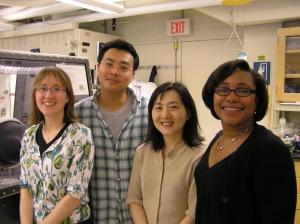
From left, students Betar Gallant and Seung Woo 
Lee and professors Yang Shao-Horn and Paula 
Hammond, in one of the labs where they did 
research on the use of carbon nanotubes 
in lithium batteries. (Credit: Image courtesy of MIT)

To produce the powerful new electrode material, the team used a layer-by-layer fabrication method, in which a base material is alternately dipped in solutions containing carbon nanotubes that have been treated with simple organic compounds that give them either a positive or negative net charge. When these layers are alternated on a surface, they bond tightly together because of the complementary charges, making a stable and durable film.

The findings, by a team led by Associate Professor of Mechanical Engineering and Materials Science and Engineering Yang Shao-Horn, in collaboration with Bayer Chair Professor of Chemical Engineering Paula Hammond, are reported in a paper published June 20 in the journal Nature Nanotechnology. The lead authors are chemical engineering student Seung Woo Lee PhD '10 and postdoctoral researcher Naoaki Yabuuchi.

Batteries, such as the lithium-ion batteries widely used in portable electronics, are made up of three basic components: two electrodes (called the anode, or negative electrode, and the cathode, or positive electrode) separated by an electrolyte, an electrically conductive material through which charged particles, or ions, can move easily. When these batteries are in use, positively charged lithium ions travel across the electrolyte to the cathode, producing an electric current; when they are recharged, an external current causes these ions to move the opposite way, so they become embedded in the spaces in the porous material of the anode.

In the new battery electrode, carbon nanotubes -- a form of pure carbon in which sheets of carbon atoms are rolled up into tiny tubes -- "self-assemble" into a tightly bound structure that is porous at the nanometer scale (billionths of a meter). In addition, the carbon nanotubes have many oxygen groups on their surfaces, which can store a large number of lithium ions; this enables carbon nanotubes for the first time to serve as the positive electrode in lithium batteries, instead of just the negative electrode.

This "electrostatic self-assembly" process is important, Hammond explains, because ordinarily carbon nanotubes on a surface tend to clump together in bundles, leaving fewer exposed surfaces to undergo reactions. By incorporating organic molecules on the nanotubes, they assemble in a way that "has a high degree of porosity while having a great number of nanotubes present," she says.

Lithium batteries with the new material demonstrate some of the advantages of both capacitors, which can produce very high power outputs in short bursts, and lithium batteries, which can provide lower power steadily for long periods, Lee says. The energy output for a given weight of this new electrode material was shown to be five times greater than for conventional capacitors, and the total power delivery rate was 10 times that of lithium-ion batteries, the team says. This performance can be attributed to good conduction of ions and electrons in the electrode, and efficient lithium storage on the surface of the nanotubes.

In addition to their high power output, the carbon nanotube electrodes showed very good stability over time. After 1,000 cycles of charging and discharging a test battery, there was no detectable change in the material's performance.

The electrodes the team produced had thicknesses up to a few microns, and the improvements in energy delivery only were seen at high-power output levels. In future work, the team aims to produce thicker electrodes and extend the improved performance to low-power outputs as well, they say. In its present form, the material might have applications for small, portable electronic devices, says Shao-Horn, but if the reported high power capability were demonstrated in a much thicker form -- with thicknesses of hundreds of microns rather than just a few -- it might eventually be suitable for other applications such as hybrid cars.

While the electrode material was produced by alternately dipping a substrate into two different solutions -- a relatively time-consuming process -- Hammond suggests that the process could be modified by instead spraying the alternate layers onto a moving ribbon of material, a technique now being developed in her lab. This could eventually open the possibility of a continuous manufacturing process that could be scaled up to high volumes for commercial production, and could also be used to produce thicker electrodes with a greater power capacity. "There isn't a real limit" on the potential thickness, Hammond says. "The only limit is the time it takes to make the layers," and the spraying technique can be up to 100 times faster than dipping, she says.

Lee says that while carbon nanotubes have been produced in limited quantities so far, a number of companies are currently gearing up for mass production of the material, which could help to make it a viable material for large-scale battery manufacturing.