BTemplates.com

Powered by Blogger.

Pageviews past week

Quantum mechanics

Auto News

artificial intelligence

About Me

Recommend us on Google!

Information Technology

Popular Posts

Showing posts with label Tech News. Show all posts

Monday, April 17, 2023

Google Project Magi: The Future of Search


  • Google's New AI Search Engine Will Change the Way You Search

Magi is designed to be more personalized and helpful than ever before, using artificial intelligence to anticipate your needs and provide you with the information you need, when you need it.

Some of the features that Magi will offer include:

  • Personalized search results: Magi will learn your preferences and interests over time, and use that information to deliver more relevant results.
  • Natural language processing: Magi will be able to understand your natural language queries, even if they are incomplete or ambiguous.
  • Smart answers: Magi will be able to provide you with smart answers to your questions, even if they are open ended or challenging.
  • Transactional search: Magi will allow you to complete transactions directly from the search results, such as booking flights or buying products.

Magi is still in development, but it has the potential to revolutionize the way we search the web. Stay tuned for more information as it becomes available!

Tuesday, July 19, 2011

Automakers Give Flywheels a Spin An old technology could make hybrid cars much cheaper.


The automakers Volvo and Jaguar are testing the possibility of using flywheels instead of batteries in hybrid electric vehicles to aid acceleration and help engines operate more efficiently. The devices could reduce fuel consumption by 20 percent and would cost a third as much as batteries. Volvo will begin road-testing a car with the technology this fall.
A computer model of Volvo's flywheel, with an outer section cut away. Credit: Volvo

In a flywheel system, energy from the wheels is used to spin a flywheel at high speeds. The flywheel continues spinning, storing energy until that motion can be transferred back to the wheels via a transmission. The idea isn't new, but it's hard to make flywheels efficient—a lot of energy can be lost to friction. In 1982, for example, GM engineered a flywheel system that was intended for its 1985 vehicles, but they canceled the project after discovering that the fuel efficiency improvements were less than half of what they'd expected. Advances in the technology now have automakers taking a second look. "Industry has gone from being skeptical to thinking it can be done, but there are enormous challenges," says Derek Crabb, vice president of powertrain engineering for Volvo.

Engineers who design Formula 1 race cars have tried to overcome the challenges of a flywheel system by using composite materials to save weight. To reduce friction, they've sealed the flywheels inside a vacuum chamber. In translating that system to passenger cars, automakers face the problem of how to maintain the vacuum, since the seals that connect the flywheel to a transmission aren't perfect.


This is fine in racing, where the system only has to last a couple of hours at a time, and can be overhauled by team mechanics. Consumer cars using a similar design would need a system to maintain the vacuum with pumps and valves—and that adds complexity and cost. In another approach, from the U.K. engineering firm Ricardo, the mechanical connection between the flywheel and the transmission is severed. Instead, energy from the flywheel is transferred to a transmission via magnets arranged around the circumference of the flywheel and in a ring outside the flywheel housing. By varying the ratio of the magnets in the flywheel to those arranged around it, it's possible to make the flywheel spin six times faster than the ring around it, which simplifies the transmission of energy.

One advantage of flywheel systems over batteries is their compact size. "Most hybrids with batteries provide a 15- to 25-kilowatt boost of power. The flywheel can deliver 60 kilowatts in a way smaller package," says Andrew Atkins, chief engineer of technology at Ricardo. The trade-off is that flywheels can't supply energy for very long.

Crabb says Volvo hasn't decided if it will use a system such as Ricardo's or something else to maintain the vacuum. Many challenges remain in bringing a flywheel hybrid to market. For instance, automakers will have to ensure that the systems can be durable, and can be manufactured on a large scale, he says. Flywheels will also have to compete with batteries and other electrical storage devices such as ultracapacitors, which are getting more powerful and less expensive. .

Friday, July 8, 2011

Teaching the neurons to meditate


In the late 1990s, Jane Anderson was working as a landscape architect. That meant she didn't work much in the winter, and she struggled with seasonal affective disorder in the dreary Minnesota winter months. She decided to try meditation and noticed a change within a month. "My experience was a sense of calmness, of better ability to regulate my emotions," she says. Her experience inspired a new study which will be published in an upcoming issue of Psychological Science, a journal of the Association for Psychological Science, which finds changes in brain activity after only five weeks of meditation training.

Previous studies have found that Buddhist monks, who have spent tens of thousands of hours of meditating, have different patterns of brain activity. But Anderson, who did this research as an undergraduate student together with a team of University of Wisconsin-Stout faculty and students, wanted to know if they could see a change in brain activity after a shorter period.

At the beginning of the study, each participant had an EEG, a measurement of the brain's electrical activity. They were told: "Relax with your eyes closed, and focus on the flow of your breath at the tip of your nose; if a random thought arises, acknowledge the thought and then simply let it go by gently bringing your attention back to the flow of your breath."

Then 11 people were invited to take part in meditation training, while the other 10 were told they would be trained later. The 11 were offered two half-hour sessions a week, and encouraged to practice as much as they could between sessions, but there wasn't any particular requirement for how much they should practice.


After five weeks, the researchers did an EEG on each person again. Each person had done, on average, about seven hours of training and practice. But even with that little meditation practice, their brain activity was different from the 10 people who hadn't had training yet. People who had done the meditation training showed a greater proportion of activity in the left frontal region of the brain in response to subsequent attempts to meditate. Other research has found that this pattern of brain activity is associated with positive moods.

The shift in brain activity "was clearly evident even with a small number of subjects," says Christopher Moyer, one of Anderson's coauthors at the University of Wisconsin-Stout. "If someone is thinking about trying meditation and they were thinking, 'It's too big of a commitment, it's going to take too much rigorous training before it has an effect on my mind,' this research suggests that's not the case." For those people, meditation might be worth a try, he says. "It can't hurt and it might do you a lot of good."

"I think this implies that meditation is likely to create a shift in outlook toward life," Anderson says. "It has really worked for me."

Provided by Association for Psychological Science

Thursday, October 14, 2010

Apple patents 'anti-sexting' technology


Apple has patented technology that could be used by parents to prevent their kids from sending sexually explicit text messages -- or "sexting."
An Apple patent shows how an anti-sexting
application might block messages on the iPhone.

The technology, which has not been commercialized, would let a phone's administrator block an iPhone from sending or receiving texts with certain words.

Messages containing blocked material either would not be received or would have the objectionable content redacted. Unlike other text blockers, Apple's version would also be able to filter content based on a child's grade level and claims to filter abbreviated words that maybe missed by other programs.

The patent, awarded Tuesday, does not address the sending or receiving of explicit images.

The U.S. patent, which Apple filed for in January 2008, could also turn these filters into educational tools, according to the patent document.

Parents of kids who are studying Spanish, for example, could be required to send a certain number of messages per month in that language, according to the document. If kids did not meet the foreign language quota, their texting privileges could be automatically revoked until they send more Spanish-language text messages.

Grammarians may cheer this innovation. The texting interface also could prod kids toward better grammar, requiring them to identify and fix spelling, punctuation and grammar mistakes before sending a message.

So maybe the Apple texting tool will be the end of LOL-speak.

Apple says old methods of monitoring and controlling text communications on phones have largely failed. Allowing kids to communicate only with a pre-set list of phone numbers or e-mail addresses is limiting, the patent document says, and does not address the content of the mobile phone communications, which Apple says is more important.

Other methods of filtering only block certain expletives, Apple says, instead of trying to recognize the overall offensiveness of a message and comparing that to a kid's age and learning level.

The blog TechCrunch asks if the patent will be the end of sexting:

"Yes and no," Alexia Tsotsis writes on that blog, "as those interesting in 'sexting' will probably find some clever workaround to express how much they want to bang, screw, hit it or a myriad of other words that don't immediately set off the censorship sensors."

The Daily Mail in the UK writes that this anti-sexting news "will be music to the ears of Tiger Woods. Or Ashley Cole, or Vernon Kay for that matter," referring to sexting scandals involving those celebrities.

It's unclear exactly how this technology would be incorporated into Apple's iPhone products, but it would appear to work through the phone's built-in text-messaging application. Other texting apps aim to prevent texting while driving and let iPhone users send text messages without incurring charges from AT&T, the mobile carrier that has exclusive rights to the iPhone in the U.S.

Do you think this kind of technology will bring about the end of sexting and SMS slang? Let us know what you think in the comments below.

Friday, June 18, 2010

Nanoparticles: Glimpse Into Never-Before-Seen


Scientists can now peer into the inner workings of catalyst nanoparticles 3,000 times smaller than a human hair within nanoseconds.
Image
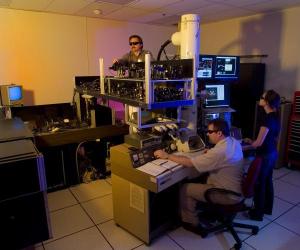
Making adjustments to the dynamic transmission electron 
microscope. From left: Curtis Brown, Thomas LaGrange and 
Judy Kim. (Credit: Image courtesy of DOE/Lawrence 
Livermore National Laboratory)

The findings point the way toward future work that could greatly improve catalyst efficiency in a variety of processes that are crucial to the world's energy security, such as petroleum catalysis and catalyst-based nanomaterial growth for next-generation rechargeable batteries. The work was performed in a collaborative effort by Lawrence Livermore National Laboratory and the University of California at Davis.

Using a new imaging technique on Lawrence Livermore's Dynamic Transmission Electron Microscope (DTEM), researchers have achieved unprecedented spatial and temporal resolution in single-shot images of nanoparticulate catalysts.

The DTEM uses a laser-driven photocathode to produce short pulses of electrons capable of recording electron micrographs with 15-nanosecond (one billionth of a second) exposure time. The recent addition of an annular dark field (ADF) aperture to the instrument has greatly improved its ability to time-resolve images of nanoparticles as small as 30 nanometers in diameter.

"Nanoparticles in this size range are of crucial importance to a wide variety of catalytic process of keen interest to energy and nanotechnology researchers," said UC Davis' Dan Masiel, formerly of LLNL and lead author of a paper appearing in the journal, ChemPhysChem. "Time-resolved imaging of such materials will allow for unprecedented insight into the dynamics of their behavior."

Previously, particles smaller than 50 nanometers could not be resolved in the 15-nanosecond exposure because of the limited signal and low contrast without ADF aperature. But by using DTEM's ADF, almost every 50-nanometer particle and many 30-nanometer ones became clearly visible because of the fast time resolution and high contrast.

"The stark difference between these two images clearly demonstrates the efficacy of annual dark field imaging when imaging samples with feature sizes near the resolution limit of DTEM," Masiel said.

The new technique makes it easier to discern significant features when compared to bright field pulsed imaging. It allows for vastly improved contrast for smaller particles, widening the range of catalyst systems that can be studied using DTEM.

DTEM can record images with six orders of magnitude higher temporal resolution than conventional TEM and can provide important insights into processes such as phase transformations, chemical reactions and nanowire and nanotube growth.

Co-authors include LLNL's Bryan Reed, Thomas LaGrange, Geoffrey Campbell, Ting Guo and Nigel Browning. The work was funded by the Department of Energy's Office of Science, Office of Basic Energy Sciences, Materials Sciences and Engineering Division.

The article appears in the May 27 online edition of ChemPhys Chem.
Enhanced by Zemanta

Wednesday, May 19, 2010

Software that Learns by Watching


KarDo learns how to perform common IT support tests by observing what the experts do.

Overworked and much in demand, IT support staff can't be in two places at once. But software designed to watch and learn as they carry out common tasks could soon help--by automatically performing the same jobs across different computers.
Me
Task manager: A screenshot 
shows KarDo performing administrative jobs 
via a graphical interface.
Credit: KarDo


The new software system, called KarDo, was developed by researchers at MIT. It can automatically configure an e-mail account, install a virus scanner, or set up access to a virtual private network, says MIT's Dina Katabi, an associate professor at MIT.

Crucially, the software just needs to watch an administrator perform this task once before being able to carry out the same job on computers running different software. Businesses spend billions of dollars each year on simple and repetitive IT tasks, according to reports from the analyst groups Forrester and Gartner. KarDo could reduce these costs by as much as 20 percent, Katabi says.

In some respects, KarDo resembles software that can be used to record macros--a set sequence of user actions on a computer. But KarDo attempts to learn the goal of each action in the sequence so it can be applied more generally later, says MIT post-graduate Hariharan Rahul, who codeveloped the system.

When IT staff want KarDo to learn a new task, they press a "start" button beforehand and a "stop" button afterwards. During a "learning phase," KarDo will attempt to map each of the actions performed in the graphical user interface, such as clicking on particular icons or buttons, with system-level actions, such as starting or closing a program, or opening a Web page. This allows a task to be applied across machines running different software, says Katabi. "I can go to my desktop, click on the Internet Explorer icon, go to a website, and then click on a particular link to download a file," she says. The same actions could then be applied by KarDo on a machine running a different Web browser like FireFox or Chrome. KarDo compares actions performed during the learning phase with a database of other tasks.

KarDo is able to reliably infer how to reproduce each of the subtasks after watching it being performed just once, says Rahul. For example, after watching an e-mail account being set up using Microsoft Outlook, it can do the same on other computers running different e-mail software. KarDo has been tested on hundreds of combinations of real tasks by IT staff at MIT and was found to get tasks right 82 percent of the time. When KarDo doesn't perform a task correctly, the results aren't serious, Katabi says.

The ultimate goal is for KarDo to intervene completely automatically, although this has not yet been tested. The idea is that when a user sends a request to the IT department , KarDo would perform the task automatically.

This sort of "programming by demonstration" is not a new idea, says Stephen Muggleton, an expert in machine learning at Imperial College London. But the approach has remained very much a research curiosity, he says. "An obvious concern from a user point of view will be the accuracy of the learned model," says Muggleton. Normally it takes relatively large amounts of data to generate error-free machine learning models, he notes.

"There's a great deal of promise in learning procedures and plans by watching," says Eric Horvitz of Microsoft Research in Redmond, WA. However, in general, this is very challenging to pull off. It is usually hard to do anything useful without constraining the nature of the task, says Horvitz.

KarDo was announced last week as the winner of the Web/IT track of MIT's $100K Entrepreneur Competition.

Monday, April 26, 2010

How We Can Sense Temperatures: Discovery Could Lead to Novel Therapies for Acute and Chronic Pain


Scientists at The Scripps Research Institute and the Genomics Institute of the Novartis Research Foundation (GNF) have shed new light on the molecular mechanism that enables us to sense temperature, such as the heat from a sizzling stove. In addition to contributing to our knowledge of basic biology, the findings could one day lead to new therapies for conditions such as acute or chronic inflammatory pain.
Me
New research sheds light on the molecular 
mechanism that enables us to sense temperature, 
such as the heat from a sizzling stove. The discovery 
could one day lead to new therapies for conditions 
such as acute or chronic inflammatory pain. 
(Credit: iStockphoto/Mark Evans)

The study, which was led by Scripps Research and GNF Professor Ardem Patapoutian, was published in an advance, online edition of the journal Nature Neuroscience on April 22, 2010.

To better understand temperature sensation, the team focused on a protein called TRPV1, which is a member of a small family of proteins known to enable temperature sensation, and is involved in inflammation and the communication of pain to the brain. After producing thousands of mutants of this protein, the scientists were able to identify a region of the protein that enabled temperature sensitivity and to detail some of the molecular mechanisms at work in the molecule.

"Ever since the discovery of these proteins, it has been an outstanding question how they can be activated by temperatures," said Research Associate Jörg Grandl, a member of the Patapoutian lab and first author of the paper. "The new study addresses this question."

"Because our ability to sense temperature is closely linked to our ability to sense pain, some of these ion channels are considered targets to treat chronic inflammatory and neuropathic pain indications," said Patapoutian. "Understanding these proteins could be crucial in designing future drugs that can either activate or block them."

Hot and Cold

Humans and other vertebrate animals use specialized sensory neurons to detect temperature, pressure, and other physical stimuli on the skin. These neurons are located in the spinal column and are connected to the skin and organs through long extensions known as axons.

On the surface of these axons are ion channel (pore-forming) proteins, which span the axon's membrane, connecting the inside with the outside. Some of these ion channels act like temperature receptors or "molecular thermometers" by opening and closing according to the temperature. At a particular temperature, the receptors open. This allows an influx of ions into the neuronal processes, and this electrical signal is relayed through the neuron to the brain.

The existence of specialized hot- and cold-neurons had been known for years, but the molecules that actually sense the temperatures and signal back to the neuron through the axon were a mystery. That changed in 1997 when a group cloned TRPV1, which is a type of transient receptor potential (TRP) channel. TRPV1, an ion channel, opens when it senses hot temperatures -- above 42° C (108° F).

That discovery opened the floodgates for identifying other temperature-detecting proteins. Within a few years, several laboratories -- including Patapoutian's -- had identified additional temperature-detecting proteins and confirmed that mammals used them to detect temperature.

But how the proteins achieved their temperature-sensing ability remained a mystery. While scientists in the field knew in much detail how ion channels were activated by chemicals or voltage signals, the molecular structures required for temperature activation remained unknown.

Two competing theories were advanced to explain the activation of ion channels in response to temperature. Drawing on the proteins' similarity to voltage-gated potassium channels, the first theory posited that TRP channels are generating temperature sensitivity because the energies required for voltage activation are very finely tuned. In contrast, the second theory proposed that these channels have a modular structure and therefore possess a specific domain that enables them to be activated by temperature -- and postulated the existence of a 'temperature-sensor domain'.

Point by Point
To gain insight into how these ion channels achieve their temperature sensitivity, in the new study the scientists conducted studies of TRPV1, which was not only the first TRP to be discovered but is also the best understood. A previous study in the lab had focused on a related, warm-activated ion channel, TPRV3, but since the biophysics of this molecule is complicated, the team was unable to tease apart its mechanisms.

Using mutagenesis techniques, for the new study the scientists first generated some 8,500 mutants of TRPV1. Then, working with the high throughput equipment available at GNF, the team performed an unbiased screen of these compounds to identify mutations of interest.

"We were looking for mutations in these proteins that would only change the temperature sensitivity of these channels, but would not affect any of the other activation mechanisms," said Grandl. "We were looking for single-point mutations [changes of a single amino acid] where the channel still functioned normally in response to capsacin (the active ingredient in chili peppers) or pH, but not to temperature."

Indeed, the team found a number of these mutations that affected the molecule's sensitivity to temperature, but not to other cues. Interestingly, the mutations were clustered in one area of the protein, the outer pore region, which provides further support to the existence of the predicted 'temperature-sensor domain'.

Next, with these mutant versions of TRPV1 in hand, the scientists examined what had changed in the molecule to disrupt temperature sensitivity.

In findings new to the field, the team discovered that TRPV1 has two ways of opening its channel -- for a brief time, opening for only for a millisecond before returning to its closed resting state, and for a relatively long time, opening for about 10 milliseconds. The team found that the mutations disrupting temperature sensitivity interfered with the long channel openings, but not the short ones.

"This study suggests a potential molecular mechanism that generates extreme temperature sensitivity from two mildly temperature sensitive steps," said Grandl. The team postulates that by stabilizing the open state, the pore domain contributes to thermosensitivity of TRPV1. "We now have a novel working model of how Nature could have evolved such exquisite temperature sensitivity, a hypothesis that can be tested in future work."

In addition to Grandl and Patapoutian, the paper was authored by Sung Eun Kim and Valerie Uzzell of Scripps Research, and Badry Bursulaya, Matt Petrus, and Michael Bandell of the Genomics Institute of the Novartis Research Foundation.

The research was supported by the U.S. National Institutes of Health, the Novartis Research Foundation, and fellowships to Grandl from the American Heart Association and the U.S. National Institutes of Health.

Tuesday, February 2, 2010

Gene Function Discovery: Guilt by Association


Scientists have created a new computational model that can be used to predict gene function of uncharacterized plant genes with unprecedented speed and accuracy. The network, dubbed AraNet, has over 19,600 genes associated to each other by over 1 million links and can increase the discovery rate of new genes affiliated with a given trait tenfold. It is a huge boost to fundamental plant biology and agricultural research.


Each line of this AraNet network represents a functional link between two genes. The colors indicate the strength of the link using a red-blue heat map scheme.The image includes about 100,000 functional links made among about 10,000 Arabidopsis genes. (Credit: Image courtesy Sue Rhee)

Despite immense progress in functional characterization of plant genomes, over 30% of the 30,000 Arabidopsis genes have not been functionally characterized yet. Another third has little evidence regarding their role in the plant.

Thursday, September 3, 2009

Tumors Feel The Deadly Sting Of Nanobees


When bees sting, they pump poison into their victims. Now the toxin in bee venom has been harnessed to kill tumor cells by researchers at Washington University School of Medicine in St. Louis. The researchers attached the major component of bee venom to nano-sized spheres that they call nanobees.


Bee on a finger. Researchers have recently harnessed the toxin in bee venom
to kill tumor cells. (Credit: iStockphoto/Tatiana Buzuleac)

In mice, nanobees delivered the bee toxin melittin to tumors while protecting other tissues from the toxin's destructive power. The mice's tumors stopped growing or shrank. The nanobees' effectiveness against cancer in the mice is reported in advance online publication Aug. 10 in the Journal of Clinical Investigation.


"The nanobees fly in, land on the surface of cells and deposit their cargo of melittin which rapidly merges with the target cells," says co-author Samuel Wickline, M.D., who heads the Siteman Center of Cancer Nanotechnology Excellence at Washington University. "We've shown that the bee toxin gets taken into the cells where it pokes holes in their internal structures."


Melittin is a small protein, or peptide, that is strongly attracted to cell membranes, where it can form pores that break up cells and kill them.


"Melittin has been of interest to researchers because in high enough concentration it can destroy any cell it comes into contact with, making it an effective antibacterial and antifungal agent and potentially an anticancer agent," says co-author Paul Schlesinger, M.D., Ph.D., associate professor of cell biology and physiology. "Cancer cells can adapt and develop resistance to many anticancer agents that alter gene function or target a cell's DNA, but it's hard for cells to find a way around the mechanism that melittin uses to kill."


The scientists tested nanobees in two kinds of mice with cancerous tumors. One mouse breed was implanted with human breast cancer cells and the other with melanoma tumors. After four to five injections of the melittin-carrying nanoparticles over several days, growth of the mice's breast cancer tumors slowed by nearly 25 percent, and the size of the mice's melanoma tumors decreased by 88 percent compared to untreated tumors.


The researchers indicate that the nanobees gathered in these solid tumors because tumors often have leaky blood vessels and tend to retain material. Scientists call this the enhanced permeability and retention effect of tumors, and it explains how certain drugs concentrate in tumor tissue much more than they do in normal tissues.


But the researchers also developed a more specific method for making sure nanobees go to tumors and not healthy tissue by loading the nanobees with additional components. When they added a targeting agent that was attracted to growing blood vessels around tumors, the nanobees were guided to precancerous skin lesions that were rapidly increasing their blood supply. Injections of targeted nanobees reduced the extent of proliferation of precancerous skin cells in the mice by 80 percent.


Overall, the results suggest that nanobees could not only lessen the growth and size of established cancerous tumors but also act at early stages to prevent cancer from developing.


"Nanobees are an effective way to package the useful, but potentially deadly, melittin, sequestering it so that it neither harms normal cells nor gets degraded before it reaches its target," Schlesinger says.


If a significant amount of melittin were injected directly into the bloodstream, widespread destruction of red blood cells would result. The researchers showed that nanoparticles protected the mice's red cells and other tissues from the toxic effects of melittin. Nanobees injected into the bloodstream did not harm the mice. They had normal blood counts, and tests for the presence of blood-borne enzymes indicative of organ damage were negative.


When secured to the nanobees, melittin is safe from protein-destroying enzymes that the body produces. Although unattached melittin was cleared from the mice's circulation within minutes, half of the melittin on nanobees was still circulating 200 minutes later. Schlesinger indicates that is long enough for the nanobees to circulate through the mice's bloodstream 200 times, giving them ample time to locate tumors.


"Melittin is a workhorse," says Wickline, also professor of medicine in the Cardiovascular Division and professor of physics, of biomedical engineering and of cell biology and physiology. "It's very stable on the nanoparticles, and it's easily and cheaply produced. We are now using a nontoxic part of the melittin molecule to hook other drugs, targeting agents or imaging compounds onto nanoparticles."


The core of the nanobees is composed of perfluorocarbon, an inert compound used in artificial blood. The research group developed perfluorocarbon nanoparticles several years ago and have been studying their use in various medical applications, including diagnosis and treatment of atherosclerosis and cancer. About six millionths of an inch in diameter, the nanoparticles are large enough to carry thousands of active compounds, yet small enough to pass readily through the bloodstream and to attach to cell membranes.


"We can add melittin to our nanoparticles after they are built," Wickline says. "If we've already developed nanoparticles as carriers and given them a targeting agent, we can then add a variety of components using native melittin or melittin-like proteins without needing to rebuild the carrier. Melittin fortunately goes onto the nanoparticles very quickly and completely and remains on the nanobee until cell contact is made."


The flexibility of nanobees and other nanoparticles made by the group suggests they could be readily adapted to fit medical situations as needed. The ability to attach imaging agents to nanoparticles means that the nanoparticles can give a visible indication of how much medication gets to tumors and how tumors respond.


"Potentially, these could be formulated for a particular patient," Schlesinger says. "We are learning more and more about tumor biology, and that knowledge could soon allow us to create nanoparticles targeted for specific tumors using the nanobee approach."


Funding from the National Institutes of Health and the American Heart Association supported this research.


If you like this post, buy me a Pittza at $1!
Reblog this post [with Zemanta]

Friday, July 24, 2009

Nanotubes Weigh A Single Atom


How can you weigh a single atom? European researchers have built an exquisite new device that can do just that. It may ultimately allow scientists to study the progress of chemical reactions, molecule by molecule.

A diagram (above) and real-life image (inset) of a carbon nanotube.
(Credit: CARDEQ Project (www.cardeq.eu)


Carbon nanotubes are ultra-thin fibres of carbon and a nanotechnologist’s dream.


They are made from thin sheets of carbon only one atom thick – known as graphene – rolled into a tube only a few nanometres across. Even the thickest is more than a thousand times thinner than a human hair.


Interest in carbon nanotubes blossomed in the 1990s when they were found to possess impressive characteristics that make them very attractive raw materials for nanotechnology of all kinds.


“They have unique properties,” explains Professor Pertti Hakonen of Helsinki University of Technology. “They are about 1000 times stronger than steel and very good thermal conductors and good electrical conductors.”


Hakonen is coordinator of the EU-funded CARDEQ project (http://www.cardeq.eu/) which is exploiting these intriguing materials to build a device sensitive enough to measure the masses of atoms and molecules.


Vibrating strings


A carbon nanotube is essentially an extremely thin, but stiff, piece of string and, like other strings, it can vibrate. As all guitar players know, heavy strings vibrate more slowly than lighter strings, so if a suspended carbon nanotube is allowed to vibrate at its natural frequency, that frequency will fall if atoms or molecules become attached to it.


It sounds simple and the idea is not new. What is new is the delicate sensing system needed to detect the vibration and measure its frequency. Some nanotubes turn out to be semiconductors, depending on how the graphene sheet is wound, and it is these that offer the solution that CARDEQ has developed.


Members of the consortium have taken the approach of building a semiconducting nanotube into a transistor so that the vibration modulates the current passing through it. “The suspended nanotube is, at the same time, the vibrating element and the readout element of the transistor,” Hakonen explains.


“The idea was to run three different detector plans in parallel and then select the best one,” he says. “Now we are down to two. So we have the single electron transfer concept, which is more sensitive, and the field effect transistor concept, which is faster.”


Single atoms


Last November, CARDEQ partners in Barcelona reported that they had sensed the mass of single chromium atoms deposited on a nanotube. But Hakonen says that even smaller atoms, of argon, can now be detected, though the device is not yet stable enough for such sensitivity to be routine. “When the device is operating well, we can see a single argon atom on short time scales. But then if you measure too long the noise becomes large.”


CARDEQ is not alone in employing carbon nanotubes as mass sensors. Similar work is going on at two centres in California – Berkeley and Caltech – though each has adopted a different method to measuring the mass.


All three groups have announced they can perform mass detection on the atomic level using nanotubes, but CARDEQ researchers provided the most convincing data with a clear shift in the resonance frequency.


But a single atom is nowhere near the limit of what is possible. Hakonen is confident they can push the technology to detect the mass of a single nucleon – a proton or neutron.


“It’s a big difference,” he admits, “but typically the improvements in these devices are jump-like. It’s not like developing some well-known device where we have only small improvements from time to time. This is really front-line work and breakthroughs do occur occasionally.”


Biological molecules


If the resolution can be pared down to a single nucleon, then researchers can look forward to accurately weighing different types of molecules and atoms in real time.


It may then become possible to observe the radioactive decay of a single nucleus and to study other types of quantum mechanical phenomena.


But the real excitement would be in tracking chemical and biological reactions involving individual atoms and molecules reacting right there on the vibrating nanotube. That could have applications in molecular biology, allowing scientists to study the basic processes of life in unprecedented detail. Such practical applications are probably ten years away, Hakonen estimates.


“It will depend very much on how the technology for processing carbon nanotubes develops. I cannot predict what will happen, but I think chemical reactions in various systems, such as proteins and so on, will be the main applications in the future.”


The CARDEQ project received funding from the FET-Open strand of the EU’s Sixth Framework Programme for ICT research.


If you like this post, buy me a beer at $3!
Reblog this post [with Zemanta]

Sunday, April 12, 2009

Sleep: Spring Cleaning For The Brain?


On the left, the brain of the well-rested blue fly has low levels of a synaptic protein called BRP in this 3D view from a confocal mircoscope. On the right, the brain of the sleep-deprived fly glows orange in areas of BRP concentration. (Bruchpilot or BRP is a protein involved in communication between neurons.)In the tired fly, the protein is present at high concentartions in three major areas of the fly's brain that are associated with learning. Sleep reduces the levels of this protein, an indication that synapses get smaller and/or weaker. This process of "downscaling" may be important so the brain is reset to normal levels of synaptic activity and can begin learning again the next day. (Credit: Courtesy of UW Health Public Affairs)

If you've ever been sleep-deprived, you know the feeling that your brain is full of wool.


Now, a study published in the April 3 edition of the journal Science has molecular and structural evidence of that woolly feeling — proteins that build up in the brains of sleep-deprived fruit flies and drop to lower levels in the brains of the well-rested. The proteins are located in the synapses, those specialized parts of neurons that allow brain cells to communicate with other neurons.


Sleep researchers at the University of Wisconsin-Madison School of Medicine and Public Health believe it is more evidence for their theory of "synaptic homeostasis." This is the idea that synapses grow stronger when we're awake as we learn and adapt to an ever-changing the environment, that sleep refreshes the brain by bringing synapses back to a lower level of strength. This is important because larger synapses consume a lot of energy, occupy more space and require more supplies, including the proteins examined in this study.


Sleep — by allowing synaptic downscaling — saves energy, space and material, and clears away unnecessary "noise" from the previous day, the researchers believe. The fresh brain is then ready to learn again in the morning.


The researchers — Giorgio Gilestro, Giulio Tononi and Chiara Cirelli, of the Center for Sleep and Consciousness — found that levels of proteins that carry messages in the synapses (or junctions) between neurons drop by 30 to 40 percent during sleep.


In the Science paper, three-dimensional photos using confocal microscopy show the brains of sleep-deprived flies filled with a synaptic protein called Bruchpilot (BRP), a component of the machinery that allows communication among neurons. In well-rested flies, levels of BRP and four other synaptic proteins drop back to low levels, providing evidence that sleep resets the brain to allow more growth and learning the next day.


"We know that sleep is necessary for our brain to function properly, to learn new things every day, and also, in some cases, to consolidate the memory of what we learned during the day," says Cirelli, associate professor of psychiatry. "During sleep, we think that most, if not all, synapses are downscaled: at the end of sleep, the strongest synapses shrink, while the weakest synapses may even disappear."


The confocal microscope views show this happening in all three major areas of the fruit-fly brain, which are known to be very plastic (involved in learning).


In a paper published last year, Tononi, Cirelli and their co-investigators found similar chemical changes in the synapses of rats' brains. They also showed that rats' brains have a stronger "evoked response" to electrical stimulation after being awake, and a weaker one after sleep. That finding provided more evidence, using electrophysiological rather than molecular techniques, consistent with the idea that synapses grow stronger during the day, then weaker during sleep.


Because sleep performs the same function in the brains of species as diverse as fruit flies and rats, Cirelli says it was likely conserved by evolution because it is so important to an animal's health and survival.


The Wisconsin laboratory has pioneered ways of studying sleep in different species, including fruit flies.


To keep the flies awake, they're put into a "fly agitator" that holds 10 plates, each containing 32 drowsy flies. A robot arm shakes the plates occasionally to keep the flies from dozing.


Flies were deprived of sleep for as long as 24 hours. Researchers then dissected their brains and measured the levels of four pre-synaptic proteins and one post-synaptic protein. All levels rose progressively during periods of wakefulness and fell after sleep. Other experiments confirmed that the changes in protein levels were not caused by exposure to light and darkness or by the stimulation itself, but by sleep and waking. They also used confocal microscopy and an antibody that specifically recognizes BRP to measure the expression of this protein in many fly-brain areas.


Higher levels of these synaptic proteins during waking may be evidence of random experiences that fill the brain every day and need to be dissipated to make room for the learning and memories that are truly significant.


"Much of what we learn in a day, we don't really need to remember," Cirelli says. "If you've used up all the space, you can't learn more before you clean out the junk that is filling up your brain."

==================================================================

Journal reference:

  1. Giorgio F. Gilestro, Giulio Tononi, and Chiara Cirelli. Widespread Changes in Synaptic Markers as a Function of Sleep and Wakefulness in Drosophila. Science, 2009; 324 (5923): 109 DOI: 10.1126/science.1166673
Adapted from materials provided by University of Wisconsin-Madison.


If you like this post, buy me a beer at $3!
Reblog this post [with Zemanta]

Sunday, March 8, 2009

Soon, a portable unit of surgical robots to replace army medics on battlefields


The Trauma Pod unit in action

Researchers in the US are working on a project that could replace army medics on a battlefield with robotic surgeons and nurses in the next 10 years.

The ‘Trauma Pod’ – being developed by US’ Defence Advanced Research Projects Agency (DARPA) - is currently undergoing trials.

Brendan Visser, a surgeon at Stanford University in California who helped develop the Trauma Pod, described it as: “Three separate robots dance over the top of the patient with their powerful arms moving very quickly, yet they don’t crash and they’re able to deliver very small items from one arm to another.”

The purpose of the Trauma Pod is to provide a quick “temporary fix” to wounded soldiers before being taken to the hospital.

“The system will focus on damage control surgery, which is the minimum necessary to stabilise someone. It could provide airway control, relieve life-threatening injuries such as a collapsed lung, or stop bleeding temporarily,” Pablo Garcia – of non-profit lab SRI International, which leads the project – told New Scientist magazine.

HOW IT WORKS

The Trauma Pod unit comprises one three-armed surgeon robot, assisted by 12 other robotic systems.

Remotely controlled by a human, the surgeon bot communicates with and instructs the other robots. One of its three arms holds an endoscope to allow the human controller to see inside the patient, while the other two grip surgical tools.

Garcia added that the robot could be allowed to carry out some simple tasks without human help, such as placing stitches or tying knots.

The bed itself monitors vital signs, administers fluids and oxygen, and may eventually administer anaesthesia.

A voice-activated robotic arm “Hot Lips” - derived from the nickname of a nurse in the TV series M*A*S*H - passes fresh tools and supplies to the surgeon bot. A third “circulating nurse” robot gives out the right tools.

The Trauma Pod unit recently passed the first phase of a feasibility trial, where robots treated a mannequin with bullet injuries by inserting a plastic tube into a damaged blood vessel and operating to close a perforated bowel.

The team hopes to eventually shrink the Trauma Pod to a collapsible unit encased in a portable shell that can be carried on the back of a vehicle.
Zemanta Pixie

Saturday, March 7, 2009

Turning chickens into dinosaurs!


Palaeontologist Jack Horner is working on a project to create a ‘chickenosaur’ or a ‘dinochicken’, wherein scientists will reverse engineer certain genes in chickens, which have previously been found reported to be direct descendants of dinos

In an awe-inspiring new experiment, US palaeontologists are attempting “reverse evolution”, in which they would try to recreate a dinosaur by starting with a chicken embryo and then working backward to engineer a new “chickenosaurus” or “dinochicken”.

According to a report in Discovery News, such “reverse evolution” has been successfully performed in mice and flies, but those studies focused on re-introducing just a few bygone traits.

The dinochicken project, instead, aims to bring back multiple dinosaur characteristics – such as a tail, teeth and forearms – by changing the levels of regulatory proteins that have evolved to suppress these characteristics in birds.

“Birds are dinosaurs, so technically we’re making a dinosaur out of a dinosaur,” said palaeontologist and project leader Jack Horner of the Montana State University.

“The only reason we’re using chickens instead of some other bird is that the chicken genome has been mapped, and chickens have already been exhaustively studied,” he added.

Although the plan seems more like out of the movie Jurassic Park, Horner assured it is real and is already underway.

“A number of people in a number of different places are moving forward with the project slowly and carefully,” he said.

One such researcher is Hans Laarson of McGill University in Canada, who is now analysing the genes involved in tail development and researching ways of manipulating chicken embryos in order to “awaken the dinosaur within”.

“There is a lot of information stored in our genes that we don’t use – genes that determine features that evolution has suppressed, for various reasons,” said Kevin Padian, a professor of integrative biology at the University of California, Berkeley and a curator at the UC Museum of Paleontology.

“We now have the tools to ‘reverse-engineer’ some of those constraints and produce traits that look a bit more like those ancient features,” he added. “This tells us how genetics, development and evolution are related, so it’s tremendously important.”

NOTHING TO WORRY ABOUT

According to Horner, there is no danger of the proposed dinochicken escaping and populating the world with dinosaurs, since only the chicken’s development - and not its genome - would have been affected.

So even if it did somehow escape and could mate, the result would just be a regular chicken, the palaeontologist said.

In any case, if a chicken embryo does not grow properly in the lab, or if it could not survive comfortably, then “we would never let it hatch”, Horner said.

When and if the chickenosaurus is created, he looks forward to bringing it out on a leash during lectures: “We’re always looking for novel ways to get the general public interested in science, and you have to admit, it would be better than a slide show for demonstrating evolution!”
Reblog this post [with Zemanta]

Astronaut to try flying carpet in space!


Koichi WakataImage via Wikipedia

Astronaut Koichi Wakata gestures after a check-up at NASA

A Japanese astronaut going to space this month will try to fly on a carpet, use eyedrops in zero gravity and meet a series of other off-beat challenges, a space agency official said on Thursday.

Koichi Wakata will perform 16 tasks chosen from 1,597 suggested by hundreds of people, from nursery school pupils to a 90-year-old man, the Japan Aerospace Exploration Agency (JAXA) official said.

Wakata will try “a magic carpet that floats in the air” after reaching the Japanese laboratory Kibo at the International Space Station (ISS) later in March for a stay of more than three months.

He will also attempt to fold clothes, do push-ups and backflips, arm-wrestle another astronaut and “shoot liquid out of the straw of a drink container

MTSAT-1Image via Wikipedia

to see what happens”, the space agency said.

In another initiative, JAXA has invited companies to rent an astronaut by the hour in the ISS space lab to perform desired tasks, which could include advertisements or science experiments.

The hourly charge for an astronaut is 5.5 million yen (Rs 29 lakh approx) - plus an extra fee of 3.3 million yen (Rs 17 lakh approx) per kilogramme to transport any required items into space.
Reblog this post [with Zemanta]