BTemplates.com

Powered by Blogger.

Pageviews past week

Quantum mechanics

Auto News

artificial intelligence

About Me

Recommend us on Google!

Information Technology

Popular Posts

Showing posts with label Science. Show all posts

Monday, April 3, 2023

Artificial Brain: The Future of Intelligence?


The future of artificial brains is uncertain. It is possible that artificial brains could one day become as intelligent as humans, or even surpass human intelligence. If this happens, it would have a profound impact on society. Artificial brains could be used to solve some of the world's most pressing problems, such as climate change and poverty. However, they could also be used for malicious purposes, such as developing autonomous weapons.

Artificial intelligence (AI) is rapidly evolving, and with it, the possibility of creating artificial brains. While this may seem like something out of a science fiction movie, it is actually a very real possibility. In fact, researchers at Indiana University (IU) are already working on developing artificial brains that could one day rival the capabilities of the human brain.

The IU team is led by Professor of Computer Science David B. Hardcastle, who is an expert in artificial intelligence and machine learning. Hardcastle and his team are working on developing artificial brains that can learn and adapt in the same way that human brains do. They believe that this type of artificial intelligence could have a profound impact on many different areas of our lives, from healthcare to education to transportation.

One of the main goals of the IU team is to develop artificial brains that can be used to improve healthcare. They believe that artificial brains could be used to diagnose diseases, develop new treatments, and even provide personalized care to patients. For example, artificial brains could be used to analyze medical images and identify potential problems that human doctors might miss. They could also be used to develop new drugs and treatments that are tailored to the specific needs of each patient.

The IU team is also working on developing artificial brains that can be used to improve education. They believe that artificial brains could be used to create personalized learning experiences for students. For example, artificial brains could be used to identify each student's strengths and weaknesses and then provide them with the appropriate level of challenge. They could also be used to provide feedback to students in a way that is both timely and helpful.

In addition to healthcare and education, the IU team is also working on developing artificial brains that can be used to improve transportation. They believe that artificial brains could be used to develop self-driving cars and other autonomous vehicles. For example, artificial brains could be used to navigate complex traffic conditions and avoid accidents. They could also be used to provide passengers with a more comfortable and enjoyable travel experience.

The work being done by the IU team is just one example of the many ways that artificial intelligence is being used to develop new technologies. Artificial intelligence has the potential to revolutionize many different areas of our lives, and the IU team is at the forefront of this research. It will be interesting to see what the future holds for artificial intelligence and artificial brains.

The Benefits of Artificial Brains

Artificial brains could have a number of benefits, including:

  • Improved healthcare: Artificial brains could be used to diagnose diseases, develop new treatments, and even provide personalized care to patients.
  • Improved education: Artificial brains could be used to create personalized learning experiences for students.
  • Improved transportation: Artificial brains could be used to develop self-driving cars and other autonomous vehicles.
  • Increased productivity: Artificial brains could be used to automate tasks and increase productivity in a variety of industries.
  • Enhanced creativity: Artificial brains could be used to generate new ideas and solve problems in innovative ways.

The Challenges of Artificial Brains

While there are many potential benefits to artificial brains, there are also a number of challenges that need to be addressed. These challenges include:

  • Safety: Artificial brains need to be designed in a way that ensures they are safe and do not pose a threat to humans.
  • Ethics: The development of artificial brains raises a number of ethical concerns, such as the potential for job displacement and the impact on human autonomy.
  • Control: It is important to ensure that artificial brains are under human control and do not become uncontrollable.
  • Bias: Artificial brains are trained on data, and if that data is biased, the artificial brain will also be biased. This is a major challenge that needs to be addressed in order to ensure that artificial brains are fair and unbiased.

The Future of Artificial Brains

The future of artificial brains is uncertain. It is possible that artificial brains could one day become as intelligent as humans, or even surpass human intelligence. If this happens, it would have a profound impact on society. Artificial brains could be used to solve some of the world's most pressing problems, such as climate change and poverty. However, they could also be used for malicious purposes, such as developing autonomous weapons.

It is important to start thinking about the implications of artificial brains now, so that we can be prepared for whatever the future holds.

Tuesday, February 14, 2023

EctoLife: World's First Artificial Womb Facility Can Grow 30,000 Babies a Year Based on Groundbreaking Research.


In a groundbreaking move, scientists have announced the opening of the world's first artificial womb facility - EctoLife. This facility has the potential to grow up to 30,000 babies every year and is based on over 50 years of cutting-edge scientific research from across the globe.

Artificial wombs have been a subject of fascination and research for decades, and this development marks a significant milestone in reproductive science. These womb-like devices provide a nurturing environment for developing embryos, giving them the support and resources they need to grow and thrive.

EctoLife is a highly advanced facility that has been designed to simulate the natural environment of a womb. It is equipped with state-of-the-art technology that can monitor and adjust the conditions inside the womb to ensure optimal growth and development of the fetus.

One of the biggest benefits of artificial wombs is that they can potentially provide a safer and more controlled environment for gestating embryos. In traditional pregnancies, a range of factors can impact the health and wellbeing of the fetus, including infections, lifestyle choices, and other environmental factors. In an artificial womb, many of these risks can be mitigated or eliminated entirely, resulting in a safer and healthier pregnancy.

Moreover, this technology has the potential to revolutionize fertility treatment and help couples struggling with infertility. Currently, many couples have to undergo invasive and expensive treatments like IVF to conceive a child. With the advent of artificial wombs, it may become possible to grow embryos outside the body, eliminating the need for these invasive procedures.

Of course, the use of artificial wombs is not without controversy. Critics argue that this technology could lead to a devaluation of traditional pregnancies and further separate humans from the natural world. There are also concerns about the ethical implications of creating and disposing of large numbers of embryos in a lab setting.

Despite these concerns, it's clear that artificial womb technology has the potential to bring about significant advancements in reproductive science. EctoLife represents a huge step forward in this field, and it will be fascinating to see how this technology evolves in the years to come.

Sunday, November 26, 2017

High-speed encryption to secure future internet


In a bid to fight against the future cyber threats, scientists have developed a new system with high-speed encryption properties that drives quantum computers to create theoretically hack-proof forms of data encryption. The novel system is capable of creating and distributing encryption codes at megabit-per-second rates, which is five to 10 times faster than existing methods and on par with current internet speeds when running several systems in parallel. The technique is secure from common attacks, even in the face of equipment flaws that could open up leaks.

"We are now likely to have a functioning quantum computer that might be able to start breaking the existing cryptographic codes in the near future," said Daniel Gauthier, Professor at The Ohio State University. "We really need to be thinking hard now of different techniques that we could use for trying to secure the internet," Gauthier added, in the paper appearing in the journal Science Advances. For the new system to work, both the hacker as well as the sender must have access to the same key, and it must be kept secret. The novel system uses a weakened laser to encode information or transmit keys on individual photons of light, but also packs more information onto each photon, making the technique faster. By adjusting the time at which the photon is released, and a property of the photon called the phase, the new system can encode two bits of information per photon instead of one.

This trick, paired with high-speed detectors powers the system to transmit keys five to 10 times faster than other methods. "It was changing these additional properties of the photon that allowed us to almost double the secure key rate that we were able to obtain if we hadn't done that," Gauthier said.

Saturday, May 31, 2014

20 Things You Didn't Know About... Time


The beginning, the end, and the funny habits of our favorite ticking force.

 “Time is an illusion. Lunchtime doubly so,” joked Douglas Adams in The Hitchhiker’s Guide to the Galaxy. Scientists aren’t laughing, though. Some speculative new physics theories suggest that time emerges from a more fundamental—and timeless—reality.
 Try explaining that when you get to work late. The average U.S. city commuter loses 38 hours a year to traffic delays.
 Wonder why you have to set your clock ahead in March?Daylight Saving Time began as a joke by Benjamin Franklin, who proposed waking people earlier on bright summer mornings so they might work more during the day and thus save candles. It was introduced in the U.K. in 1917 and then spread around the world.
4  Green days. The Department of Energy estimates that electricity demand drops by 0.5 percent during Daylight Saving Time, saving the equivalent of nearly 3 million barrels of oil.
5  By observing how quickly bank tellers made change, pedestrians walked, and postal clerks spoke, psychologists determined that the three fastest-paced U.S. cities are Boston, Buffalo, and New York.
 The three slowest? Shreveport, Sacramento, and L.A.
 One second used to be defined as 1/86,400 the length of a day. However, Earth’s rotation isn’t perfectly reliable. Tidal friction from the sun and moon slows our planet and increases the length of a day by 3 milli­seconds per century.
8  This means that in the time of the dinosaurs, the day was just 23 hours long.
9  Weather also changes the day. During El Niño events, strong winds can slow Earth’s rotation by a fraction of a milli­second every 24 hours.
10  Modern technology can do better. In 1972 a network of atomic clocks in more than 50 countries was made the final authority on time, so accurate that it takes 31.7 million years to lose about one second.
11  To keep this time in sync with Earth’s slowing rotation, a “leap second” must be added every few years, most recently this past New Year’s Eve.
12  The world’s most accurate clock, at the National Institute of Standards and Technology in Colorado, measures vibrations of a single atom of mercury. In a billion years it will not lose one second.
13  Until the 1800s, every village lived in its own little time zone, with clocks synchronized to the local solar noon.
14  This caused havoc with the advent of trains and timetables. For a while watches were made that could tell both local time and “railway time.”
15  On November 18, 1883, American railway companies forced the national adoption of standardized time zones.
16  Thinking about how railway time required clocks in different places to be synchronized may have inspired Einstein to develop his theory of relativity, which unifies space and time.
17  Einstein showed that gravity makes time run more slowly. Thus airplane passengers, flying where Earth’s pull is weaker, age a few extra nano­seconds each flight.
18  According to quantum theory, the shortest moment of time that can exist is known as Planck time, or 0.0000000000000000000000000000000000000000001 second.
19  Time has not been around forever. Most scientists believe it was created along with the rest of the universe in the Big Bang, 13.7 billion years ago.
20  There may be an end of time. Three Spanish scientists posit that the observed acceleration of the expanding cosmos is an illusion caused by the slowing of time. According to their math, time may eventually stop, at which point everything will come to a standstill.

Sunday, April 20, 2014

Sugar-powered biobattery has 10 times the energy storage of lithium: Your smartphone might soon run on enzymes


As you probably know, from sucking down cans of Coke and masticating on candy, sugar — glucose, fructose, sucrose, dextrose — is an excellent source of energy. Biologically speaking, sugar molecules are energy-dense, easy to transport, and cheap to digest. There is a reason why almost every living cell on Earth generates its energy (ATP) from glucose. Now, researchers at Virginia Tech have successfully created a sugar-powered fuel cell that has an energy storage density of 596 amp-hours per kilo — or “one order of magnitude” higher than lithium-ion batteries. This fuel cell is refillable with a solution of maltodextrin, and its only by products are electricity and water. The chief researcher, Y.H. Percival Zhang, says the tech could be commercialized in as soon as three years.


Now, it’s not exactly news that sugar is an excellent energy source. As a culture we’ve probably known about it since before we were Homo sapiens. The problem is, unless you’re a living organism or some kind of incendiary device, extracting that energy is difficult. In nature, an enzymatic pathway is used — a production line of tailor-made enzymes that meddle with the glucose molecules until they become ATP. Because it’s easy enough to produce enzymes in large quantities, researchers have tried to create fuel cells that use artificial “metabolism” to break down glucose into electricity (biobatteries), but it has historically proven very hard to find the right pathway for maximum efficiency and to keep the enzymes in the right place over a long period of time.


A diagram of the enzymatic fuel cell. The little Pac-Man things are enzymes.
Now, however, Zhang and friends at Virginia Tech appear to have built a high-density fuel cell that uses an enzymatic pathway to create a lot of electricity from glucose. There doesn’t seem to be much information on how stable this biobattery is over multiple refills, but if Zhang thinks it could be commercialized in three years, that’s a very good sign. Curiously, the research paper says that the enzymes are non-immobilized — meaning Zhang found a certain battery chemistry that doesn’t require the enzymes to be kept in place… or, alternatively, that it will only work for a very short time.

The Virginia Tech biobattery uses 13 enzymes, plus air (it’s an air-breathing biobattery), to produce nearly 24 electrons from a single glucose unit. This equates to a power output of 0.8 mW/cm, current density of 6 mA/cm, and energy storage density of 596 Ah/kg. This last figure is impressive, at roughly 10 times the energy density of the lithium-ion batteries in your mobile devices. [Research paper: doi:10.1038/ncomms4026 - "A high-energy-density sugar biobattery based on a synthetic enzymatic pathway"]

If Zhang’s biobatteries pan out, you might soon be recharging your smartphone by pouring in a solution of 15% maltodextrin. That battery would not only be very safe (it produces water and electricity), but very cheap to run and very green. This seems to fit in perfectly with Zhang’s homepage, which talks about how his main goals in life are replacing crude oil with sugar, and feeding the world.

The other area in which biobatteries might be useful is powering implanted devices, such as pacemakers — or, in the future, subcutaneous sensors and computers. Such a biobattery could feed on the glucose in your bloodstream, providing an endless supply of safe electricity for the myriad implants that futuristic technocrats will surely have.
 

Friday, July 5, 2013

For better batteries, just add water


A new type of lithium-ion battery that uses aqueous iodide ions in an aqueous cathode configuration provides twice the energy density of conventional lithium-ion batteries.

A new type of lithium-ion battery that uses aqueous iodide ions
in an aqueous cathode configuration provides twice the energy
density of conventional lithium-ion batteries.
Lithium-ion batteries are now found everywhere in devices such as cellular phones and laptop computers, where they perform well. In automotive applications, however, engineers face the challenge of squeezing enough lithium-ion batteries onto a vehicle to provide the desired power and range without introducing storage and weight issues. Hye Ryung Byon, Yu Zhao and Lina Wang from the RIKEN Byon Initiative Research Unit have now developed a lithium-iodine battery system with twice the energy density of conventional lithium-ion batteries.

Byon's team is involved in alternative energy research and, specifically, improving the performance of lithium-based battery technologies. In their research they turned to an 'aqueous' system in which the organic electrolyte in conventional lithium-ion cells is replaced with water. Such aqueous lithium battery technologies have gained attention among alternative energy researchers because of their greatly reduced fire risk and environmental hazard. Aqueous solutions also have other advantages, which include an inherently high ionic conductivity.

For their battery system, the researchers investigated an 'aqueous cathode' configuration (Fig. 1), which accelerates reduction and oxidation reactions to improve battery performance. Finding suitable reagents for the aqueous cathode, however, proved to be a tricky proposition. According to Byon, water solubility is the most important criterion for screening new materials, since this parameter determines the battery's energy density. Furthermore, the redox reaction has to take place in a restricted voltage range in order to avoid water electrolysis. An extensive search led the researchers to produce the first-ever lithium battery involving aqueous iodine—an element with high water solubility and a pair of ions, known as the triiodide/iodide redox couple, that readily undergo aqueous electrochemical reactions.

The team constructed a prototype aqueous cathode device and found the energy density to be nearly double that of a conventional lithium-ion battery, thanks to the high solubility of the triiodide/iodide ions. Their battery had high and near-ideal power storage capacities and could be successfully recharged hundreds of times, avoiding a problem that plagues other alternative high-energy-density lithium-ion batteries. Microscopy analysis revealed that the cathode collector remained untouched after 100 charge/discharge cycles with no observable corrosion or precipitate formation.

Byon and colleagues now plan to develop a three-dimensional, microstructured current collector that could enhance the diffusion-controlled triiodide/iodide process and accelerate charge and discharge. They are also seeking to raise energy densities even further by using a flowing-electrode configuration that stores aqueous 'fuel' in an external reservoir—a modification that should make this low-cost, heavy metal-free design more amenable to electric vehicle specifications.

More information: 1.Zhao, Y., Wang, L. & Byon, H. R. High-performance rechargeable lithium-iodine batteries using triiodide/iodide redox couples in an aqueous cathode. Nature Communications 4, 1896 (2013). dx.doi.org/10.1038/ncomms2907

Monday, June 24, 2013

Consider a Text for Teen Suicide Prevention and Intervention, Research Suggests


Adolescents Commonly Use Social Media to Reach Out When They are Depressed

"Obviously this is a place where adolescents are expressing their feelings. It leads me to believe that we need to think about using social media as an intervention and as a way to connect with people."

Teens and young adults are making use of social networking sites and mobile technology to express suicidal thoughts and intentions as well as to reach out for help, two studies suggest.

An analysis of about one month of public posts on MySpace revealed 64 comments in which adolescents expressed a wish to die. Researchers conducted a follow-up survey of young adults and found that text messages were the second-most common way for respondents to seek help when they felt depressed. Talking to a friend or family member ranked first.

These young adults also said they would be least likely to use suicide hotlines or online suicide support groups – the most prevalent strategy among existing suicide-prevention initiatives.

The findings of the two studies suggest that suicide prevention and intervention efforts geared at teens and young adults should employ social networking and other types of technology, researchers say.

“Obviously this is a place where adolescents are expressing their feelings,” said Scottye Cash, associate professor of social work at The Ohio State University and lead author of the studies. “It leads me to believe that we need to think about using social media as an intervention and as a way to connect with people.”

The research team is in the process conducting a study similar to the MySpace analysis by examining young people’s Twitter messages for suicidal content. The researchers would like to analyze Facebook, but too few of the profiles are public, Cash said.

Suicide is the third leading cause of death among youths between the ages of 10 and 24 years, according to the Centers for Disease Control and Prevention (CDC).

Cash and colleagues published the MySpace research in a recent issue of the journal Cyberpsychology, Behavior and Social Networking. They presented the survey findings at a meeting of the American Academy of Child and Adolescent Psychiatry.

Cash’s interest in this phenomenon was sparked in part by media reports about teenagers using social media to express suicidal thoughts and behaviors.

“We wanted to know: Is that accurate, or are these isolated incidents? We found that in a short period of time, there were dozens of examples of teens with suicidal thoughts using MySpace to talk to their friends,” she said.

The researchers performed a content analysis of public profiles on MySpace. They downloaded profile pages of a 41,000-member sample of 13- to 24-year-olds from March 3-4, 2008, and again in December 2008, this time with comments included. By developing a list of phrases to identify potential suicidal thoughts or behaviors, the researchers narrowed 2 million downloaded comments to 1,083 that contained suggestions of suicidality, and used a manual process to eventually arrive at 64 posts that were clear discussions of suicide.

“There’s a lot of drama and angst in teenagers so in a lot of cases, they might say something ‘will kill them’ but not really mean it. Teasing out that hyperbole was an intense process,” Cash said. Song lyrics also made up a surprising number of references to suicide, she added.

The three most common phrases within the final sample were “kill myself” (51.6 percent), “want to die” (15.6 percent) and “suicide” (14.1 percent). Though in more than half of the posts the context was unknown, Cash and colleagues determined that 42 percent of the posts referred to problems with family or other relationships – including 15.6 percent that were about break-ups – and 6.3 percent were attributable to mental health problems or substance abuse.

Very few of the posts identified the method the adolescents would consider in a suicide attempt, but 3 percent mentioned guns, 1.6 percent referred to a knife and 1.6 percent combined being hit by a car and a knife.

With this information in hand, Cash and co-investigator Jeffrey Bridge of the Research Institute at Nationwide Children’s Hospital surveyed young people to learn more about how they convey their depression and suicidal thoughts. Bridge also co-authored the MySpace paper.

Collaborating with Research Now, a social marketing firm, the researchers obtained a sample of survey participants through a company that collects consumer opinions. The final sample included 1,089 participants age 18-24 with an average age of almost 21, half male and half female, and 70.6 percent white.

They were asked about their history of suicidal thoughts and attempts, general Internet and technology use, social networking activity and whether they had symptoms of depression.

More than a third reported they have had suicidal thoughts; of those, 37.5 percent had attempted suicide, resulting in a 13 percent rate of suicide attempts among the entire sample. That figure compares to the 8 percent of U.S. high-school students who reported in a 2011 CDC national survey that they had attempted suicide at least once in the previous year. According to that survey, almost 16 percent of youths had seriously considered suicide and almost 13 percent had made a suicide plan in the previous 12 months.

Results of Cash’s survey showed that respondents would favor talking to a friend or family member when they were depressed, followed by sending texts, talking on the phone, using instant messaging and posting to a social networking site. Less common responses included talking to a health-care provider, posting to a blog, calling a suicide prevention hotline and posting to an online suicide support group.

Response trends suggested, though, that participants with suicidal thoughts or attempts were more willing to use technology – specifically the phone, instant messaging, texting and social networking – to reach out compared to those with no suicidal history. In light of this trend, the fact that the participants were active online consumers might have contributed to the relatively high percentage of suicide attempts among the study sample. In addition, the survey also asked about lifetime suicide history, not just recent history, Cash noted.

The survey also showed that this age group looks to the Internet for information on sensitive topics, and again suggested that young adults of both sexes with a history of suicidal thoughts or attempts consulted the Internet for information about topics that are difficult to discuss – specifically drug use, sex, depression, eating disorders or other mental health concerns. Females with past suicide attempts used social networking the most, according to the results.

“It appears that our methods of reaching out to adolescents and young adults is not actually meeting them where they are. If, as adults, we’re saying, ‘this is what we think you need’ and they tell us they’re not going to use it, should we keep pumping resources into suicide hotlines?” Cash said. “We need to find new ways to connect with them and help them with whatever they’re struggling with, or, in other words, meet them where they are in ways that make sense to them.”

A notable resource already available is www.reachout.com, a website geared toward adolescents who are struggling through a tough time. Some Internet-based resources exist that could serve as models for new suicide prevention interventions, she noted. They include teen.smokefree.gov and www.thatsnotcool.com

The survey research was supported by an Ohio State University College of Social Work Seed Grant.

Additional co-authors of the MySpace paper include Michael Thelwall of the University of Wolverhampton in the United Kingdom, Sydney Peck of Elmira College and Jared Ferrell of the University of Akron.

#

Contact: Scottye Cash, Cash.33@osu.edu (Email is the best way to reach Cash.)

Written by Emily Caldwell, (614) 292-8310; Caldwell.151@osu.edu

More data storage? Here's how to fit 1,000 terabytes on a DVD


We live in a world where digital information is exploding. Some 90% of the world's data was generated in the past two years. The obvious question is: how can we store it all?

Using nanotechnology, researchers have developed a technique to increase the data storage capacity of a DVD from a measly 4.7GB to 1,000TB.
Using nanotechnology, researchers have developed a technique to increase the data storage capacity of a DVD from a measly 4.7GB to 1,000TB. Credit: Nature Communications
In Nature Communications today, we, along with Richard Evans from CSIRO, show how we developed a new technique to enable the data capacity of a single DVD to increase from 4.7 gigabytes up to one petabyte (1,000 terabytes). This is equivalent of 10.6 years of compressed high-definition video or 50,000 full high-definition movies.

So how did we manage to achieve such a huge boost in data storage? First, we need to understand how data is stored on optical discs such as CDs and DVDs.

The basics of digital storage


Although optical discs are used to carry software, films, games, and private data, and have great advantages over other recording media in terms of cost, longevity and reliability, their low data storage capacity is their major limiting factor.

The operation of optical data storage is rather simple. When you burn a CD, for example, the information is transformed to strings of binary digits (0s and 1s, also called bits). Each bit is then laser "burned" into the disc, using a single beam of light, in the form of dots.

The storage capacity of optical discs is mainly limited by the physical dimensions of the dots. But as there's a limit to the size of the disc as well as the size of the dots, many current methods of data storage, such as DVDs and Blu-ray discs, continue to have low level storage density.

To get around this, we had to look at light's fundamental laws.
On the basis of this law, the diameter of a spot of light, obtained by focusing a light beam through a lens, cannot be smaller than half its wavelength – around 500 nanometres (500 billionths of a metre) for visible light.

And while this law plays a huge role in modern optical microscopy, it also sets up a barrier for any efforts from researchers to produce extremely small dots – in the nanometre region – to use as binary bits.

In our study, we showed how to break this fundamental limit by using a two-light-beam method, with different colours, for recording onto discs instead of the conventional single-light-beam method.

Both beams must abide by Abbe's law, so they cannot produce smaller dots individually. But we gave the two beams different functions:
  • The first beam (red, in the figure right) has a round shape, and is used to activate the recording. We called it the writing beam
  • The second beam – the purple donut-shape – plays an anti-recording function, inhibiting the function of the writing beam

The two beams were then overlapped. As the second beam cancelled out the first in its donut ring, the recording process was tightly confined to the centre of the writing beam.

This new technique produces an effective focal spot of nine nanometres – or one ten thousandth the diameter of a human hair.

The technique, in practical terms


Our work will greatly impact the development of super-compact devices as well as nanoscience and nanotechnology research.

The exceptional penetration feature of light beams allow for 3D recording or fabrication, which can dramatically increase the data storage – the number of dots – on a single optical device.

The technique is also cost-effective and portable, as only conventional optical and laser elements are used, and allows for the development of optical data storage with long life and low energy consumption, which could be an ideal platform for a Big Data centre.

As the rate of information generated worldwide continues to accelerate, the aim of more storage capacity in compact devices will continue. Our breakthrough has put that target within our reach.
 
 
Story from: http://phys.org/news/2013-06-storage-terabytes-dvd.html#ajTabs

Friday, June 24, 2011

'Quantum magic' without any 'spooky action at a distance'


The quantum mechanical entanglement is at the heart of the famous quantum teleportation experiment and was referred to by Albert Einstein as "spooky action at a distance". A team of researchers led by Anton Zeilinger at the University of Vienna and the Institute for Quantum Optics and Quantum Information of the Austrian Academy of Sciences used a system which does not allow for entanglement, and still found results which cannot be interpreted classically. Their findings were published in the latest issue of the renowned scientific journal Nature.
The central part of the optical setup used to demonstrate
that even a system which does not allow entanglement
exhibits features commonly attributed to this phenomenon.
Credit: IQOQI; Jacqueline Godany 2011

Asher Peres, a pioneer of quantum information theory once remarked jokingly in a letter to a colleague (Dagmar Bruß): Entanglement is a trick 'quantum magicians' use to produce phenomena that cannot be imitated by 'classical magicians'. When two particles are entangled, measurements performed on one of them immediately affect the other, no matter how far apart the particles are. What if, in an experiment, one considers a system that does not allow for entanglement? Will the quantum magicians still have an advantage over the classical magicians?

Quantum physics beyond magic

This is the question the team of quantum physicists led by Anton Zeilinger from the Faculty of Physics at the University of Vienna and from the IQOQI of the Austrian Academy of Sciences addressed in their experiment. The physicists used a "qutrit" – a quantum system consisting of a single photon that can assume three distinguishable states. "We were able to demonstrate experimentally that quantum mechanical measurements cannot be interpreted in a classical way even when no entanglement is involved," Radek Lapkiewicz explains. The findings relate to the theoretical predictions by John Stewart Bell, Simon B. Kochen, and Ernst Specker.

Quantum world versus everyday life


Quantum physics is in stark contrast with what we perceive and experience in our everyday lives and what we understand as "classical physics". Let us, for example, examine a globe: from a given point of view we can only see one respective hemisphere at any given time. When spinning the globe once around its axis we are able to construct a meaningful and "true" picture of our planet assuming that the shape of the continents stays the same, even when we cannot see them.

Therefore, by means of our experience and the assumptions made in classical physics, we can assign certain properties to a system without actually observing it. This is no longer the case if one pictures a "quantum globe". Contrary to a globe where –due to the assumptions of classical properties– the various pieces fit together as they do in a puzzle, the pictures of the quantum globe do not fit together. Yet the pattern is not random: it is possible to predict by how much the individual parts will differ from each other after an observation.

More information: Experimental non-classicality of an indivisible quantum system, Radek Lapkiewicz, Peizhe Li, Christoph Schaeff, Nathan K. Langford, Sven Ramelow, Marcin Wiesniak and Anton Zeilinger, Nature, June 23, 2011. DOI: 10.1038/nature10119

Provided by University of Vienna

Thursday, October 14, 2010

Apple patents 'anti-sexting' technology


Apple has patented technology that could be used by parents to prevent their kids from sending sexually explicit text messages -- or "sexting."
An Apple patent shows how an anti-sexting
application might block messages on the iPhone.

The technology, which has not been commercialized, would let a phone's administrator block an iPhone from sending or receiving texts with certain words.

Messages containing blocked material either would not be received or would have the objectionable content redacted. Unlike other text blockers, Apple's version would also be able to filter content based on a child's grade level and claims to filter abbreviated words that maybe missed by other programs.

The patent, awarded Tuesday, does not address the sending or receiving of explicit images.

The U.S. patent, which Apple filed for in January 2008, could also turn these filters into educational tools, according to the patent document.

Parents of kids who are studying Spanish, for example, could be required to send a certain number of messages per month in that language, according to the document. If kids did not meet the foreign language quota, their texting privileges could be automatically revoked until they send more Spanish-language text messages.

Grammarians may cheer this innovation. The texting interface also could prod kids toward better grammar, requiring them to identify and fix spelling, punctuation and grammar mistakes before sending a message.

So maybe the Apple texting tool will be the end of LOL-speak.

Apple says old methods of monitoring and controlling text communications on phones have largely failed. Allowing kids to communicate only with a pre-set list of phone numbers or e-mail addresses is limiting, the patent document says, and does not address the content of the mobile phone communications, which Apple says is more important.

Other methods of filtering only block certain expletives, Apple says, instead of trying to recognize the overall offensiveness of a message and comparing that to a kid's age and learning level.

The blog TechCrunch asks if the patent will be the end of sexting:

"Yes and no," Alexia Tsotsis writes on that blog, "as those interesting in 'sexting' will probably find some clever workaround to express how much they want to bang, screw, hit it or a myriad of other words that don't immediately set off the censorship sensors."

The Daily Mail in the UK writes that this anti-sexting news "will be music to the ears of Tiger Woods. Or Ashley Cole, or Vernon Kay for that matter," referring to sexting scandals involving those celebrities.

It's unclear exactly how this technology would be incorporated into Apple's iPhone products, but it would appear to work through the phone's built-in text-messaging application. Other texting apps aim to prevent texting while driving and let iPhone users send text messages without incurring charges from AT&T, the mobile carrier that has exclusive rights to the iPhone in the U.S.

Do you think this kind of technology will bring about the end of sexting and SMS slang? Let us know what you think in the comments below.

Thursday, September 23, 2010

Credit Card with a Computer Inside A smarter credit card could mean new security features and other functionality.


A programmable credit card can display useful information, offer added security features, and even act as several different cards by rewriting its own magnetic strip.
Smarter card: A user has to enter a PIN to display this
card’s full number and unlock its magnetic stripe for use
either online or in-store. After a short time the display
and magnetic stripe become blank again.
Credit: Dynamics

Two types of programmable credit cards were unveiled this week at the DEMO conference in Santa Clara, California, by Dynamics, a startup based in Pittsburgh that's been developing the technology in stealth mode for three years. The company raised $5.7 million of funding last year.

The new cards are no bigger than the one in your wallet, and is actually slightly more flexible. It can display information at the press of a button, and can become several different cards by rewriting its own magnetic strip.

The "MultiAccount" card has two buttons on its face, each with an indicator light that can be pressed to record data to its magnetic strip. "One might switch the card to be your debit card, and the other your credit card," says Dynamics CEO Jeff Mullen. "These cards are exactly the same size and thickness of a conventional card, and the lithium-polymer battery inside can last four years under high usage. They're also fully waterproof, so you can put them through the washing machine."

The "Hidden" card features a keypad and black-and-white display for six of the digits in the card's unique number. Once the correct PIN is entered on the card's four buttons, the missing digits are filled in and the card's magnetic strip is populated with data. Both the digits and the strip become blank again after a short time. "If this card is lost, it's just dead plastic to anyone who finds it," says Mullen, who thinks it could help banks attract security-conscious consumers.

That may be true, says Avivah Litan, a Gartner analyst who researches security and technology in the financial sector, but "most card data is stolen electronically, in large volumes," she notes. As a result, banks "may prevent a few percentage points [of fraud], but it seems unlikely to be worth the investment for them."

The MultiAccount card may be more attractive to the financial sector than the "Hidden" card. "It could help the very large card issuers, such as Chase, that have a lot of overlap between their credit and debit accounts," says Litan. However, convincing banks to invest in an unproven technology will require the potential for a very strong effect on their bottom lines, she says.

Mullen says Dynamics's cards are significantly more expensive to produce than standard credit cards, but argues that the additional cost is offset by the benefits to a bank. "These cards are significant revenue generators for them, not cost centers," he says.

Banks already target different types of cards to particular demographics, and use reward schemes to attract new business and encourage heavy use of their products. Cards with computational smarts inside could enable more of that, Mullen argues. For example, a credit card that can suddenly act as a loyalty card might encourage customers to use a scheme that they otherwise wouldn't.

"Cards with this technology have been used in large numbers in stealth trials in the U.S. since earlier this year," says Mullen, who adds that banking partners will begin talking about their plans for the technology in coming months. A particular attraction for banks, he says, is that the cards are compatible with existing infrastructure, unlike contactless payments based on RFID chips.

"There are 16 million magnetic stripe readers in the world," he says. "It's hard to change that, but easy to upgrade your own cards without building new infrastructure."

Dynamics is also working on cards that include E Ink-style displays that remain switched on for longer periods, and the company is also investigating a card that can transfer more data. Typically only a third of the magnetic strip on a card carries the card's details, says Mullen. "You can send messages between card and reader using the rest of that area."

Thursday, July 8, 2010

Brain's Energy Restored During Sleep


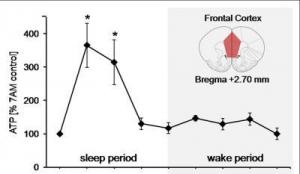
In the initial stages of sleep, energy levels increase dramatically in brain regions found to be active during waking hours, according to new research in the June 30 issue of the Journal of Neuroscience. These results suggest that a surge of cellular energy may replenish brain processes needed to function normally while awake.
Image
currency of cells, in rats increased in four key brain regions normally active during wakefulness. Shown here is the energy surge measured in the frontal cortex, a brain region associated with higher-level thinking. (Credit: Courtesy, with permission: Dworak et al. The Journal of Neuroscience 2010.)

A good night's rest has clear restorative benefits, but evidence of the actual biological processes that occur during sleep has been elusive. Radhika Basheer, PhD, and Robert McCarley, MD, of Boston V.A. Healthcare System and Harvard Medical School, proposed that brain energy levels are key to nightly restoration.

"Our finding bears on one of the perennial conundrums in biology: the function of sleep," Basheer said. "Somewhat surprisingly, there have been no modern-era studies of brain energy using the most sensitive measurements."

The authors measured levels of adenosine triphosphate (ATP), the energy currency of cells, in rats. They found that ATP levels in four key brain regions normally active during wakefulness increased when the rats were in non-REM sleep, but were accompanied by an overall decrease in brain activity. When the animals were awake, ATP levels were steady. When the rats were gently nudged to stay awake three or six hours past their normal sleep times, there was no increase in ATP.

The authors conclude that sleep is necessary for this ATP energy surge, as keeping the rats awake prevented the surge. The energy increase may then power restorative processes absent during wakefulness, because brain cells consume large amounts of energy just performing daily waking functions.

"This research provides intriguing evidence that a sleep-dependent energy surge is needed to facilitate the restorative biosynthetic processes," said Robert Greene, MD, PhD, of the University of Texas Southwestern, a sleep expert who was unaffiliated with the study. He observed that questions arise from the findings, such as the specific cause of the ATP surge. "The authors propose that the surge is related to decreases in brain cell activity during sleep, but it may be due to many other factors as well, including cellular signaling in the brain," he said.

The research was supported by the Department of Veterans Affairs, a Deutsche Forschungsgemeinschaft Fellowship, and the National Institute of Mental Health.

Monday, June 28, 2010

NASA infrared imagery shows well-defined eye in Category 5 Celia


Celia has exploded into a monster hurricane in the Eastern Pacific, and is now a Category 5 storm over open waters. NASA's Aqua satellite captured an infrared image (that shows temperature) of Celia's clouds and clearly shows an eye in the storm. Celia's eye appears well-defined and is between 15-20 nautical miles wide.
Image
AIRS noticed that Celia has a very large area of them where clouds are so very high in the troposphere (to the tropopause) that they're as cold as -94 to -112 (-75 to -80 Celsius) Fahrenheit! Credit: NASA JPL, Ed Olsen


The Atmospheric Infrared Sounder, or AIRS instrument provides infrared imagery of cloud tops and sea surface temperatures, two things that are important to tropical cyclones. High, cold cloud tops indicate strong thunderstorms around a tropical cyclone's center. AIRS imagery on June 25 noticed that Celia had a very large area of high, icy cold clouds that are so very high in the troposphere (to the tropopause) that they're as cold as -94 to -112 (-75 to -80 Celsius) Fahrenheit! The National Hurricane Center called Celia a "very impressive hurricane" this morning.

Warm sea surface temperatures are also critical for a tropical cyclone's development, and AIRS infrared imagery is able to read those temperatures from space, too. AIRS imagery taken on Friday, July 25 at 9:05 UTC (5:05 a.m. EDT) showed that the sea surface temperatures around Celia were over the 80 degree Fahrenheit threshold needed to continue powering tropical cyclones. As Celia continues to move west-northwestward, however, those waters will become cooler and they are expected to weaken Celia.
Image
The Moderate Imaging Spectroradiometer (MODIS) instrument on NASA's Aqua satellite captured this visible image of Hurricane Celia on June 24 at 20:55 UTC (4:55 p.m. EDT). Credit: NASA Goddard/MODIS Rapid Response Team


At 5 a.m. EDT (2 a.m. PDT) on Friday, June 25, powerful Category Five Hurricane Celia was packing maximum sustained winds near 160 mph (260 km/hr). Hurricane force winds extend outward up to 50 miles (85 km) from the center...and tropical storm force winds extend outward up to 140 miles (220 km). Celia's center was located about 805 nautical miles southwest of the southern tip of Baja California, near 13.4 North and 117.0 West. Celia's minimum central pressure is 926 millibars, and she is moving west-northwest near 13 mph (20 km/hr).

The cooler waters that lie in Celia's path are expected to quickly help weaken the storm. The National Hurricane Center expects Celia to be downgraded to tropical storm strength late on Sunday, June 27.

Enhanced by Zemanta

Thursday, June 24, 2010

Neuroscientists Can Predict Your Behavior


In a study with implications for the advertising industry and public health organizations, UCLA neuroscientists have shown they can use brain scanning to predict whether people will use sunscreen during a one-week period even better than the people themselves can.
Precuneus and medial prefrontal cortex highlighted 
in brain. In this study, activity in the medial prefrontal 
region helped researchers predict which study participants 
would increase their sunscreen use, even better than 
the participants themselves could predict. 
(Credit: Image courtesy of UCLA)

"There is a very long history within psychology of people not being very good judges of what they will actually do in a future situation," said the study's senior author, Matthew Lieberman, a UCLA professor of psychology and of psychiatry and biobehavioral sciences. "Many people 'decide' to do things but then don't do them."

The new study by Lieberman and lead author Emily Falk, who earned her doctorate in psychology from UCLA this month, shows that increased activity in a brain region called the medial prefrontal cortex among individuals viewing and listening to public service announcement slides on the importance of using sunscreen strongly indicated that these people were more likely to increase their use of sunscreen the following week, even beyond the people's own expectations.

"From this region of the brain, we can predict for about three-quarters of the people whether they will increase their use of sunscreen beyond what they say they will do," Lieberman said. "If you just go by what people say they will do, you get fewer than half of the people accurately predicted, and using this brain region, we could do significantly better."

"While most people's self-reports are not very accurate, they do not realize their self-reports are wrong so often in predicting future behavior," Falk said. "It is surprising to find out that some technique might be able to predict my own behavior better than I can. Yet the brain seems to reveal something important that we may not even realize."

The study, the first persuasion study in neuroscience to predict behavior change, appears June 23 in the Journal of Neuroscience.

For the study, Falk, Lieberman and their collaborators sought people who did not use sunscreen every day. The study group consisted of 20 participants, mostly UCLA students, 10 female and 10 male. The participants had their brains scanned using functional magnetic resonance imaging (fMRI) at UCLA's Ahmanson-Lovelace Brain Mapping Center as they saw and heard a series of public service announcements. They were also asked about their intentions to use sunscreen over the next week and their attitudes about sunscreen.

The participants were then contacted a week later and asked on how many days during the week they had used sunscreen.

Lieberman and Falk focused on part of the brain's medial prefrontal cortex, which is located in the front of the brain, between the eyebrows. This brain region is associated with self-reflection -- thinking about what we like and do not like and our motivations and desires.

"It is the one region of the prefrontal cortex that we know is disproportionately larger in humans than in other primates," Lieberman said. "This region is associated with self-awareness and seems to be critical for thinking about yourself and thinking about your preferences and values."

The researchers developed a model based on 10 people and tested it on the next 10. They shuffled the 20 people in different ways to test the model. There are more than 180,000 ways to divide the 20 people into groups, Falk said.

"We ran a simulation of the 180,000 combinations, developed our model on the first 10 subjects on each of the 180,000 simulations, and tested it on the second 10," Falk said. "We saw a very reliable relationship, where for the vast majority of the 180,000 ways to divide the group up, this one region of the brain, the medial prefrontal cortex, does a very good job of predicting sunscreen use in the second group."

This finding could be relevant to many public health organizations, as well as the advertising industry, Lieberman and Falk said.

"For advertisers, there may be a lot more that is knowable than is known, and this is a data-driven method for knowing more about how to create persuasive messages," said Lieberman, one of the founders of social cognitive neuroscience.

Neural focus groups

While 19th-century department store pioneer John Wanamaker (quoted at the beginning of this release) advertised effectively for his stores in newspapers, he still said he was wasting half his advertising budget -- only he didn't know which half.

"We're learning something about which half," Lieberman said.

While advertising agencies often use focus groups to test commercials and movie trailers, in the future they and public health officials perhaps should add "neural focus groups" to test which messages will be effective while monitoring the brain activity of their subjects.

"A problem with standard focus groups," Falk said, "is that people are lousy at reporting what they will actually do. We have not had much to supplement that approach, but in the future it may be possible to create what we are calling 'neural focus groups.' Instead of talking with people about what they think they will do, a public health or advertising agency can study their brains and learn what they are really likely to do and how an advertisement would be likely to affect millions of other people as well."

"Given that there are emerging technologies that are relatively portable and approximate some of what fMRI can do at a fraction of the cost, looking to the brain to shape persuasive messages could become a reality," Lieberman said. "But we're just at the beginning. This is one of the first papers on anything like this. There will be a series of papers over the next 10 years or more that will tell us what factors are driving neural responses."

"We hope to build a sophisticated model of persuasion that may incorporate multiple brain regions," said Falk, who studies the neural basis of persuasion and attitude change. She has been hired by the University of Michigan-Ann Arbor as an assistant professor of communication studies and psychology and a member of the university's Institute for Social Research, starting in September.

While some people have emphasized reasoning and emotion as key areas on which to base advertising campaigns, a key question may be whether messages and advertisements can be produced that "make people feel, 'This is about me and is relevant to my preferences and motivations,'" Falk said. "Perhaps effective messages reinforce our values, our self-identity, what motivates us. We will learn much more as we continue this line of research over the years."

Neuroscientists will learn whether they can predict behavior better and are likely to obtain a more nuanced understanding of the roles played by different parts of brain regions, said Falk, who this March received UCLA's Charles E. and Sue K. Young Award for outstanding research and teaching. She is interested in how to make more effective health and other public service messages aimed at young adults.

"There is still much we do not know about how to get people to make healthier choices," Falk said. "We hope to learn much more about what makes messages more or less persuasive."

Different brain regions may be important for persuading people to tell or e-mail their friends about a health message, product or service; Lieberman and Falk are studying this issue of "creating buzz" as well.

However, the implications of the research go far beyond advertising, Lieberman said.

"There are many applications beyond how you make a good 30-second commercial," he said, "including how teachers can communicate better so their students won't tune out or how doctors can convince patients to stick to their instructions. We all use persuasion in some form or another every day."

Beware of hucksters

Some people are already offering "neuro-marketing," purporting to help businesses sell their products and help candidates run their advertising campaigns, Lieberman noted. They may, for example, recommend what colors and sounds to use in commercials. Is this effective, or are they claiming expertise they do not possess?

"In general, they are taking simple views of how different parts of the brain work and are saying it is important to turn a particular part of the brain on when advertising, and therefore you should do more of this or that," Lieberman said. "For instance, they will say you want to activate the amygdala because that is the brain's emotion center. Typically they are not looking at the relationship between what happens in the brain when someone is exposed to an advertisement and what actually are the outcomes that you care about. For example, do people change their behavior? Does someone spread the message to others? Instead, they are giving generic analysis, and my guess is that the vast majority of the advice they are giving is not accurate.

"To really understand the relationship between the brain's responses to brands and persuasive materials and desirable outcomes, you actually have to measure the outcomes that are desirable and not just say what should work," he said. "There are many folks claiming to be neuroscientists who have read a little introductory neuroscience, and that is not enough expertise. It's almost infinitely more complicated than that."

Co-authors on the Journal of Neuroscience paper are Elliot Berkman, a UCLA graduate student of psychology in Lieberman's laboratory who will be an assistant professor of psychology at the University of Oregon this fall; Traci Mann, a professor of psychology at the University of Minnesota-Minneapolis who was formerly on UCLA's faculty; and Brittany Harrison, a former UCLA undergraduate student.
Enhanced by Zemanta