BTemplates.com

Powered by Blogger.

Pageviews past week

Quantum mechanics

Auto News

artificial intelligence

About Me

Recommend us on Google!

Information Technology

Popular Posts

Showing posts with label Greenhouse gas. Show all posts

Thursday, June 9, 2011

Global Warming Happening Faster Than Ever?


Current Carbon Dioxide Emission Higher Than It Was Just Before Ancient Episode of Severe Global Warming

The present rate of greenhouse carbon dioxide emissions through fossil fuel burning is higher than that associated with an ancient episode of severe global warming, according to new research. The findings are published online this week by the journal Nature Geoscience.
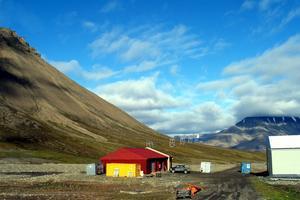
Core shed in Spitsbergen. (Credit: Image courtesy of 
National Oceanography Centre, Southampton (UK))

Around 55.9 million years ago, Earth experienced a period of intense global warming known as the Palaeocene-Eocene Thermal Maximum (PETM), which lasted for around 170,000 years. During its main phase, average annual temperatures rose by around 5°C.

Scientists believe that the warming may have been initially triggered by an event such as the baking of organic-rich sediments by igneous activity that released the potent greenhouse gas, methane. This initial temperature increase warmed ocean bottom waters which allowed the break down of gas hydrates (clathrates), which are found under deep ocean sediments: this would have greatly amplified the initial warming by releasing even more vast volumes of methane. As the methane diffused from the seawater into the atmosphere it would have been oxidised to form carbon dioxide, another potent and longer-lived greenhouse gas.

Adam Charles and his PhD supervisor, Dr Ian Harding, both palaeoceanographers at the University of Southampton's School of Ocean and Earth Science (SOES) based at the National Oceanography Centre, Southampton, co-authored the report. Dr Harding said: "The PETM has been seen by many as a natural test bed for understanding modern human-made global warming, despite it not being a perfect analogy. However, the total amount of carbon released during this climatic perturbation and its rate of release have been unclear."

To help fill this gap in knowledge, the researchers measured carbon isotope ratios of marine organic matter preserved in sediments collected in Spitsbergen. The sedimentary section is important because it records the entirety of the PETM, from its initiation to through the recovery period, and as such is the most complete record of the warming event so far known in high northern latitudes.

Based on their carbon isotope measurements and computer simulations of Earth system, the researchers estimated that the rate of carbon emissions during the PETM peaked at between 300 million and 1,700 million metric tonnes per year, which is much slower than the present carbon emission rate.


"Our findings suggest that humankind may be causing atmospheric carbon dioxide to increase at rates never previously seen on Earth, which would suggest that current temperatures will potentially rise much faster than they did during the PETM," concluded Dr Harding.

This research was supported by The Worldwide Universities Network, Pennsylvania State University, and the US National Science Foundation.

Saturday, October 16, 2010

Carbon Dioxide Controls Earth's Temperature, New Modeling Study Shows


Water vapor and clouds are the major contributors to Earth's greenhouse effect, but a new atmosphere-ocean climate modeling study shows that the planet's temperature ultimately depends on the atmospheric level of carbon dioxide.
Various atmospheric components differ in their contributions 
to the greenhouse effect, some through feedbacks and some 
through forcings. Without carbon dioxide and other non-
condensing greenhouse gases, water vapor and clouds would 
be unable to provide the feedback mechanisms that
amplify the greenhouse effect. (Credit: NASA GISS)

The study, conducted by Andrew Lacis and colleagues at NASA's Goddard Institute for Space Studies (GISS) in New York, examined the nature of Earth's greenhouse effect and clarified the role that greenhouse gases and clouds play in absorbing outgoing infrared radiation. Notably, the team identified non-condensing greenhouse gases -- such as carbon dioxide, methane, nitrous oxide, ozone, and chlorofluorocarbons -- as providing the core support for the terrestrial greenhouse effect.

Without non-condensing greenhouse gases, water vapor and clouds would be unable to provide the feedback mechanisms that amplify the greenhouse effect. The study's results are published Oct. 15 in Science.

A companion study led by GISS co-author Gavin Schmidt that has been accepted for publication in the Journal of Geophysical Research shows that carbon dioxide accounts for about 20 percent of the greenhouse effect, water vapor and clouds together account for 75 percent, and minor gases and aerosols make up the remaining five percent. However, it is the 25 percent non-condensing greenhouse gas component, which includes carbon dioxide, that is the key factor in sustaining Earth's greenhouse effect. By this accounting, carbon dioxide is responsible for 80 percent of the radiative forcing that sustains the Earth's greenhouse effect.

The climate forcing experiment described in Science was simple in design and concept -- all of the non-condensing greenhouse gases and aerosols were zeroed out, and the global climate model was run forward in time to see what would happen to the greenhouse effect.

Without the sustaining support by the non-condensing greenhouse gases, Earth's greenhouse effect collapsed as water vapor quickly precipitated from the atmosphere, plunging the model Earth into an icebound state -- a clear demonstration that water vapor, although contributing 50 percent of the total greenhouse warming, acts as a feedback process, and as such, cannot by itself uphold the Earth's greenhouse effect.

"Our climate modeling simulation should be viewed as an experiment in atmospheric physics, illustrating a cause and effect problem which allowed us to gain a better understanding of the working mechanics of Earth's greenhouse effect, and enabled us to demonstrate the direct relationship that exists between rising atmospheric carbon dioxide and rising global temperature," Lacis said.

The study ties in to the geologic record in which carbon dioxide levels have oscillated between approximately 180 parts per million during ice ages, and about 280 parts per million during warmer interglacial periods. To provide perspective to the nearly 1 C (1.8 F) increase in global temperature over the past century, it is estimated that the global mean temperature difference between the extremes of the ice age and interglacial periods is only about 5 C (9 F).

"When carbon dioxide increases, more water vapor returns to the atmosphere. This is what helped to melt the glaciers that once covered New York City," said co-author David Rind, of NASA's Goddard Institute for Space Studies. "Today we are in uncharted territory as carbon dioxide approaches 390 parts per million in what has been referred to as the 'superinterglacial.'"

"The bottom line is that atmospheric carbon dioxide acts as a thermostat in regulating the temperature of Earth," Lacis said. "The Intergovernmental Panel on Climate Change has fully documented the fact that industrial activity is responsible for the rapidly increasing levels of atmospheric carbon dioxide and other greenhouse gases. It is not surprising then that global warming can be linked directly to the observed increase in atmospheric carbon dioxide and to human industrial activity in general."

Sunday, October 3, 2010

Genetically Altered Trees Fight Global Warming?


Forests of genetically altered trees and other plants could sequester several billion tons of carbon from the atmosphere each year and so help ameliorate global warming, according to estimates published in the October issue of BioScience.
New research examines the prospects for enhancing biological carbon sequestration through a variety of policy and technical approaches, including the deployment of genetically engineered trees and other plants. (Credit: iStockphoto)

The study, by researchers at Lawrence Berkeley National Laboratory and Oak Ridge National Laboratory, outlines a variety of strategies for augmenting the processes that plants use to sequester carbon dioxide from the air and convert it into long-lived forms of carbon, first in vegetation and ultimately in soil.

Besides increasing the efficiency of plants' absorption of light, researchers might be able to genetically alter plants so they send more carbon into their roots--where some may be converted into soil carbon and remain out of circulation for centuries. Other possibilities include altering plants so that they can better withstand the stresses of growing on marginal land, and so that they yield improved bioenergy and food crops. Such innovations might, in combination, boost substantially the amount of carbon that vegetation naturally extracts from air, according to the authors' estimates.

The researchers stress that the use of genetically engineered plants for carbon sequestration is only one of many policy initiatives and technical tools that might boost the carbon sequestration already occurring in natural vegetation and crops.

The article, by Christer Jansson, Stan D. Wullschleger, Udaya C. Kalluri, and Gerald A. Tuskan, is the first in a Special Section in the October BioScience that includes several perspectives on the prospects for enhancing biological carbon sequestration. Other articles in the section analyze the substantial ecological and economic constraints that limit such efforts. One article discusses the prospects for sequestering carbon by culturing algae to produce biofuel feedstocks; one proposes a modification of the current regulatory climate for producing genetically engineered trees in the United States; and one discusses societal perceptions of the issues surrounding the use of genetically altered organisms to ameliorate warming attributed to the buildup of greenhouse gases.

Sunday, September 12, 2010

Carbon Mapping Breakthrough


By integrating satellite mapping, airborne-laser technology, and ground-based plot surveys, scientists from the Carnegie Institution's Department of Global Ecology, with colleagues from the World Wildlife Fund and in coordination with the Peruvian Ministry of the Environment (MINAM), have revealed the first high-resolution maps of carbon locked up in tropical forest vegetation and emitted by land-use practices.
A new high-resolution airborne and satellite mapping approach provides detailed information on carbon stocks in Amazonia. This image shows an area of road building and development adjacent to primary forest in red tones, and secondary forest regrowth in green tones. (Credit: Image from the Carnegie Airborne Observatory, Carnegie Institution for Science)

These new maps pave the way for accurate monitoring of carbon storage and emissions for the proposed United Nations initiative on Reduced Emissions from Deforestation and Degradation (REDD). The study is published in the September 6, 2010, early edition of the Proceedings of the National Academy of Sciences.

The United Nations REDD initiative could create financial incentives to reduce carbon emissions from deforestation and degradation. However, this and similar carbon monitoring programs have been hindered by a lack of accurate, high-resolution methods to account for changes in the carbon stored in vegetation and lost through deforestation, selective logging, and other land-use disturbances. The new high-resolution mapping method will have a major impact on the implementation of REDD in tropical regions around the world.

The study covered over 16,600 square miles of the Peruvian Amazon -- an area about the size of Switzerland. The researchers used a four-step process: They mapped vegetation types and disturbance by satellite; developed maps of 3-D vegetation structure using a LiDAR system (light detection and ranging) from the fixed-wing Carnegie Airborne Observatory; converted the structural data into carbon density using a small network of field plots on the ground; and integrated the satellite and LiDAR data for high-resolution maps of stored and emitted carbon. The scientists combined historical deforestation and degradation data with 2009 carbon stock information to calculate emissions from 1999-2009 for the Madre de Dios region.

"We found that the total regional forest carbon storage was about 395 million metric tons and emissions reached about 630,000 metric tons per year," explained lead author Greg Asner. "But what really surprised us was how carbon storage differed among forest types and the underlying geology, all in very close proximity to one another. For instance, where the local geology is up to 60 million years old, the vegetation retains about 25% less carbon than the vegetation found on geologically younger, more fertile surfaces. We also found an important interaction between geology, land use, and emissions. These are the first such patterns to emerge from the Amazon forest."

The scientists also found that the paving of the Interoceanic Highway, combined with selective logging and gold mining, caused an increase of deforestation emissions of more than 61% by 2009, while degradation emissions doubled. Forest degradation increased regional carbon emissions by 47% over deforestation alone. However, the researchers were able to detect an 18% offset to these regional emissions in forests regrowing on previously cleared and now abandoned lands.

Members of the Peruvian government participated throughout the research process to familiarize themselves with the new method. In doing so, they aimed to assess the method's advantages, evaluate deforestation and forest disturbance, and determine carbon stocks in an environmentally critical area of Madre de Dios, Peru. "A valuable opportunity has opened for MINAM to count on Carnegie's scientific and technical support. This will strengthen our ability to monitor the Amazon forest, build experience in improving the interpretation of the country's environmental and land management conditions, and contribute to the establishment of the REDD mechanism," says Doris Rueda, director of Land Management at MINAM.

To support REDD, the Intergovernmental Panel on Climate Change (IPCC) issued baseline carbon density estimates for different biomes of the world, while also encouraging higher resolution approaches. When used for the Peruvian study area, the IPCC baseline estimate for carbon storage is 587 million metric tons. Based on the new Carnegie approach, the estimated total is 395 million metric tons. Under REDD-type programs, however, the high-resolution accuracy of the new approach would yield more credit per ton of carbon, thereby providing financial incentives for slowing deforestation and degradation.

Carnegie scientists are expanding their demonstration and training efforts in the high-resolution mapping technique with the governments of Ecuador and Colombia.

The research was supported by the Government of Norway, the Gordon and Betty Moore Foundation, the W. M. Keck Foundation, and William R. Hearst III.

Friday, August 27, 2010

Dry Water Could Make a Big Splash Commercially, Help Fight Global Warming


An unusual substance known as "dry water," which resembles powdered sugar, could provide a new way to absorb and store carbon dioxide, the major greenhouse gas that contributes to global warming, scientists reported at the 240th National Meeting of the American Chemical Society.
Powdered material called "dry water" could provide a new way to store carbon dioxide in an effort to fight global warming. (Credit: Ben Carter)

The powder shows bright promise for a number of other uses, they said. It may, for instance, be a greener, more energy-efficient way of jumpstarting the chemical reactions used to make hundreds of consumer products. Dry water also could provide a safer way to store and transport potentially harmful industrial materials.

"There's nothing else quite like it," said Ben Carter, Ph.D., researcher for study leader Professor Andrew Cooper. "Hopefully, we may see 'dry water' making waves in the future."

Carter explained that the substance became known as "dry water" because it consists of 95 percent water and yet is a dry powder. Each powder particle contains a water droplet surrounded by modified silica, the stuff that makes up ordinary beach sand. The silica coating prevents the water droplets from combining and turning back into a liquid. The result is a fine powder that can slurp up gases, which chemically combine with the water molecules to form what chemists term a hydrate.

Dry water was discovered in 1968 and got attention for its potential use in cosmetics. Scientists at the University of Hull, U.K. rediscovered it in 2006 in order to study its structure, and Cooper's group at the University of Liverpool has since expanded its range of potential applications.

One of the most recent involves using dry water as a storage material for gases, including carbon dioxide. In laboratory-scale research, Cooper and co-workers found that dry water absorbed over three times as much carbon dioxide as ordinary, uncombined water and silica in the same space of time. This ability to absorb large amounts of carbon dioxide gas as a hydrate could make it useful in helping to reduce global warming, the scientists suggested.

Cooper and colleagues demonstrated in previous studies that dry water is also useful for storing methane, a component of natural gas, and may help expand its use as a future energy source. In particular, they hope that engineers can use the powder to collect and transport stranded deposits of natural gas. This also exists on the ocean floor in the form of gas hydrates, a form of frozen methane also known as the "ice that burns." The powder could also provide a safer, more convenient way to store methane fuel for use in vehicles powered by natural gas. "A great deal of work remains to be done before we could reach that stage," Carter added.

In another potential new application, the scientists also showed that dry water is a promising means to speed up catalyzed reactions between hydrogen gas and maleic acid to produce succinic acid, a feedstock or raw material widely used to make drugs, food ingredients, and other consumer products. Manufacturers usually have to stir these substances together to get them to react. By developing dry water particles that contain maleic acid, Cooper and colleagues showed that they could speed up the acid's reaction with hydrogen without any stirring, resulting in a greener, more energy-efficient process.

"If you can remove the need to stir your reactions, then potentially you're making considerable energy savings," Carter said.

Prof. Cooper's team describes an additional new application in which dry water technology shows promise for storing liquids, particularly emulsions. Emulsions are mixtures of two or more unblendable liquids, such as the oil and water mixture in mayonnaise. The scientists showed that they could transform a simple emulsion into a dry powder that is similar to dry water. The resulting powder could make it safer and easier for manufacturers to store and transport potentially harmful liquids.

Carter noted that he and his colleagues are seeking commercial or academic collaboration to further develop the dry water technology. The U.K. Engineering and Physical Sciences Research Council (EPSRC) and the Center for Materials Discovery provided funding and technical support for this study.

Friday, July 16, 2010

Carbon Sequestration: Steam Process Could Remove Carbon Dioxide to Regenerate Amine Capture Materials


Because they can remove carbon dioxide from the flue gases of coal-burning facilities such as power plants, solid materials containing amines are being extensively studied as part of potential CO2 sequestration programs designed to reduce the impact of the greenhouse gas.
Image
A relatively simple regeneration technique that could utilize waste steam to remove carbon dioxide from solid amine materials used to capture the greenhouse gas from the flue gases of coal-burning facilities. (Credit: iStockphoto/Andy Olsen)

But although these adsorbent materials do a good job of trapping the carbon dioxide, commonly-used techniques for separating the CO2 from the amine materials -- thereby regenerating them for re-use -- seem unlikely to be suitable for high-volume industrial applications.

Now, researchers have demonstrated a relatively simple regeneration technique that could utilize waste steam generated by many facilities that burn fossil fuels. This steam-stripping technique could produce concentrated carbon dioxide ready for sequestration in the ocean or deep-earth locations -- while readying the amine materials for further use.

"We have demonstrated an approach to developing a practical adsorption process for capturing carbon dioxide and then releasing it in a form suitable for sequestration," said Christopher Jones, a professor in the School of Chemical & Biomolecular Engineering at the Georgia Institute of Technology.

The research was reported online June 23, 2010 in the early view version of the journal ChemSusChem. The work was supported by New York-based Global Thermostat, LLC., a company that is developing and commercializing technology for the direct capture of carbon dioxide from the air.

Amine sorbents are often regenerated through a process that involves a change in temperature to supply the energy required to break the amine-carbon dioxide chemical bonds.

For convenience, researchers commonly remove the CO2 by heating the amine material in the presence of a flowing gas such as nitrogen or helium. That removes the carbon dioxide, but mixes it with the flowing gas -- regenerating the material, but leaving the CO2 mixed with nitrogen or helium.

Another approach is to heat the material in a carbon dioxide stream, but that is less efficient and can lead to fouling of the amine.

Jones and his team from Georgia Tech, SRI International and Global Thermostat took a different approach, heating the sorbent amine in steam at a temperature of approximately 105 degrees Celsius, causing the carbon dioxide to separate from the material. The steam can then be compressed, condensing the water and leaving a concentrated flow of carbon dioxide suitable for sequestration or other use -- such as a nutrient for algae growth.

Because most coal-burning facilities generate steam, some of that might be bled off to achieve the separation and regeneration without a significant energy penalty. "In many facilities, steam at this temperature would have no other application, so using it for this purpose would not have a significant cost to the plant," Jones noted.

The researchers studied three common formulations of the amine material: Class 1 adsorbents based on porous supports impregnated with monomeric or polymeric amines, Class 2 adsorbents that are covalently linked to a solid support, and Class 3 adsorbents based on porous supports upon which aminopolymers are polymerized in-situ, starting from an amine-containing monomer.

The adsorbents were studied through three cycles of carbon dioxide adsorption and steam-stripping. The researchers found differences in how each material was affected by the steam-stripping; performance of the most stable material actually improved, while the least stable material suffered a 13 percent efficiency decline.

"Steam-stripping is widely used in other separation processes, but has never been reported for use with supported amine materials, perhaps due to concerns about sorbent stability," Jones said. "We reported three uses of the materials in the paper and have only tested them through five or six uses, but we expect the materials could be used many more times. To be practical, the amine-containing materials need to be useful through thousands of cycles."

Pilot-scale carbon dioxide separation facilities are already in operation using amines dissolved in water. Because of the energy required to regenerate the liquid solutions, many researchers have been examining solid amines -- but the work so far has focused mostly on improving the efficiency of the materials, he added.

Though much remains to be done before solid amine materials can be used in large-scale applications, Jones believes the study demonstrates that improved materials can be developed with properties tailored for the steam regeneration process.

"We believe there is potential for development of materials that will be stable for long-term use during regeneration using this technique," he said. "This study lays the groundwork for an array of future studies that will lead to an understanding of the structural changes induced by steam-stripping."

In addition to Jones, the research team included Wen Li, Sunho Choi and Jeffery Drese from Georgia Tech, Marc Hornbostel and Gopala Krishnan from SRI International, and Peter M. Eisenberger of Global Thermostat, LLC.

Saturday, June 19, 2010

CO2: Missing Link to Past Climate Changes


Increasingly, the Earth's climate appears to be more connected than anyone would have imagined. El Nino, the weather pattern that originates in a patch of the equatorial Pacific, can spawn heat waves and droughts as far away as Africa.
Image
Sedimentary cores taken from the ocean floor in four l
ocations show that climate patterns in the tropics have 
mirrored Ice Age cycles for the last 2.7 million years 
and that carbon dioxide has played the leading role in 
determining global climate patterns. Cores from site 806 
were used as controls. (Credit: Timothy Herbert, 
Brown University)

Now, a research team led by Brown University has established that the climate in the tropics over at least the last 2.7 million years changed in lockstep with the cyclical spread and retreat of ice sheets thousands of miles away in the Northern Hemisphere. The findings appear to cement the link between the recent Ice Ages and temperature changes in tropical oceans. Based on that new link, the scientists conclude that carbon dioxide has played the lead role in dictating global climate patterns, beginning with the Ice Ages and continuing today.

"We think we have the simplest explanation for the link between the Ice Ages and the tropics over that time and the apparent role of carbon dioxide in the intensification of Ice Ages and corresponding changes in the tropics," said Timothy Herbert, professor of geological sciences at Brown and the lead author of the paper in Science.

"It certainly supports the idea of global sensitivity of climate to carbon dioxide as the first order of control on global temperature patterns," Herbert added, "but we don't know why. The answer lies in the ocean, we're pretty sure."

The research team, including scientists from Luther College in Iowa, Lafayette College in Pennsylvania, and the University of Hong Kong, analyzed cores taken from the seabed at four locations in the tropical oceans: the Arabian Sea, the South China Sea, the eastern Pacific and the equatorial Atlantic Ocean.

They decided to zero in on tropical ocean surface temperatures because these vast bodies, which make up roughly half of the world's oceans, in large measure orchestrate the amount of water in the atmosphere and thus rainfall patterns worldwide, as well as the concentration of water vapor, the most prevalent greenhouse gas.

Looking at the chemical remains of tiny marine organisms that lived in the sunlit zone of the ocean, the scientists were able to extract the surface temperature for the oceans for the last 3.5 million years, well before the beginning of the Ice Ages. Beginning about 2.7 million years ago, the geologists found that tropical ocean surface temperatures dropped by 1 to 3 degrees Celsius (1.8 to 5.4 degrees Fahrenheit) during each Ice Age, when ice sheets spread in the Northern Hemisphere and significantly cooled oceans in the northern latitudes. Even more compelling, the tropics also changed when Ice Age cycles switched from roughly 41,000-year to 100,000-year intervals.

"The tropics are reproducing this pattern both in the cooling that accompanies the glaciation in the Northern Hemisphere and the timing of those changes," Herbert said. "The biggest surprise to us was how similar the patterns looked all across the tropics since about 2.7 million years ago. We didn't expect such similarity."

Climate scientists have a record of carbon dioxide levels for the last 800,000 years -- spanning the last seven Ice Ages -- from ice cores taken in Antarctica. They have deduced that carbon dioxide levels in the atmosphere fell by about 30 percent during each cycle, and that most of that carbon dioxide was absorbed by high-latitude oceans such as the North Atlantic and the Southern Ocean. According to the new findings, this pattern began 2.7 million years ago, and the amount of atmospheric carbon dioxide absorbed by the oceans has intensified with each successive Ice Age. Geologists know the Ice Ages have gotten progressively colder -- leading to larger ice sheets -- because they have found debris on the seabed of the North Atlantic and North Pacific left by icebergs that broke from the land-bound sheets.

"It seems likely that changes in carbon dioxide were the most important reason why tropical temperatures changed, along with the water vapor feedback," Herbert said.

Herbert acknowledges that the team's findings leave important questions. One is why carbon dioxide began to play a major role when the Ice Ages began 2.7 million years ago. Also left unanswered is why carbon dioxide appears to have magnified the intensity of successive Ice Ages from the beginning of the cycles to the present. The researchers do not understand why the timing of the Ice Age cycles shifted from roughly 41,000-year to 100,000-year intervals.

Contributing authors are Laura Cleaveland Peterson at Luther College, Kira Lawrence at Lafayette College and Zhonghui Liu at the University of Hong Kong. The U.S. National Science Foundation and the Evolving Earth Foundation funded the research. The cores came from the Ocean Drilling Program, sponsored by the NSF, and the Integrated Ocean Drilling Program.

Wednesday, June 16, 2010

High-Yield Agriculture Slows Global Warming


Advances in high-yield agriculture over the latter part of the 20th century have prevented massive amounts of greenhouse gases from entering the atmosphere -- the equivalent of 590 billion metric tons of carbon dioxide -- according to a new study led by two Stanford Earth scientists.

Image
Increased yields of crops -- such as this maize in Kenya -- 
have not only helped feed the world, but have reduced 
greenhouse gas emissions. (Credit: Marshall Burke)

The yield improvements reduced the need to convert forests to farmland, a process that typically involves burning of trees and other plants, which generates carbon dioxide and other greenhouse gases.

The researchers estimate that if not for increased yields, additional greenhouse gas emissions from clearing land for farming would have been equal to as much as a third of the world's total output of greenhouse gases since the dawn of the Industrial Revolution in 1850.

The researchers also calculated that for every dollar spent on agricultural research and development since 1961, emissions of the three principal greenhouse gases -- methane, nitrous oxide and carbon dioxide -- were reduced by the equivalent of about a quarter of a ton of carbon dioxide -- a high rate of financial return compared to other approaches to reducing the gases.

"Our results dispel the notion that modern intensive agriculture is inherently worse for the environment than a more 'old-fashioned' way of doing things," said Jennifer Burney, lead author of a paper describing the study that will be published online by the Proceedings of the National Academy of Sciences.

Adding up the impact

The researchers calculated emissions of carbon dioxide, methane and nitrous oxide, converting the amounts of the latter two gases into the quantities of carbon dioxide that would have an equivalent impact on the atmosphere, to facilitate comparison of total greenhouse gas outputs.

Burney, a postdoctoral researcher with the Program on Food Security and the Environment at Stanford, said agriculture currently accounts for about 12 percent of human-caused greenhouse gas emissions. Although greenhouse gas emissions from the production and use of fertilizer have increased with agricultural intensification, those emissions are far outstripped by the emissions that would have been generated in converting additional forest and grassland to farmland.

"Every time forest or shrub land is cleared for farming, the carbon that was tied up in the biomass is released and rapidly makes its way into the atmosphere -- usually by being burned," she said. "Yield intensification has lessened the pressure to clear land and reduced emissions by up to 13 billion tons of carbon dioxide a year."

"When we look at the costs of the research and development that went into these improvements, we find that funding agricultural research ranks among the cheapest ways to prevent greenhouse gas emissions," said Steven Davis, a co-author of the paper and a postdoctoral researcher at the Carnegie Institution at Stanford.

To evaluate the impact of yield intensification on climate change, the researchers compared actual agricultural production between 1961 and 2005 with hypothetical scenarios in which the world's increasing food needs were met by expanding the amount of farmland rather than by the boost in yields produced by the Green Revolution.

"Even without higher yields, population and food demand would likely have climbed to levels close to what they are today," said David Lobell, also a coauthor and assistant professor of environmental Earth system science at Stanford.

"Lower yields per acre would likely have meant more starvation and death, but the population would still have increased because of much higher birth rates," he said. "People tend to have more children when survival of those children is less certain."

Avoiding the need for more farmland

The researchers found that without the advances in high-yield agriculture, several billion additional acres of cropland would have been needed.

Comparing emissions in the theoretical scenarios with real-world emissions from 1961 to 2005, the researchers estimated that the actual improvements in crop yields probably kept greenhouse gas emissions equivalent to at least 317 billion tons of carbon dioxide out of the atmosphere, and perhaps as much as 590 billion tons.

Without the emission reductions from yield improvements, the total amount of greenhouse gas pumped into the atmosphere over the preceding 155 years would have been between 18 and 34 percent greater than it has been, they said.

To calculate how much money was spent on research for each ton of avoided emissions, the researchers calculated the total amount of agricultural research funding related to yield improvements since 1961 through 2005. That produced a price between approximately $4 and $7.50 for each ton of carbon dioxide that was not emitted.

"The size and cost-effectiveness of this carbon reduction is striking when compared with proposed mitigation options in other sectors," said Lobell. "For example, strategies proposed to reduce emissions related to construction would cut emissions by a little less than half the amount that we estimate has been achieved by yield improvements and would cost close to $20 per ton."

The authors also note that raising yields alone won't guarantee lower emissions from land use change.

"It has been shown in several contexts that yield gains alone do not necessarily stop expansion of cropland," Lobell said. "That suggests that intensification must be coupled with conservation and development efforts.

"In certain cases, when yields go up in an area, it increases the profitability of farming there and gives people more incentive to expand their farm. But in general, high yields keep prices low, which reduces the incentive to expand."

The researchers concluded that improvement of crop yields should be prominent among a portfolio of strategies to reduce global greenhouse gases emissions.

"The striking thing is that all of these climate benefits were not the explicit intention of historical investments in agriculture. This was simply a side benefit of efforts to feed the world," Burney noted. "If climate policy intentionally rewarded these kinds of efforts, that could make an even bigger difference. The question going forward is how climate policy might be designed to achieve that."
Enhanced by Zemanta

Friday, May 7, 2010

Global Warming: Future Temperatures Could Exceed Livable Limits, Researchers Find


Reasonable worst-case scenarios for global warming could lead to deadly temperatures for humans in coming centuries, according to research findings from Purdue University and the University of New South Wales, Australia.
Me
This map shows the maximum wet-bulb temperatures 
reached in a climate model from a high carbon dioxide 
emissions future climate scenario with a global-mean 
temperature 12 degrees Celsius (21 degrees Fahrenheit) 
warmer than 2007. The white land areas exceed the 
wet-bulb limit at which researchers calculated humans 
would experience a potentially lethal level of heat stress. 
(Credit: Purdue University graphic/Matthew Huber)

Researchers for the first time have calculated the highest tolerable "wet-bulb" temperature and found that this temperature could be exceeded for the first time in human history in future climate scenarios if greenhouse gas emissions continue at their current rate.

Wet-bulb temperature is equivalent to what is felt when wet skin is exposed to moving air. It includes temperature and atmospheric humidity and is measured by covering a standard thermometer bulb with a wetted cloth and fully ventilating it.

The researchers calculated that humans and most mammals, which have internal body temperatures near 98.6 degrees Fahrenheit, will experience a potentially lethal level of heat stress at wet-bulb temperature above 95 degrees sustained for six hours or more, said Matthew Huber, the Purdue professor of earth and atmospheric sciences who co-authored the paper that will be published in the Proceedings of the National Academy of Sciences.

"Although areas of the world regularly see temperatures above 100 degrees, really high wet-bulb temperatures are rare," Huber said. "This is because the hottest areas normally have low humidity, like the 'dry heat' referred to in Arizona. When it is dry, we are able to cool our bodies through perspiration and can remain fairly comfortable. The highest wet-bulb temperatures ever recorded were in places like Saudi Arabia near the coast where winds occasionally bring extremely hot, humid ocean air over hot land leading to unbearably stifling conditions, which fortunately are short-lived today."

The study did not provide new evaluations of the likelihood of future climate scenarios, but explored the impacts of warming. The challenges presented by the future climate scenarios are daunting in their scale and severity, he said.

"Whole countries would intermittently be subject to severe heat stress requiring large-scale adaptation efforts," Huber said. "One can imagine that such efforts, for example the wider adoption of air conditioning, would cause the power requirements to soar, and the affordability of such approaches is in question for much of the Third World that would bear the brunt of these impacts. In addition, the livestock on which we rely would still be exposed, and it would make any form of outside work hazardous."

While the Intergovernmental Panel on Climate Change central estimates of business-as-usual warming by 2100 are seven degrees Fahrenheit, eventual warming of 25 degrees is feasible, he said.

"We found that a warming of 12 degrees Fahrenheit would cause some areas of the world to surpass the wet-bulb temperature limit, and a 21-degree warming would put half of the world's population in an uninhabitable environment," Huber said. "When it comes to evaluating the risk of carbon emissions, such worst-case scenarios need to be taken into account. It's the difference between a game of roulette and playing Russian roulette with a pistol. Sometimes the stakes are too high, even if there is only a small chance of losing."

Steven Sherwood, the professor at the Climate Change Research Centre at the University of New South Wales, Australia, who is the paper's lead author, said prolonged wet-bulb temperatures above 95 degrees would be intolerable after a matter of hours.

"The wet-bulb limit is basically the point at which one would overheat even if they were naked in the shade, soaking wet and standing in front of a large fan," Sherwood said. "Although we are very unlikely to reach such temperatures this century, they could happen in the next."

Humans at rest generate about 100 watts of energy from metabolic activity. Wet-bulb temperature estimates provide upper limits on the ability of people to cool themselves by sweating and otherwise dissipating this heat, he said. In order for the heat dissipation process to work, the surrounding air must be cooler than the skin, which must be cooler than the core body temperature. The cooler skin is then able to absorb excess heat from the core and release it into the environment. If the wet-bulb temperature is warmer than the temperature of the skin, metabolic heat cannot be released and potentially dangerous overheating can ensue depending on the magnitude and duration of the heat stress.

The National Science Foundation-funded research investigated the long-term implications of sustained greenhouse gas emissions on climate extremes. The team used climate models to compare the peak wet-bulb temperatures to the global temperatures for various climate simulations and found that the peak wet-bulb temperature rises approximately 1 degree Centigrade for every degree Centigrade increase in tropical mean temperature.

Huber did the climate modeling on supercomputers operated by Information Technology at Purdue (ITaP), Purdue's central information technology organization. Sherwood performed the wet-bulb calculations.

"These temperatures haven't been seen during the existence of hominids, but they did occur about 50 million years ago, and it is a legitimate possibility that the Earth could see such temperatures again," Huber said. "If we consider these worst-case scenarios early enough, perhaps we can do something to address the risk through mitigation or new technological advancements that will allow us to adapt."
Reblog this post [with Zemanta]

Tuesday, March 9, 2010

Scientists Create a Solar Energy Device from a Plant Protein Structure


If harnessing the unlimited solar power of the sun were easy, we wouldn't still have the greenhouse gas problem that results from the use of fossil fuel. And while solar energy systems work moderately well in hot desert climates, they are still inefficient and contribute only a small percentage of the general energy demand. A new solution may be coming from an unexpected source -- a source that may be on your dinner plate tonight.
Scientists Create a Solar Energy Device from a Plant Protein Structure
New research suggests that minute crystals from peas can be illuminated and used as small battery chargers or form the core of more efficient artificial solar cells. (Credit: iStockphoto/Andrea Skjold)

"Looking at the most complicated membrane structure found in a plant, we deciphered a complex membrane protein structure which is the core of our new proposed model for developing 'green' energy," says structural biologist Prof. Nathan Nelson of Tel Aviv University's Department of Biochemistry. Isolating the minute crystals of the PSI super complex from the pea plant, Prof. Nelson suggests these crystals can be illuminated and used as small battery chargers or form the core of more efficient artificial solar cells.

Nanoscience is the science of small particles of materials and is one of the most important research frontiers in modern technology. In nature, positioning of molecules with sub-nanometer precision is routine, and crucial to the operation of biological complexes such as photosynthetic complexes. Prof. Nelson's research concentrates on this aspect.

The mighty PSI

To generate useful energy, plants have evolved very sophisticated "nano-machinery" which operates with light as its energy source and gives a perfect quantum yield of 100%. Called the Photosystem I (PSI) complex, this complex was isolated from pea leaves, crystalized and its crystal structure determined by Prof. Nelson to high resolution, which enabled him to describe in detail its intricate structure.

"My research aims to come close to achieving the energy production that plants can obtain when converting sun to sugars in their green leaves," explains Prof. Nelson.

Described in 1905 by Albert Einstein, quantum physics and photons explained the basic principles of how light energy works. Once light is absorbed in plant leaves, it energizes an electron which is subsequently used to support a biochemical reaction, like sugar production.

"If we could come even close to how plants are manufacturing their sugar energy, we'd have a breakthrough. It's therefore important to solve the structure of this nano-machine to understand its function," says Prof. Nelson, whose lab is laying the foundations for this possibility.

Since the PSI reaction center is a pigment-protein complex responsible for the photosynthetic conversion of light energy to another form of energy like chemical energy, these reaction centers, thousands of which are precisely packed in the crystals, may be used to convert light energy to electricity and serve as electronic components in a variety of different devices.

"One can imagine our amazement and joy when, upon illumination of those crystals placed on gold covered plates, we were able to generate a voltage of 10 volts. This won't solve our world's energy problem, but this could be assembled in power switches for low-power solar needs, for example," he concludes.
Reblog this post [with Zemanta]

Thursday, December 24, 2009

Scientists Map Speed of Climate Change for Different Ecosystems


From beetles to barnacles, pikas to pine warblers, many species are already on the move in response to shifting climate regimes. But how fast will they -- and their habitats -- have to move to keep pace with global climate change over the next century? In a new study, a team of scientists including Dr. Healy Hamilton from the California Academy of Sciences have calculated that on average, ecosystems will need to shift about 0.42 kilometers per year (about a quarter mile per year) to keep pace with changing temperatures across the globe.

Subdivision in Oregon, U.S. Global warming is causing climate belts to shift toward the poles and to higher elevations. To keep pace with these changes, the average ecosystem will need to shift about a quarter mile each year, says a new study led by scientists at the Carnegie Institution. For some habitats, such as low-lying areas, climate belts are moving even faster, putting many species in jeopardy, especially where human development has blocked migration paths. (Credit: iStockphoto)

Mountainous habitats will be able to move more slowly, since a modest move up or down slope can result in a large change in temperature. However, flatter ecosystems, such as flooded grasslands, mangroves, and deserts, will need to move much more rapidly to stay in their comfort zone -- sometimes more than a kilometer per year. The team, which also included scientists from the Carnegie Institute of Science, Climate Central, and U.C. Berkeley, will publish their results in the December 24 issue of Nature.

Saturday, December 12, 2009

Bacteria Engineered to Turn Carbon Dioxide Into Liquid Fuel


Global climate change has prompted efforts to drastically reduce emissions of carbon dioxide, a greenhouse gas produced by burning fossil fuels.


Genetically engineered strains of the cyanobacterium Synechococcus elongatus in a Petri dish. (Credit: Image courtesy of University of California - Los Angeles)

In a new approach, researchers from the UCLA Henry Samueli School of Engineering and Applied Science have genetically modified a cyanobacterium to consume carbon dioxide and produce the liquid fuel isobutanol, which holds great potential as a gasoline alternative. The reaction is powered directly by energy from sunlight, through photosynthesis.

Monday, December 7, 2009

Earth More Sensitive to Carbon Dioxide Than Previously Thought


In the long term, the Earth's temperature may be 30-50% more sensitive to atmospheric carbon dioxide than has previously been estimated, reports a new study published in Nature Geoscience.


The temperature response of the Earth (in degrees C) to an increase in atmospheric carbon dioxide from pre-industrial levels (280 parts per million by volume) to higher levels (400 parts per million by volume). (a) shows predicted global temperatures when processes that adjust on relatively short-term timescales (for example sea-ice, clouds, and water vapour) are included in the model (b) includes additional long-tem processes that adjust on relatively long timescales (vegetation and land-ice). (Credit: Image courtesy of University of Bristol)


The results show that components of the Earth's climate system that vary over long timescales -- such as land-ice and vegetation -- have an important effect on this temperature sensitivity, but these factors are often neglected in current climate models.

Wednesday, November 11, 2009

Controversial New Climate Change Data: Is Earth's Capacity To Absorb CO2 Much Greater Than Expected?


New data show that the balance between the airborne and the absorbed fraction of carbon dioxide has stayed approximately constant since 1850, despite emissions of carbon dioxide having risen from about 2 billion tons a year in 1850 to 35 billion tons a year now.

New data show that the balance between the airborne and the absorbed fraction of carbon dioxide has stayed approximately constant since 1850, despite emissions of carbon dioxide having risen from about 2 billion tons a year in 1850 to 35 billion tons a year now. (Credit: iStockphoto/Karl Dolenc)


This suggests that terrestrial ecosystems and the oceans have a much greater capacity to absorb CO2 than had been previously expected.

Thursday, September 3, 2009

Stop Emitting Carbon Dioxide, Or Geoengineering Could Be Only Hope For Earth's Climate, Experts Warn


The future of the Earth could rest on potentially dangerous and unproven geoengineering technologies unless emissions of carbon dioxide can be greatly reduced, the latest Royal Society report has found.

A new report finds that unless future efforts to reduce greenhouse gas emissions are much more successful than they have been so far, additional action in the form of geoengineering will be necessary if we are to cool the planet. (Credit: iStockphoto/Andrey Prokhorov)

The report (published September 1, 2009 by the Royal Society, the UK’s national academy of science) found that unless future efforts to reduce greenhouse gas emissions are much more successful than they have been so far, additional action in the form of geoengineering will be necessary if we are to cool the planet. Geoengineering technologies were found to be very likely to be technically possible and some were considered to be potentially useful to augment the continuing efforts to mitigate climate change by reducing emissions. However, the report identified major uncertainties regarding their effectiveness, costs and environmental impacts.


Professor John Shepherd, who chaired the Royal Society’s geoengineering study, said, “It is an unpalatable truth that unless we can succeed in greatly reducing CO2 emissions we are headed for a very uncomfortable and challenging climate future, and geoengineering will be the only option left to limit further temperature increases. Our research found that some geoengineering techniques could have serious unintended and detrimental effects on many people and ecosystems - yet we are still failing to take the only action that will prevent us from having to rely on them. Geoengineering and its consequences are the price we may have to pay for failure to act on climate change.”


The report assesses the two main kinds of geoengineering techniques – Carbon Dioxide Removal (CDR) and Solar Radiation Management (SRM). CDR techniques address the root of the problem – rising CO2 – and so have fewer uncertainties and risks, as they work to return the Earth to a more normal state. They are therefore considered preferable to SRM techniques, but none has yet been demonstrated to be effective at an affordable cost, with acceptable environmental impacts, and they only work to reduce temperatures over very long timescales.


SRM techniques act by reflecting the sun’s energy away from Earth, meaning they lower temperatures rapidly, but do not affect CO2 levels. They therefore fail to address the wider effects of rising CO2, such as ocean acidification, and would need to be deployed for a very long time. Although they are relatively cheap to deploy, there are considerable uncertainties about their regional consequences, and they only reduce some, but not all, of the effects of climate change, while possibly creating other problems. The report concludes that SRM techniques could be useful if a threshold is reached where action to reduce temperatures must be taken rapidly, but that they are not an alternative to emissions reductions or CDR techniques.


Professor Shepherd added, “None of the geoengineering technologies so far suggested is a magic bullet, and all have risks and uncertainties associated with them. It is essential that we strive to cut emissions now, but we must also face the very real possibility that we will fail. If “Plan B” is to be an option in the future, considerable research and development of the different methods, their environmental impacts and governance issues must be undertaken now. Used irresponsibly or without regard for possible side effects, geoengineering could have catastrophic consequences similar to those of climate change itself. We must ensure that a governance framework is in place to prevent this.”


Of the CDR techniques assessed, the following were considered to have most useful potential:


  • CO2 capture from ambient air – this would be the preferred method of geoengineering, as it effectively reverses the cause of climate change. At this stage no cost-effective methods have yet been demonstrated and much more research and development is needed.
  • Enhanced weathering – this technique, which utilises naturally occurring reactions of CO2 from the air with rocks and minerals, was identified as a prospective longer-term option. However more research is needed to find cost-effective methods and to understand the wider environmental implications.
  • Land use and afforestation – the report found that land use management could and should play a small but significant role in reducing the growth of atmospheric CO2 concentrations. However the scope for applying this technique would be limited by land use conflicts, and all the competing demands for land must be considered when assessing the potential for afforestation and reforestation. Should temperatures rise to such a level where more rapid action needs to be taken, the following SRM techniques were considered to have most potential:
  • Stratospheric aerosols – these were found to be feasible, and previous volcanic eruptions have effectively provided short-term preliminary case studies of the potential effectiveness of this method. The cost was assessed as likely to be relatively low and the timescale of action short. However, there are some serious questions over adverse effects, particularly depletion of stratospheric ozone.
  • Space-based methods – these were considered to be a potential SRM technique for long-term use, if the major problems of implementation and maintenance could be solved. At present the techniques remain prohibitively expensive, complex and would be slow to implement.
  • Cloud albedo approaches (eg. cloud ships) – the effects would be localised and the impacts on regional weather patterns and ocean currents are of considerable concern but are not well understood. The feasibility and effectiveness of the technique is uncertain. A great deal more research would be needed before this technique could be seriously considered.


The following techniques were considered to have lower potential:


  • Biochar (CDR technique) – the report identified significant doubts relating to the potential scope, effectiveness and safety of this technique and recommended that substantial research would be required before it could be considered for eligibility for UN carbon credits.
  • Ocean fertilisation (CDR technique) – the report found that this technique had not been proved to be effective and had high potential for unintended and undesirable ecological side effects.
  • Surface albedo approaches (SRM technique, including white roof methods, reflective crops and desert reflectors) – these were found to be ineffective, expensive and, in some cases, likely to have serious impacts on local and regional weather patterns.


For more information, see: http://www.royalsociety.org/geoengineeringclimate


If you like this post, buy me a Pittza at $1!
Reblog this post [with Zemanta]