BTemplates.com

Powered by Blogger.

Pageviews past week

Quantum mechanics

Auto News

artificial intelligence

About Me

Recommend us on Google!

Information Technology

Popular Posts

Showing posts with label Temperature. Show all posts

Saturday, August 28, 2010

El Niños Are Growing Stronger, NASA/NOAA Study Finds


A relatively new type of El Niño, which has its warmest waters in the central-equatorial Pacific Ocean, rather than in the eastern-equatorial Pacific, is becoming more common and progressively stronger, according to a new study by NASA and NOAA. The research may improve our understanding of the relationship between El Niños and climate change, and has potentially significant implications for long-term weather forecasting.
Deviations from normal sea surface temperatures (left) 
and sea surface heights (right) at the peak of the 2009-2010 
central Pacific El Niño, as measured by NOAA polar orbiting 
satellites and NASA's Jason-1 spacecraft, respectively. The 
warmest temperatures and highest sea levels were located in 
the central equatorial Pacific. Image credit: 
(Credit: NASA/JPL-NOAA)

Lead author Tong Lee of NASA's Jet Propulsion Laboratory, Pasadena, Calif., and Michael McPhaden of NOAA's Pacific Marine Environmental Laboratory, Seattle, measured changes in El Niño intensity since 1982. They analyzed NOAA satellite observations of sea surface temperature, checked against and blended with directly-measured ocean temperature data. The strength of each El Niño was gauged by how much its sea surface temperatures deviated from the average. They found the intensity of El Niños in the central Pacific has nearly doubled, with the most intense event occurring in 2009-10.

The scientists say the stronger El Niños help explain a steady rise in central Pacific sea surface temperatures observed over the past few decades in previous studies-a trend attributed by some to the effects of global warming. While Lee and McPhaden observed a rise in sea surface temperatures during El Niño years, no significant temperature increases were seen in years when ocean conditions were neutral, or when El Niño's cool water counterpart, La Niña, was present.

"Our study concludes the long-term warming trend seen in the central Pacific is primarily due to more intense El Niños, rather than a general rise of background temperatures," said Lee.

"These results suggest climate change may already be affecting El Niño by shifting the center of action from the eastern to the central Pacific," said McPhaden. "El Niño's impact on global weather patterns is different if ocean warming occurs primarily in the central Pacific, instead of the eastern Pacific.

"If the trend we observe continues," McPhaden added, "it could throw a monkey wrench into long-range weather forecasting, which is largely based on our understanding of El Niños from the latter half of the 20th century."

El Niño, Spanish for "the little boy," is the oceanic component of a climate pattern called the El Niño-Southern Oscillation, which appears in the tropical Pacific Ocean on average every three to five years. The most dominant year-to-year fluctuating pattern in Earth's climate system, El Niños have a powerful impact on the ocean and atmosphere, as well as important socioeconomic consequences. They can influence global weather patterns and the occurrence and frequency of hurricanes, droughts and floods; and can even raise or lower global temperatures by as much as 0.2 degrees Celsius (0.4 degrees Fahrenheit).

During a "classic" El Niño episode, the normally strong easterly trade winds in the tropical eastern Pacific weaken. That weakening suppresses the normal upward movement of cold subsurface waters and allows warm surface water from the central Pacific to shift toward the Americas. In these situations, unusually warm surface water occupies much of the tropical Pacific, with the maximum ocean warming remaining in the eastern-equatorial Pacific.

Since the early 1990s, however, scientists have noted a new type of El Niño that has been occurring with greater frequency. Known variously as "central-Pacific El Niño," "warm-pool El Niño," "dateline El Niño" or "El Niño Modoki" (Japanese for "similar but different"), the maximum ocean warming from such El Niños is found in the central-equatorial, rather than eastern, Pacific. Such central Pacific El Niño events were observed in 1991-92, 1994-95, 2002-03, 2004-05 and 2009-10. A recent study found many climate models predict such events will become much more frequent under projected global warming scenarios.

Lee said further research is needed to evaluate the impacts of these increasingly intense El Niños and determine why these changes are occurring. "It is important to know if the increasing intensity and frequency of these central Pacific El Niños are due to natural variations in climate or to climate change caused by human-produced greenhouse gas emissions," he said.

Results of the study were published recently in Geophysical Research Letters.

For more information on El Niño, visit: http://sealevel.jpl.nasa.gov/.

Tuesday, August 3, 2010

Silicon Can Be Made to Melt in Reverse


Like an ice cube on a warm day, most materials melt -- that is, change from a solid to a liquid state -- as they get warmer. But a few oddball materials do the reverse: They melt as they get cooler. Now a team of researchers at MIT has found that silicon, the most widely used material for computer chips and solar cells, can exhibit this strange property of "retrograde melting" when it contains high concentrations of certain metals dissolved in it.

Image
A tiny silicon chip -- the glowing orange square at the center of this special heating device -- is heated to a temperature well below silicon's melting point, and then very slowly cooled down. The chip inside this heating device was placed in the path of a synchrotron beam to probe its changes at a molecular level as it went through the retrograde melting process. (Credit: Patrick Gillooly)

The material, a compound of silicon, copper, nickel and iron, "melts" (actually turning from a solid to a slush-like mix of solid and liquid material) as it cools below 900 degrees Celsius, whereas silicon ordinarily melts at 1414 degrees C. The much lower temperatures make it possible to observe the behavior of the material during melting, based on specialized X-ray fluorescence microprobe technology using a synchrotron -- a type of particle accelerator -- as a source.

The material and its properties are described in a paper just published online in the journal Advanced Materials. Team leader Tonio Buonassisi, the SMA Assistant Professor of Mechanical Engineering and Manufacturing, is the senior author, and the lead authors are Steve Hudelson MS '09, and postdoctoral fellow Bonna Newman PhD '08.

The findings could be useful in lowering the cost of manufacturing some silicon-based devices, especially those in which tiny amounts of impurities can significantly reduce performance. In the material that Buonassisi and his researchers studied, impurities tend to migrate to the liquid portion, leaving regions of purer silicon behind. This could make it possible to produce some silicon-based devices, such as solar cells, using a less pure, and therefore less expensive, grade of silicon that would be purified during the manufacturing process.

"If you can create little liquid droplets inside a block of silicon, they serve like little vacuum cleaners to suck up impurities," Buonassisi says. This research could also lead to new methods for making arrays of silicon nanowires -- tiny tubes that are highly conductive to heat and electricity.

Buonassisi predicted in a 2007 paper that it should be possible to induce retrograde melting in silicon, but the conditions needed to produce such a state, and to study it at a microscopic level, are highly specialized and have only recently become available. To create the right conditions, Buonassisi and his team had to adapt a microscope "hot-stage" device that allowed the researchers to precisely control the rate of heating and cooling. And to actually observe what was happening as the material was heated and cooled, they drew upon high-power synchrotron-based X-ray sources at Lawrence Berkeley National Laboratory in California and at Argonne National Laboratory in Illinois (researchers from both national labs are co-authors of the paper).

The material for the tests consisted of a kind of sandwich made from two thin layers of silicon, with a filling of copper, nickel and iron between them. This was first heated enough to cause the metals to dissolve into the silicon, but below silicon's melting point. The amount of metal was such that the silicon became supersaturated -- that is, more of the metal was dissolved in the silicon than would normally be possible under stable conditions. For example, when a liquid is heated, it can dissolve more of another material, but then when cooled down it can become supersaturated, until the excess material precipitates out.

In this case, where the metals were dissolved into the solid silicon, "if you begin cooling it down, you hit a point where you induce precipitation, and it has no choice but to precipitate out in a liquid phase," Buonassisi says. It is at that point that the material melts.

Funding was provided by the U.S. Department of Energy, the National Science Foundation, the Clare Booth Luce Foundation, Doug Spreng and the Chesonis Family Foundation, and some equipment was provided by McCrone Scientific

Wednesday, June 23, 2010

New A/C System Could Slash Energy Bills


Ah, the cool, refreshing feel of air conditioning on a sweltering summer day.
Image
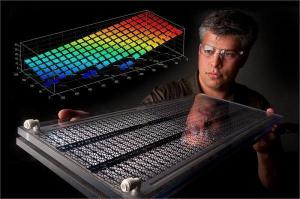
NREL senior engineer Eric Kozubal examines a prototype air flow channel of the DEVap air conditioner, which he co-invented. DEVap, which stands for desiccant-enhanced evaporative air conditioner, is a novel concept that uses membrane technology to combine the efficiency of evaporative cooling and the drying potential of liquid desiccant salt solutions. The graph superimposed on the photo shows shows how hot humid air, in red, changes to cool dry air, in blue, as the air passes through the DEVap core. (Credit: Pat Corkery)

Ugh, the discomfort when those energy bills in July, August and September come due -- $200, $400, $600 or more.

Feel miserable, or dig deep into your wallet -- not much of a choice for the 250 million Americans who live in climates where heat, humidity or both are a Catch-22 for three to 12 months a year.

A soothing solution may be on its way, thanks to a melding of technologies in filters, coolers and drying agents.

The U.S. Department of Energy's National Renewable Energy Laboratory has invented a new air conditioning process with the potential of using 50 percent to 90 percent less energy than today's top-of-the-line units. It uses membranes, evaporative cooling and liquid desiccants in a way that has never been done before in the centuries-old science of removing heat from the air.

"The idea is to revolutionize cooling, while removing millions of metric tons of carbon from the air," NREL mechanical engineer Eric Kozubal, co-inventor of the Desiccant-Enhanced eVaporative air conditioner (DEVap), said.

"We'd been working with membranes, evaporative coolers and desiccants. We saw an opportunity to combine them into a single device for a product with unique capabilities."

Hot and Humid Climates are Tricky

Evaporative coolers are a lower-cost alternative to A/C in dry climates that don't get too hot or humid -- say, Denver, but not Phoenix or Miami. Water flows over a mesh, and a fan blows air through the wet mesh to create humid, cool air.

In humid climes, adding water to the air creates a hot and sticky building environment. Furthermore, the air cannot absorb enough water to become cold.

In Phoenix or Tucson, the evaporative cooler can bring down the temperature, but not enough to make it pleasant inside on a 100-degree day or during the four to eight week moist period known as monsoon season. The cooling bumps up against the wet bulb temperature, the lowest temperature to which air can be cooled by evaporating without changing the pressure. The wet bulb temperature could be 75 or 80 degrees on a mid-summer Tucson day. Typically, evaporative coolers only can bring the temperatures about 85 percent of the way to the wet bulb level.

So, for most of the country, refrigeration-based air conditioning is the preferred way of keeping cool.

Cooling Requires Temperature Drop and Less Moisture

Cooling comes in two forms -- sensible cooling, which is a temperature drop, and latent cooling, which comes from pulling the moisture out of the air.

One intriguing product already on the market in arid, temperate climates is the Coolerado cooler. It differs from a typical evaporative cooler by never increasing the moisture content of the supply air. It provides cool air through indirect evaporative cooling. Indirect evaporative systems use a purge air stream that removes heat from the product or supply air stream that is then directed into a building.

That way, the Coolerado can cool the air all the way to the wet-bulb temperature.

"It's a big improvement on evaporative cooling because it doesn't add moisture and still gives you cold air," Kozubal said. However, in a humid climate, it still does not provide cold air or humidity control.

DEVap: Liquid Desiccants, Permeable Membranes

The DEVap solves that problem. It relies on the desiccants' capacity to create dry air using heat and evaporative coolers' capacity to take dry air and make cold air.

"By no means is the concept novel, the idea of combining the two," Kozubal said. "But no one has been able to come up with a practical and cost-effective way to do it."

HVAC engineers have known for decades the value of desiccants to air conditioning. In fact, one of the pioneers of early A/C, Willis Haviland Carrier, knew of its potential, but opted to go the refrigeration route.

Most people know of desiccants as the pebble-sized handfuls that come with new shoes to keep them dry.

The kind NREL uses are syrupy liquids -- highly concentrated aqueous salt solutions of lithium chloride or calcium chloride. They have a high affinity for water vapor, and can thus create very dry air.

Because of the complexity of desiccant cooling systems, they have traditionally only been used in industrial drying processes. Inventing a device simple enough for easy installation and maintenance is what has impaired desiccant cooling from entering into commercial and residential cooling markets.

To solve that problem, the NREL device uses thin membranes that simplify the process of integrating air flow, desiccants, and evaporative cooling. These result in an air conditioning system that provides superior comfort and humidity control.

The membranes in the DEVap A/C are hydrophobic, which means water tends to bead up rather than soak through the membranes. Imagine rain falling on a freshly waxed car. That property allows the membranes to control the liquid flows within the cooling core. "It's that property that keeps the water and the desiccant separated from the air stream," Kozubal said.

"We bring the water and liquid desiccant into DEVap's heat-mass exchanger core," Kozubal said. "The desiccant and evaporative cooling effect work together to create cold-dry air."

The air is cooled and dried from a hot-humid condition to a cold and dry condition all in one step. This all happens in a fraction of a second as air flows through the DEVap air conditioner. The result is an air conditioner that controls both thermal and humidity loads.

DEVap helps the environment in many ways. DEVap uses 50 percent to 90 percent less energy than top-of-the-line refrigeration-based air conditioning.

Because DEVap uses salt solutions rather than refrigerants, there are no harmful chlorofluorocarbons (CFCs) or hydrochlorofluorocarbons (HCFCs) to worry about. A pound of CFC or HCFC in refrigerant-based A/Cs contributes as much to global warming as 2,000 pounds of carbon dioxide. A typical residential size A/C has as much as 13 pounds of these refrigerants. The release of this much refrigerant is equivalent to burning more than 1,300 gallons of gasoline, or driving over 60,000 miles in a 2010 Toyota Prius. That's based on the Environmental Protection Agency's fuel efficiency rating for the 2010 Toyota Prius and on the standard of 19.5 pounds of carbon dioxide for every gallon of gasoline burned.

Traditional air conditioners use a lot of electricity to run the refrigeration cycle, but DEVap replaces that refrigeration cycle with an absorption cycle that is thermally activated. It can be powered by natural gas or solar energy and uses very little electricity.

This means that DEVap could become the most energy efficient way to cool your house whether you live in Phoenix, New York, or Houston.

NREL has patented the DEVap concept, and Kozubal expects that over the next couple of years he will be working on making the device smaller and simpler and perfecting the heat transfer to make DEVap more cost effective.

Eventually, NREL will license the technology to industry, "We're never going to be in the air conditioner manufacturing business," said Ron Judkoff, Principle Program Manager for Building Energy Research at NREL. "But we'd like to work with manufacturers to bring DEVap to market and create a more efficient and environmentally benign air conditioning product."

Friday, May 7, 2010

Global Warming: Future Temperatures Could Exceed Livable Limits, Researchers Find


Reasonable worst-case scenarios for global warming could lead to deadly temperatures for humans in coming centuries, according to research findings from Purdue University and the University of New South Wales, Australia.
Me
This map shows the maximum wet-bulb temperatures 
reached in a climate model from a high carbon dioxide 
emissions future climate scenario with a global-mean 
temperature 12 degrees Celsius (21 degrees Fahrenheit) 
warmer than 2007. The white land areas exceed the 
wet-bulb limit at which researchers calculated humans 
would experience a potentially lethal level of heat stress. 
(Credit: Purdue University graphic/Matthew Huber)

Researchers for the first time have calculated the highest tolerable "wet-bulb" temperature and found that this temperature could be exceeded for the first time in human history in future climate scenarios if greenhouse gas emissions continue at their current rate.

Wet-bulb temperature is equivalent to what is felt when wet skin is exposed to moving air. It includes temperature and atmospheric humidity and is measured by covering a standard thermometer bulb with a wetted cloth and fully ventilating it.

The researchers calculated that humans and most mammals, which have internal body temperatures near 98.6 degrees Fahrenheit, will experience a potentially lethal level of heat stress at wet-bulb temperature above 95 degrees sustained for six hours or more, said Matthew Huber, the Purdue professor of earth and atmospheric sciences who co-authored the paper that will be published in the Proceedings of the National Academy of Sciences.

"Although areas of the world regularly see temperatures above 100 degrees, really high wet-bulb temperatures are rare," Huber said. "This is because the hottest areas normally have low humidity, like the 'dry heat' referred to in Arizona. When it is dry, we are able to cool our bodies through perspiration and can remain fairly comfortable. The highest wet-bulb temperatures ever recorded were in places like Saudi Arabia near the coast where winds occasionally bring extremely hot, humid ocean air over hot land leading to unbearably stifling conditions, which fortunately are short-lived today."

The study did not provide new evaluations of the likelihood of future climate scenarios, but explored the impacts of warming. The challenges presented by the future climate scenarios are daunting in their scale and severity, he said.

"Whole countries would intermittently be subject to severe heat stress requiring large-scale adaptation efforts," Huber said. "One can imagine that such efforts, for example the wider adoption of air conditioning, would cause the power requirements to soar, and the affordability of such approaches is in question for much of the Third World that would bear the brunt of these impacts. In addition, the livestock on which we rely would still be exposed, and it would make any form of outside work hazardous."

While the Intergovernmental Panel on Climate Change central estimates of business-as-usual warming by 2100 are seven degrees Fahrenheit, eventual warming of 25 degrees is feasible, he said.

"We found that a warming of 12 degrees Fahrenheit would cause some areas of the world to surpass the wet-bulb temperature limit, and a 21-degree warming would put half of the world's population in an uninhabitable environment," Huber said. "When it comes to evaluating the risk of carbon emissions, such worst-case scenarios need to be taken into account. It's the difference between a game of roulette and playing Russian roulette with a pistol. Sometimes the stakes are too high, even if there is only a small chance of losing."

Steven Sherwood, the professor at the Climate Change Research Centre at the University of New South Wales, Australia, who is the paper's lead author, said prolonged wet-bulb temperatures above 95 degrees would be intolerable after a matter of hours.

"The wet-bulb limit is basically the point at which one would overheat even if they were naked in the shade, soaking wet and standing in front of a large fan," Sherwood said. "Although we are very unlikely to reach such temperatures this century, they could happen in the next."

Humans at rest generate about 100 watts of energy from metabolic activity. Wet-bulb temperature estimates provide upper limits on the ability of people to cool themselves by sweating and otherwise dissipating this heat, he said. In order for the heat dissipation process to work, the surrounding air must be cooler than the skin, which must be cooler than the core body temperature. The cooler skin is then able to absorb excess heat from the core and release it into the environment. If the wet-bulb temperature is warmer than the temperature of the skin, metabolic heat cannot be released and potentially dangerous overheating can ensue depending on the magnitude and duration of the heat stress.

The National Science Foundation-funded research investigated the long-term implications of sustained greenhouse gas emissions on climate extremes. The team used climate models to compare the peak wet-bulb temperatures to the global temperatures for various climate simulations and found that the peak wet-bulb temperature rises approximately 1 degree Centigrade for every degree Centigrade increase in tropical mean temperature.

Huber did the climate modeling on supercomputers operated by Information Technology at Purdue (ITaP), Purdue's central information technology organization. Sherwood performed the wet-bulb calculations.

"These temperatures haven't been seen during the existence of hominids, but they did occur about 50 million years ago, and it is a legitimate possibility that the Earth could see such temperatures again," Huber said. "If we consider these worst-case scenarios early enough, perhaps we can do something to address the risk through mitigation or new technological advancements that will allow us to adapt."
Reblog this post [with Zemanta]

Monday, April 26, 2010

How We Can Sense Temperatures: Discovery Could Lead to Novel Therapies for Acute and Chronic Pain


Scientists at The Scripps Research Institute and the Genomics Institute of the Novartis Research Foundation (GNF) have shed new light on the molecular mechanism that enables us to sense temperature, such as the heat from a sizzling stove. In addition to contributing to our knowledge of basic biology, the findings could one day lead to new therapies for conditions such as acute or chronic inflammatory pain.
Me
New research sheds light on the molecular 
mechanism that enables us to sense temperature, 
such as the heat from a sizzling stove. The discovery 
could one day lead to new therapies for conditions 
such as acute or chronic inflammatory pain. 
(Credit: iStockphoto/Mark Evans)

The study, which was led by Scripps Research and GNF Professor Ardem Patapoutian, was published in an advance, online edition of the journal Nature Neuroscience on April 22, 2010.

To better understand temperature sensation, the team focused on a protein called TRPV1, which is a member of a small family of proteins known to enable temperature sensation, and is involved in inflammation and the communication of pain to the brain. After producing thousands of mutants of this protein, the scientists were able to identify a region of the protein that enabled temperature sensitivity and to detail some of the molecular mechanisms at work in the molecule.

"Ever since the discovery of these proteins, it has been an outstanding question how they can be activated by temperatures," said Research Associate Jörg Grandl, a member of the Patapoutian lab and first author of the paper. "The new study addresses this question."

"Because our ability to sense temperature is closely linked to our ability to sense pain, some of these ion channels are considered targets to treat chronic inflammatory and neuropathic pain indications," said Patapoutian. "Understanding these proteins could be crucial in designing future drugs that can either activate or block them."

Hot and Cold

Humans and other vertebrate animals use specialized sensory neurons to detect temperature, pressure, and other physical stimuli on the skin. These neurons are located in the spinal column and are connected to the skin and organs through long extensions known as axons.

On the surface of these axons are ion channel (pore-forming) proteins, which span the axon's membrane, connecting the inside with the outside. Some of these ion channels act like temperature receptors or "molecular thermometers" by opening and closing according to the temperature. At a particular temperature, the receptors open. This allows an influx of ions into the neuronal processes, and this electrical signal is relayed through the neuron to the brain.

The existence of specialized hot- and cold-neurons had been known for years, but the molecules that actually sense the temperatures and signal back to the neuron through the axon were a mystery. That changed in 1997 when a group cloned TRPV1, which is a type of transient receptor potential (TRP) channel. TRPV1, an ion channel, opens when it senses hot temperatures -- above 42° C (108° F).

That discovery opened the floodgates for identifying other temperature-detecting proteins. Within a few years, several laboratories -- including Patapoutian's -- had identified additional temperature-detecting proteins and confirmed that mammals used them to detect temperature.

But how the proteins achieved their temperature-sensing ability remained a mystery. While scientists in the field knew in much detail how ion channels were activated by chemicals or voltage signals, the molecular structures required for temperature activation remained unknown.

Two competing theories were advanced to explain the activation of ion channels in response to temperature. Drawing on the proteins' similarity to voltage-gated potassium channels, the first theory posited that TRP channels are generating temperature sensitivity because the energies required for voltage activation are very finely tuned. In contrast, the second theory proposed that these channels have a modular structure and therefore possess a specific domain that enables them to be activated by temperature -- and postulated the existence of a 'temperature-sensor domain'.

Point by Point
To gain insight into how these ion channels achieve their temperature sensitivity, in the new study the scientists conducted studies of TRPV1, which was not only the first TRP to be discovered but is also the best understood. A previous study in the lab had focused on a related, warm-activated ion channel, TPRV3, but since the biophysics of this molecule is complicated, the team was unable to tease apart its mechanisms.

Using mutagenesis techniques, for the new study the scientists first generated some 8,500 mutants of TRPV1. Then, working with the high throughput equipment available at GNF, the team performed an unbiased screen of these compounds to identify mutations of interest.

"We were looking for mutations in these proteins that would only change the temperature sensitivity of these channels, but would not affect any of the other activation mechanisms," said Grandl. "We were looking for single-point mutations [changes of a single amino acid] where the channel still functioned normally in response to capsacin (the active ingredient in chili peppers) or pH, but not to temperature."

Indeed, the team found a number of these mutations that affected the molecule's sensitivity to temperature, but not to other cues. Interestingly, the mutations were clustered in one area of the protein, the outer pore region, which provides further support to the existence of the predicted 'temperature-sensor domain'.

Next, with these mutant versions of TRPV1 in hand, the scientists examined what had changed in the molecule to disrupt temperature sensitivity.

In findings new to the field, the team discovered that TRPV1 has two ways of opening its channel -- for a brief time, opening for only for a millisecond before returning to its closed resting state, and for a relatively long time, opening for about 10 milliseconds. The team found that the mutations disrupting temperature sensitivity interfered with the long channel openings, but not the short ones.

"This study suggests a potential molecular mechanism that generates extreme temperature sensitivity from two mildly temperature sensitive steps," said Grandl. The team postulates that by stabilizing the open state, the pore domain contributes to thermosensitivity of TRPV1. "We now have a novel working model of how Nature could have evolved such exquisite temperature sensitivity, a hypothesis that can be tested in future work."

In addition to Grandl and Patapoutian, the paper was authored by Sung Eun Kim and Valerie Uzzell of Scripps Research, and Badry Bursulaya, Matt Petrus, and Michael Bandell of the Genomics Institute of the Novartis Research Foundation.

The research was supported by the U.S. National Institutes of Health, the Novartis Research Foundation, and fellowships to Grandl from the American Heart Association and the U.S. National Institutes of Health.

Friday, January 29, 2010

Global Warming 'Feedback' Less Than Thought?


A new estimate of the feedback between temperature and atmospheric carbon dioxide (CO2) concentration has been derived from a comprehensive comparison of temperature and CO2 records spanning the past millennium.

New research implies that the amplification of current global warming by carbon-cycle feedback will be significantly less than recent work has suggested. (Credit: iStockphoto)

The result, which is based on more than 200,000 individual comparisons, implies that the amplification of current global warming by carbon-cycle feedback will be significantly less than recent work has suggested.