BTemplates.com

Powered by Blogger.

Pageviews past week

Quantum mechanics

Auto News

artificial intelligence

About Me

Recommend us on Google!

Information Technology

Popular Posts

Showing posts with label Adenosine triphosphate. Show all posts

Thursday, July 8, 2010

Brain's Energy Restored During Sleep


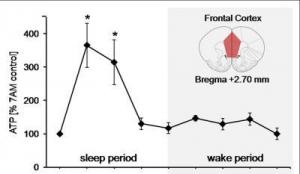
In the initial stages of sleep, energy levels increase dramatically in brain regions found to be active during waking hours, according to new research in the June 30 issue of the Journal of Neuroscience. These results suggest that a surge of cellular energy may replenish brain processes needed to function normally while awake.
Image
currency of cells, in rats increased in four key brain regions normally active during wakefulness. Shown here is the energy surge measured in the frontal cortex, a brain region associated with higher-level thinking. (Credit: Courtesy, with permission: Dworak et al. The Journal of Neuroscience 2010.)

A good night's rest has clear restorative benefits, but evidence of the actual biological processes that occur during sleep has been elusive. Radhika Basheer, PhD, and Robert McCarley, MD, of Boston V.A. Healthcare System and Harvard Medical School, proposed that brain energy levels are key to nightly restoration.

"Our finding bears on one of the perennial conundrums in biology: the function of sleep," Basheer said. "Somewhat surprisingly, there have been no modern-era studies of brain energy using the most sensitive measurements."

The authors measured levels of adenosine triphosphate (ATP), the energy currency of cells, in rats. They found that ATP levels in four key brain regions normally active during wakefulness increased when the rats were in non-REM sleep, but were accompanied by an overall decrease in brain activity. When the animals were awake, ATP levels were steady. When the rats were gently nudged to stay awake three or six hours past their normal sleep times, there was no increase in ATP.

The authors conclude that sleep is necessary for this ATP energy surge, as keeping the rats awake prevented the surge. The energy increase may then power restorative processes absent during wakefulness, because brain cells consume large amounts of energy just performing daily waking functions.

"This research provides intriguing evidence that a sleep-dependent energy surge is needed to facilitate the restorative biosynthetic processes," said Robert Greene, MD, PhD, of the University of Texas Southwestern, a sleep expert who was unaffiliated with the study. He observed that questions arise from the findings, such as the specific cause of the ATP surge. "The authors propose that the surge is related to decreases in brain cell activity during sleep, but it may be due to many other factors as well, including cellular signaling in the brain," he said.

The research was supported by the Department of Veterans Affairs, a Deutsche Forschungsgemeinschaft Fellowship, and the National Institute of Mental Health.

Monday, July 5, 2010

Nanomachines in the Powerhouse of the Cell


Scientists of the University of Freiburg and the University of Frankfurt have elucidated the architecture of the largest protein complex of the cellular respiratory chain.They discovered an unknown mechanism of energy conversion in this molecular complex. The mechanism is required to utilize the energy contained in food.
Image
The structural model of mitochondrial complex I provides new insights in energy conversion at nanoscale. A molecular coupling device links pump modules in the membrane arm of the huge enzyme complex. (Credit: Image courtesy of Albert-Ludwigs-Universität Freiburg)

After ten years of research work, the x-ray crystallographic analysis of the huge and most complicated protein complex of the mitochondrial respiratory chain was successful. The complex contains more than 40 different proteins, marks the entry to cellular respiration and is thus also called mitochondrial complex I. The results are published in the current online-edition of the journal Science.

A detailed understanding of the function of complex I is of special medical interest. Dysfunction of the complex is implicated in several neurodegenerative diseases such as Parkinson´s disease or Alzheimer´s disease, and also with the physiological processes of biological aging, in general. The work of Prof. Carola Hunte of the Freiburg Institute for Biochemistry and Molecular Biology and the Freiburg excellence centre BIOSS (Centre for Biological Signalling Studies) in cooperation with Prof. Ulrich Brandt, Professor for Molecular Bioenergetics and member of the excellence centre „Macromolecular Complexes" and Dr. Volker Zickermann of his research group is a major step forward to this understanding.

The energy metabolism takes place in the so-called powerhouses of the cell, the mitochondria. They transduce the energy taken up as food into adenosine triphosphate, in short ATP, which is the universal energy currency of life. A chain of five complicated molecular machines in the mitochondrial membrane are responsible for the energy conversion. The production of ATP in mitochondria requires so many steps, as it is in principal a Knallgasreaction. In a laboratory experiment, hydrogen and oxygen gas would react in an explosion and the energy contained would be released as heat. In biological oxidation, the energy will be released by the membrane bound protein complexes of the respiratory chain in a controlled manner in small packages. Comparable to a fuel cell, this process generates an electrical membrane potential, which is the driving force of ATP synthesis. The total surface of all mitochondrial membranes in a human body covers about 14.000 square meter. This accounts for a daily production of about 65 kg of ATP.

The now presented structural model provides important and unexpected insights for the function of complex I. A special type of „transmission element," which is not known from any other protein, appears to be responsible for the energy transduction within the complex by mechanical nanoscale coupling. Transferred to the technical world, this could be described as a power transmission by a coupling rod, which connects for instance the wheels of a steam train. This new nano-mechanical principle will now be analysed by additional functional studies and a refined structural analysis.

Wednesday, May 26, 2010

'Nature's Batteries' Powered Early Lifeforms?


Researchers at the University of Leeds have uncovered new clues to the origins of life on Earth.

The team found that a compound known as pyrophosphite may have been an important energy source for primitive lifeforms.

There are several conflicting theories of how life on Earth emerged from inanimate matter billions of years ago -- a process known as abiogenesis.

"It's a chicken and egg question," said Dr Terry Kee of the University of Leeds, who led the research. "Scientists are in disagreement over what came first -- replication, or metabolism. But there is a third part to the equation -- and that is energy."
Me
A space-filling molecular model of ATP (adenosine 
triphosphate), with hydrogen shown white, oxygen 
red, phosphorous orange, nitrogen turquoise, and 
carbon black, and with ions marked by a negative 
sign. (Credit: Courtesy of Wikipedia)


All living things require a continual supply of energy in order to function. This energy is carried around our bodies within certain molecules, one of the best known being ATP (adenosine triphosphate), which converts heat from the sun into a useable form for animals and plants.

At any one time, the human body contains just 250g of ATP -- this provides roughly the same amount of energy as a single AA battery. This ATP store is being constantly used and regenerated in cells via a process known as respiration, which is driven by natural catalysts called enzymes.

"You need enzymes to make ATP and you need ATP to make enzymes," explained Dr Kee. "The question is: where did energy come from before either of these two things existed? We think that the answer may lie in simple molecules such as pyrophosphite which is chemically very similar to ATP, but has the potential to transfer energy without enzymes."

The key to the battery-like properties of both ATP and pyrophosphite is an element called phosphorus, which is essential for all living things. Not only is phosphorus the active component of ATP, it also forms the backbone of DNA and is important in the structure of cell walls.

But despite its importance to life, it is not fully understood how phosphorus first appeared in our atmosphere. One theory is that it was contained within the many meteorites that collided with the Earth billions of years ago.

"Phosphorus is present within several meteoritic minerals and it is possible that this reacted to form pyrophosphite under the acidic, volcanic conditions of early Earth," added Dr Kee.

The findings, published in the journal Chemical Communications, are the first to suggest that pyrophosphite may have been relevant in the shift from basic chemistry to complex biology when life on earth began. Since completing this research, Dr Kee and his team have found even further evidence for the importance of this molecule and now hope to team up with collaborators from NASA to investigate its role in abiogenesis.

The study was funded by the STFC and the Engineering and Physical Sciences Research Council (EPSRC).