BTemplates.com

Powered by Blogger.

Pageviews past week

Quantum mechanics

Auto News

artificial intelligence

About Me

Recommend us on Google!

Information Technology

Popular Posts

Thursday, June 24, 2010

Neuroscientists Can Predict Your Behavior


In a study with implications for the advertising industry and public health organizations, UCLA neuroscientists have shown they can use brain scanning to predict whether people will use sunscreen during a one-week period even better than the people themselves can.
Precuneus and medial prefrontal cortex highlighted 
in brain. In this study, activity in the medial prefrontal 
region helped researchers predict which study participants 
would increase their sunscreen use, even better than 
the participants themselves could predict. 
(Credit: Image courtesy of UCLA)

"There is a very long history within psychology of people not being very good judges of what they will actually do in a future situation," said the study's senior author, Matthew Lieberman, a UCLA professor of psychology and of psychiatry and biobehavioral sciences. "Many people 'decide' to do things but then don't do them."

The new study by Lieberman and lead author Emily Falk, who earned her doctorate in psychology from UCLA this month, shows that increased activity in a brain region called the medial prefrontal cortex among individuals viewing and listening to public service announcement slides on the importance of using sunscreen strongly indicated that these people were more likely to increase their use of sunscreen the following week, even beyond the people's own expectations.

"From this region of the brain, we can predict for about three-quarters of the people whether they will increase their use of sunscreen beyond what they say they will do," Lieberman said. "If you just go by what people say they will do, you get fewer than half of the people accurately predicted, and using this brain region, we could do significantly better."

"While most people's self-reports are not very accurate, they do not realize their self-reports are wrong so often in predicting future behavior," Falk said. "It is surprising to find out that some technique might be able to predict my own behavior better than I can. Yet the brain seems to reveal something important that we may not even realize."

The study, the first persuasion study in neuroscience to predict behavior change, appears June 23 in the Journal of Neuroscience.

For the study, Falk, Lieberman and their collaborators sought people who did not use sunscreen every day. The study group consisted of 20 participants, mostly UCLA students, 10 female and 10 male. The participants had their brains scanned using functional magnetic resonance imaging (fMRI) at UCLA's Ahmanson-Lovelace Brain Mapping Center as they saw and heard a series of public service announcements. They were also asked about their intentions to use sunscreen over the next week and their attitudes about sunscreen.

The participants were then contacted a week later and asked on how many days during the week they had used sunscreen.

Lieberman and Falk focused on part of the brain's medial prefrontal cortex, which is located in the front of the brain, between the eyebrows. This brain region is associated with self-reflection -- thinking about what we like and do not like and our motivations and desires.

"It is the one region of the prefrontal cortex that we know is disproportionately larger in humans than in other primates," Lieberman said. "This region is associated with self-awareness and seems to be critical for thinking about yourself and thinking about your preferences and values."

The researchers developed a model based on 10 people and tested it on the next 10. They shuffled the 20 people in different ways to test the model. There are more than 180,000 ways to divide the 20 people into groups, Falk said.

"We ran a simulation of the 180,000 combinations, developed our model on the first 10 subjects on each of the 180,000 simulations, and tested it on the second 10," Falk said. "We saw a very reliable relationship, where for the vast majority of the 180,000 ways to divide the group up, this one region of the brain, the medial prefrontal cortex, does a very good job of predicting sunscreen use in the second group."

This finding could be relevant to many public health organizations, as well as the advertising industry, Lieberman and Falk said.

"For advertisers, there may be a lot more that is knowable than is known, and this is a data-driven method for knowing more about how to create persuasive messages," said Lieberman, one of the founders of social cognitive neuroscience.

Neural focus groups

While 19th-century department store pioneer John Wanamaker (quoted at the beginning of this release) advertised effectively for his stores in newspapers, he still said he was wasting half his advertising budget -- only he didn't know which half.

"We're learning something about which half," Lieberman said.

While advertising agencies often use focus groups to test commercials and movie trailers, in the future they and public health officials perhaps should add "neural focus groups" to test which messages will be effective while monitoring the brain activity of their subjects.

"A problem with standard focus groups," Falk said, "is that people are lousy at reporting what they will actually do. We have not had much to supplement that approach, but in the future it may be possible to create what we are calling 'neural focus groups.' Instead of talking with people about what they think they will do, a public health or advertising agency can study their brains and learn what they are really likely to do and how an advertisement would be likely to affect millions of other people as well."

"Given that there are emerging technologies that are relatively portable and approximate some of what fMRI can do at a fraction of the cost, looking to the brain to shape persuasive messages could become a reality," Lieberman said. "But we're just at the beginning. This is one of the first papers on anything like this. There will be a series of papers over the next 10 years or more that will tell us what factors are driving neural responses."

"We hope to build a sophisticated model of persuasion that may incorporate multiple brain regions," said Falk, who studies the neural basis of persuasion and attitude change. She has been hired by the University of Michigan-Ann Arbor as an assistant professor of communication studies and psychology and a member of the university's Institute for Social Research, starting in September.

While some people have emphasized reasoning and emotion as key areas on which to base advertising campaigns, a key question may be whether messages and advertisements can be produced that "make people feel, 'This is about me and is relevant to my preferences and motivations,'" Falk said. "Perhaps effective messages reinforce our values, our self-identity, what motivates us. We will learn much more as we continue this line of research over the years."

Neuroscientists will learn whether they can predict behavior better and are likely to obtain a more nuanced understanding of the roles played by different parts of brain regions, said Falk, who this March received UCLA's Charles E. and Sue K. Young Award for outstanding research and teaching. She is interested in how to make more effective health and other public service messages aimed at young adults.

"There is still much we do not know about how to get people to make healthier choices," Falk said. "We hope to learn much more about what makes messages more or less persuasive."

Different brain regions may be important for persuading people to tell or e-mail their friends about a health message, product or service; Lieberman and Falk are studying this issue of "creating buzz" as well.

However, the implications of the research go far beyond advertising, Lieberman said.

"There are many applications beyond how you make a good 30-second commercial," he said, "including how teachers can communicate better so their students won't tune out or how doctors can convince patients to stick to their instructions. We all use persuasion in some form or another every day."

Beware of hucksters

Some people are already offering "neuro-marketing," purporting to help businesses sell their products and help candidates run their advertising campaigns, Lieberman noted. They may, for example, recommend what colors and sounds to use in commercials. Is this effective, or are they claiming expertise they do not possess?

"In general, they are taking simple views of how different parts of the brain work and are saying it is important to turn a particular part of the brain on when advertising, and therefore you should do more of this or that," Lieberman said. "For instance, they will say you want to activate the amygdala because that is the brain's emotion center. Typically they are not looking at the relationship between what happens in the brain when someone is exposed to an advertisement and what actually are the outcomes that you care about. For example, do people change their behavior? Does someone spread the message to others? Instead, they are giving generic analysis, and my guess is that the vast majority of the advice they are giving is not accurate.

"To really understand the relationship between the brain's responses to brands and persuasive materials and desirable outcomes, you actually have to measure the outcomes that are desirable and not just say what should work," he said. "There are many folks claiming to be neuroscientists who have read a little introductory neuroscience, and that is not enough expertise. It's almost infinitely more complicated than that."

Co-authors on the Journal of Neuroscience paper are Elliot Berkman, a UCLA graduate student of psychology in Lieberman's laboratory who will be an assistant professor of psychology at the University of Oregon this fall; Traci Mann, a professor of psychology at the University of Minnesota-Minneapolis who was formerly on UCLA's faculty; and Brittany Harrison, a former UCLA undergraduate student.
Enhanced by Zemanta

Wednesday, June 23, 2010

New A/C System Could Slash Energy Bills


Ah, the cool, refreshing feel of air conditioning on a sweltering summer day.
Image
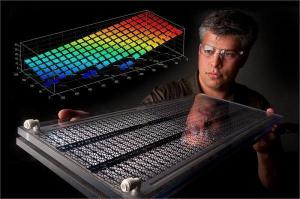
NREL senior engineer Eric Kozubal examines a prototype air flow channel of the DEVap air conditioner, which he co-invented. DEVap, which stands for desiccant-enhanced evaporative air conditioner, is a novel concept that uses membrane technology to combine the efficiency of evaporative cooling and the drying potential of liquid desiccant salt solutions. The graph superimposed on the photo shows shows how hot humid air, in red, changes to cool dry air, in blue, as the air passes through the DEVap core. (Credit: Pat Corkery)

Ugh, the discomfort when those energy bills in July, August and September come due -- $200, $400, $600 or more.

Feel miserable, or dig deep into your wallet -- not much of a choice for the 250 million Americans who live in climates where heat, humidity or both are a Catch-22 for three to 12 months a year.

A soothing solution may be on its way, thanks to a melding of technologies in filters, coolers and drying agents.

The U.S. Department of Energy's National Renewable Energy Laboratory has invented a new air conditioning process with the potential of using 50 percent to 90 percent less energy than today's top-of-the-line units. It uses membranes, evaporative cooling and liquid desiccants in a way that has never been done before in the centuries-old science of removing heat from the air.

"The idea is to revolutionize cooling, while removing millions of metric tons of carbon from the air," NREL mechanical engineer Eric Kozubal, co-inventor of the Desiccant-Enhanced eVaporative air conditioner (DEVap), said.

"We'd been working with membranes, evaporative coolers and desiccants. We saw an opportunity to combine them into a single device for a product with unique capabilities."

Hot and Humid Climates are Tricky

Evaporative coolers are a lower-cost alternative to A/C in dry climates that don't get too hot or humid -- say, Denver, but not Phoenix or Miami. Water flows over a mesh, and a fan blows air through the wet mesh to create humid, cool air.

In humid climes, adding water to the air creates a hot and sticky building environment. Furthermore, the air cannot absorb enough water to become cold.

In Phoenix or Tucson, the evaporative cooler can bring down the temperature, but not enough to make it pleasant inside on a 100-degree day or during the four to eight week moist period known as monsoon season. The cooling bumps up against the wet bulb temperature, the lowest temperature to which air can be cooled by evaporating without changing the pressure. The wet bulb temperature could be 75 or 80 degrees on a mid-summer Tucson day. Typically, evaporative coolers only can bring the temperatures about 85 percent of the way to the wet bulb level.

So, for most of the country, refrigeration-based air conditioning is the preferred way of keeping cool.

Cooling Requires Temperature Drop and Less Moisture

Cooling comes in two forms -- sensible cooling, which is a temperature drop, and latent cooling, which comes from pulling the moisture out of the air.

One intriguing product already on the market in arid, temperate climates is the Coolerado cooler. It differs from a typical evaporative cooler by never increasing the moisture content of the supply air. It provides cool air through indirect evaporative cooling. Indirect evaporative systems use a purge air stream that removes heat from the product or supply air stream that is then directed into a building.

That way, the Coolerado can cool the air all the way to the wet-bulb temperature.

"It's a big improvement on evaporative cooling because it doesn't add moisture and still gives you cold air," Kozubal said. However, in a humid climate, it still does not provide cold air or humidity control.

DEVap: Liquid Desiccants, Permeable Membranes

The DEVap solves that problem. It relies on the desiccants' capacity to create dry air using heat and evaporative coolers' capacity to take dry air and make cold air.

"By no means is the concept novel, the idea of combining the two," Kozubal said. "But no one has been able to come up with a practical and cost-effective way to do it."

HVAC engineers have known for decades the value of desiccants to air conditioning. In fact, one of the pioneers of early A/C, Willis Haviland Carrier, knew of its potential, but opted to go the refrigeration route.

Most people know of desiccants as the pebble-sized handfuls that come with new shoes to keep them dry.

The kind NREL uses are syrupy liquids -- highly concentrated aqueous salt solutions of lithium chloride or calcium chloride. They have a high affinity for water vapor, and can thus create very dry air.

Because of the complexity of desiccant cooling systems, they have traditionally only been used in industrial drying processes. Inventing a device simple enough for easy installation and maintenance is what has impaired desiccant cooling from entering into commercial and residential cooling markets.

To solve that problem, the NREL device uses thin membranes that simplify the process of integrating air flow, desiccants, and evaporative cooling. These result in an air conditioning system that provides superior comfort and humidity control.

The membranes in the DEVap A/C are hydrophobic, which means water tends to bead up rather than soak through the membranes. Imagine rain falling on a freshly waxed car. That property allows the membranes to control the liquid flows within the cooling core. "It's that property that keeps the water and the desiccant separated from the air stream," Kozubal said.

"We bring the water and liquid desiccant into DEVap's heat-mass exchanger core," Kozubal said. "The desiccant and evaporative cooling effect work together to create cold-dry air."

The air is cooled and dried from a hot-humid condition to a cold and dry condition all in one step. This all happens in a fraction of a second as air flows through the DEVap air conditioner. The result is an air conditioner that controls both thermal and humidity loads.

DEVap helps the environment in many ways. DEVap uses 50 percent to 90 percent less energy than top-of-the-line refrigeration-based air conditioning.

Because DEVap uses salt solutions rather than refrigerants, there are no harmful chlorofluorocarbons (CFCs) or hydrochlorofluorocarbons (HCFCs) to worry about. A pound of CFC or HCFC in refrigerant-based A/Cs contributes as much to global warming as 2,000 pounds of carbon dioxide. A typical residential size A/C has as much as 13 pounds of these refrigerants. The release of this much refrigerant is equivalent to burning more than 1,300 gallons of gasoline, or driving over 60,000 miles in a 2010 Toyota Prius. That's based on the Environmental Protection Agency's fuel efficiency rating for the 2010 Toyota Prius and on the standard of 19.5 pounds of carbon dioxide for every gallon of gasoline burned.

Traditional air conditioners use a lot of electricity to run the refrigeration cycle, but DEVap replaces that refrigeration cycle with an absorption cycle that is thermally activated. It can be powered by natural gas or solar energy and uses very little electricity.

This means that DEVap could become the most energy efficient way to cool your house whether you live in Phoenix, New York, or Houston.

NREL has patented the DEVap concept, and Kozubal expects that over the next couple of years he will be working on making the device smaller and simpler and perfecting the heat transfer to make DEVap more cost effective.

Eventually, NREL will license the technology to industry, "We're never going to be in the air conditioner manufacturing business," said Ron Judkoff, Principle Program Manager for Building Energy Research at NREL. "But we'd like to work with manufacturers to bring DEVap to market and create a more efficient and environmentally benign air conditioning product."

Tuesday, June 22, 2010

Battery Power Capacity Boost from Nanotubes?


Batteries might gain a boost in power capacity as a result of a new finding from researchers at MIT. They found that using carbon nanotubes for one of the battery's electrodes produced a significant increase -- up to tenfold -- in the amount of power it could deliver from a given weight of material, compared to a conventional lithium-ion battery. Such electrodes might find applications in small portable devices, and with further research might also lead to improved batteries for larger, more power-hungry applications.

Image
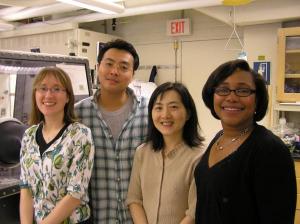
From left, students Betar Gallant and Seung Woo 
Lee and professors Yang Shao-Horn and Paula 
Hammond, in one of the labs where they did 
research on the use of carbon nanotubes 
in lithium batteries. (Credit: Image courtesy of MIT)

To produce the powerful new electrode material, the team used a layer-by-layer fabrication method, in which a base material is alternately dipped in solutions containing carbon nanotubes that have been treated with simple organic compounds that give them either a positive or negative net charge. When these layers are alternated on a surface, they bond tightly together because of the complementary charges, making a stable and durable film.

The findings, by a team led by Associate Professor of Mechanical Engineering and Materials Science and Engineering Yang Shao-Horn, in collaboration with Bayer Chair Professor of Chemical Engineering Paula Hammond, are reported in a paper published June 20 in the journal Nature Nanotechnology. The lead authors are chemical engineering student Seung Woo Lee PhD '10 and postdoctoral researcher Naoaki Yabuuchi.

Batteries, such as the lithium-ion batteries widely used in portable electronics, are made up of three basic components: two electrodes (called the anode, or negative electrode, and the cathode, or positive electrode) separated by an electrolyte, an electrically conductive material through which charged particles, or ions, can move easily. When these batteries are in use, positively charged lithium ions travel across the electrolyte to the cathode, producing an electric current; when they are recharged, an external current causes these ions to move the opposite way, so they become embedded in the spaces in the porous material of the anode.

In the new battery electrode, carbon nanotubes -- a form of pure carbon in which sheets of carbon atoms are rolled up into tiny tubes -- "self-assemble" into a tightly bound structure that is porous at the nanometer scale (billionths of a meter). In addition, the carbon nanotubes have many oxygen groups on their surfaces, which can store a large number of lithium ions; this enables carbon nanotubes for the first time to serve as the positive electrode in lithium batteries, instead of just the negative electrode.

This "electrostatic self-assembly" process is important, Hammond explains, because ordinarily carbon nanotubes on a surface tend to clump together in bundles, leaving fewer exposed surfaces to undergo reactions. By incorporating organic molecules on the nanotubes, they assemble in a way that "has a high degree of porosity while having a great number of nanotubes present," she says.

Lithium batteries with the new material demonstrate some of the advantages of both capacitors, which can produce very high power outputs in short bursts, and lithium batteries, which can provide lower power steadily for long periods, Lee says. The energy output for a given weight of this new electrode material was shown to be five times greater than for conventional capacitors, and the total power delivery rate was 10 times that of lithium-ion batteries, the team says. This performance can be attributed to good conduction of ions and electrons in the electrode, and efficient lithium storage on the surface of the nanotubes.

In addition to their high power output, the carbon nanotube electrodes showed very good stability over time. After 1,000 cycles of charging and discharging a test battery, there was no detectable change in the material's performance.

The electrodes the team produced had thicknesses up to a few microns, and the improvements in energy delivery only were seen at high-power output levels. In future work, the team aims to produce thicker electrodes and extend the improved performance to low-power outputs as well, they say. In its present form, the material might have applications for small, portable electronic devices, says Shao-Horn, but if the reported high power capability were demonstrated in a much thicker form -- with thicknesses of hundreds of microns rather than just a few -- it might eventually be suitable for other applications such as hybrid cars.

While the electrode material was produced by alternately dipping a substrate into two different solutions -- a relatively time-consuming process -- Hammond suggests that the process could be modified by instead spraying the alternate layers onto a moving ribbon of material, a technique now being developed in her lab. This could eventually open the possibility of a continuous manufacturing process that could be scaled up to high volumes for commercial production, and could also be used to produce thicker electrodes with a greater power capacity. "There isn't a real limit" on the potential thickness, Hammond says. "The only limit is the time it takes to make the layers," and the spraying technique can be up to 100 times faster than dipping, she says.

Lee says that while carbon nanotubes have been produced in limited quantities so far, a number of companies are currently gearing up for mass production of the material, which could help to make it a viable material for large-scale battery manufacturing.

Monday, June 21, 2010

Gene Therapy Reverses Type 1 Diabetes in Mice


Researchers have developed an experimental cure for Type 1 diabetes, a disease that affects about one in every 400 to 600 children and adolescents.

Image
In a new study using gene therapy in mice, researchers 
say they have developed an experimental cure for 
Type 1 diabetes. (Credit: iStockphoto)

Results of the research in a mouse model of Type 1 diabetes are being presented at The Endocrine Society's 92nd Annual Meeting in San Diego.

Using gene therapy, the team from Baylor College of Medicine in Houston tried to counter the two defects that cause Type 1 diabetes: autoimmune attack and destruction of the insulin-producing beta cells. They used nonobese diabetic mice, which spontaneously develop diabetes due to autoimmunity, just as humans do with Type 1 diabetes.

"A single treatment cured about 50 percent of the diabetic mice, restoring their blood sugar to normal so that they no longer need insulin injections," said study co-author Lawrence Chan, MD, DSc, chief of Baylor's diabetes, endocrinology and metabolism division.

Type 1 diabetes occurs when the body's immune system attacks and destroys the beta cells in the pancreas, the insulin "factory" of the body. The resulting near-complete deficiency of insulin -- the hormone that controls blood sugar -- leads to a buildup of high blood sugar and thus diabetes.

In past studies of their original gene therapy, Chan's group was able to stimulate new formation of beta cells in the liver and restore insulin production and normal blood sugar levels in more than 100 mice with chemically induced diabetes. However, in nonobese diabetic mice the treatment failed to reverse Type 1 diabetes because the mouse's immune system killed the newly formed beta cells, he said.

In this research, which was funded by the National Institute of Diabetes, Kidney and Digestive Diseases, Chan said they "added to the original gene therapy approach a protective gene that shields the newly formed beta cells from autoimmune attack." The added gene was for interleukin-10, an important regulator of the immune system. Past studies showed that interleukin-10 can prevent diabetes development in mice but cannot reverse the disease once it has developed because of the lack of beta cells.

However, when the researchers combined the gene therapy with interleukin-10 into a single intravenous injection, the treatment showed a complete reversal of diabetes in half of the mice during more than 20 months' follow-up. Although the therapy did not reverse autoimmunity throughout the body, it protected the new beta cells from the local destructive effect of autoimmunity, Chan explained.

"We developed a protective 'moat' around the new beta cells," he said. "We are now developing other strategies to try to fortify the newly formed beta cells and give them better weapons in addition to the moat, in order to increase the treatment's cure rate."

Why the gene therapy did not work in all the mice is unclear. However, Chan said the treated mice that did not have improvements in their blood sugar did gain weight and lived a little longer than untreated mice.
Enhanced by Zemanta

Fly Cells Flock Together, Follow the Light


Scientists at Johns Hopkins report using a laser beam to activate a protein that makes a cluster of fruit fly cells act like a school of fish turning in social unison, following the lead of the one stimulated with light.
Image
Still image from a video clip showing a photo-activatable 
form of Rac. (Credit: Image courtesy of Denise Montell Lab)

The study of this unexpected cell movement, reported May 16 in Nature Cell Biology,holds potential importance for understanding embryonic development, wound healing and tumor metastasis -- the process by which tumor cells acquire the ability to invade surrounding tissues and migrate long distances to colonize lymph nodes, bones and other distant organs.

The research dramatically demonstrates, the researchers say, the collective direction-sensing behavior of live cells in intact tissue, and a means of controlling protein behavior in a living organism by shining a focused beam of light precisely on the parts of cells where they want the protein to be active.

"Our little system in the fruit fly is an elegant example of cells behaving socially in their natural environment -- surrounded by other cells," says Denise Montell, Ph.D., a professor of biological chemistry and director of the Center for Cell Dynamics at the Johns Hopkins University School of Medicine. "You can't capture this behavior if you look at individual cells in a culture dish."

The "social" migrating behavior among a cluster of cells in the fly ovary surprised the research team, which was using a new laser light tool to manipulate protein activity.

"People tend to think of cancer as single cells breaking off from the tumor and migrating away," Montell says, but it's likely that this collective form of movement is important, at one phase or another, in the spread of tumors."

A better understanding of how and why cells move can facilitate the development of new treatments not only for cancer but other disorders characterized by aberrant cell behavior.

Developed in the laboratory of Klaus Hahn, Ph.D., Thurman Professor of Pharmacology at the University of North Carolina at Chapel Hill, the light-activation technique previously had been shown to control cell movement in cultured mammalian cells. The Hopkins-led study provides proof of principle that a non-toxic light alone can activate a protein in live organisms, allowing researchers to safely control when and where cells move.

The Hopkins team conducted their study on a cluster of six so-called border cells in the fly ovary, cells the team has long studied and which are important to the fly because if they don't migrate, females are sterile. In addition they serve as a model for understanding the mechanisms that control collective cell movements in general, which occur during normal embryonic development, wound healing and in tumor metastasis.

First, they genetically altered the border cells so that they were lacking the ability to respond to naturally occurring chemical attractants that normally control their movement. Then they used a fly protein known as Rac, which was fused to a photoactivatable (PA) plant protein, a creation engineered by Hahn's lab. The PA-Rac, which remains inert in the dark, reacts to light because the plant protein changes shape and allows Rac to become active, causing the cells to move.

Because a beam of laser light can be much smaller than a cell, the team was able to activate Rac not only in one single cell, but also in one part of one cell, Montell says: "The other cool thing is this is reversible, so as soon as you take the light away, the PA-Rac wraps back up and turns itself off."

Following up on previous research, the team wanted to find out if Rac would be sufficient to set the direction of movement of cells within live tissue.

When they shined a laser beam on various individual cells, the entire cluster responded by moving in directions that it wouldn't under normal conditions: sideways, for instance, and even in reverse. In short, they followed the light.

"When we activated Rac in even one part of one of these cells -- and not in the cell that would be the leader if all was normal -- it was as if all the other cells said, Aha! You've got more Rac activity so we're heading your way," Montell says. "It's amazing to me that somehow the cells sense each others' levels of Rac activity and collectively decide which way to go.

Authors on the paper, in addition to Montell and Hahn, are Xiaobo Wang from Johns Hopkins and Yi Wu from UNC.

Funding was provided by the National Institutes of Health and the Cell Migration Consortium.

A video clip of a photo-activatable form of Rac is available at: http://www.icm.com/montell/MovieS5%28RacQ61Lforwardandrev%29.mov

Enhanced by Zemanta

Sunday, June 20, 2010

Constraining the Reign of Ancient Egypt: Radiocarbon Dating Helps to Nail Down the Chronology of Kings, Researchers Say


For several thousands of years, ancient Egypt dominated the Mediterranean world -- and scholars across the globe have spent more than a century trying to document the reigns of the various rulers of Egypt's Old, Middle and New Kingdoms. Now, a detailed radiocarbon analysis of short-lived plant remains from the region is providing scientists with a long and accurate chronology of ancient Egyptian dynasties that agrees with most previous estimates but also imposes some historic revisions.
Image
Statue of the head of Ramses II at Luxor temple at night. 
(Credit: iStockphoto/Paul Vinten)

Although previous chronologies have been precise in relative ways, assigning absolute dates to specific events in ancient Egyptian history has been an extremely contentious undertaking. This new study tightly constrains those previous predictions, especially for the Old Kingdom, which was determined to be slightly older than some scholars had believed. The study will also allow for more accurate historical comparisons to surrounding areas, like Libya and Sudan, which have been subject to many radiocarbon dating techniques in the past.

Christopher Bronk Ramsey and colleagues from the Universities of Oxford and Cranfield in England, along with a team of researchers from France, Austria and Israel, collected radiocarbon measurements from 211 various plants -- obtained from museum collections in the form of seeds, baskets, textiles, plant stems and fruits -- that were directly associated with particular reigns of ancient Egyptian kings. They then combined their radiocarbon data with historical information about the order and length of each king's reign to make a complete chronology of ancient Egyptian dynasties.

Their research is published in the June 18 issue of Science, the peer-reviewed journal published by AAAS, the nonprofit science society.

"My colleague, Joanne Rowland, went to a lot of museums, explaining what we were doing and asking for their participation," Bronk Ramsey said. "The museums were all very helpful in providing material we were interested in -- especially important since export of samples from Egypt is currently prohibited. Fortunately, we only needed samples that were about the same size as a grain of wheat."

The researchers' new chronology does indicate that a few events occurred earlier than previously predicted. It suggests, for example, that the reign of Djoser in the Old Kingdom actually started between 2691 and 2625 B.C. and that the New Kingdom began between 1570 and 1544 B.C.

Bronk Ramsey and his colleagues also found some discrepancies in the radiocarbon levels of the Nile Valley, but they suggest that these are due to ancient Egypt's unusual growing season, which is concentrated in the winter months.

For the most part, the new chronology simply narrows down the various historical scenarios that researchers have been considering for ancient Egypt.

"For the first time, radiocarbon dating has become precise enough to constrain the history of ancient Egypt to very specific dates," said Bronk Ramsey. "I think scholars and scientists will be glad to hear that our small team of researchers has independently corroborated a century of scholarship in just three years."

This report by Bronk Ramsey et al. was funded by the Leverhulme Trust with additional financial support from the German-Israeli Foundation for Scientific Research and Development, NERC, CNRS, CEA, IRSN, IRD, and Ministère de La Culture.
Enhanced by Zemanta

Saturday, June 19, 2010

Highly Efficient Solar Cells Could Result from Quantum Dot Research


Conventional solar cell efficiency could be increased from the current limit of 30 percent to more than 60 percent, suggests new research on semiconductor nanocrystals, or quantum dots, led by chemist Xiaoyang Zhu at The University of Texas at Austin.
Image
Xiaoyang Zhu and colleagues discovered that hot electrons can be transferred from photo-excited lead selenide nanocrystals to an electron conductor made of titanium dioxide. Their discovery points the way toward more efficient solar cells. (Credit: The University of Texas at Austin)

Zhu and his colleagues report their results in this week's Science.

The scientists have discovered a method to capture the higher energy sunlight that is lost as heat in conventional solar cells.

The maximum efficiency of the silicon solar cell in use today is about 31 percent. That's because much of the energy from sunlight hitting a solar cell is too high to be turned into usable electricity. That energy, in the form of so-called "hot electrons," is lost as heat.

If the higher energy sunlight, or more specifically the hot electrons, could be captured, solar-to-electric power conversion efficiency could be increased theoretically to as high as 66 percent.

"There are a few steps needed to create what I call this 'ultimate solar cell,'" says Zhu, professor of chemistry and director of the Center for Materials Chemistry. "First, the cooling rate of hot electrons needs to be slowed down. Second, we need to be able to grab those hot electrons and use them quickly before they lose all of their energy."

Zhu says that semiconductor nanocrystals, or quantum dots, are promising for these purposes.

As for the first problem, a number of research groups have suggested that cooling of hot electrons can be slowed down in semiconductor nanocrystals. In a 2008 paper in Science, a research group from the University of Chicago showed this to be true unambiguously for colloidal semiconductor nanocrystals.

Zhu's team has now figured out the next critical step: how to take those electrons out.

They discovered that hot electrons can be transferred from photo-excited lead selenide nanocrystals to an electron conductor made of widely used titanium dioxide.

"If we take the hot electrons out, we can do work with them," says Zhu. "The demonstration of this hot electron transfer establishes that a highly efficient hot carrier solar cell is not just a theoretical concept, but an experimental possibility."

The researchers used quantum dots made of lead selenide, but Zhu says that their methods will work for quantum dots made of other materials, too.

He cautions that this is just one scientific step, and that more science and a lot of engineering need to be done before the world sees a 66 percent efficient solar cell.

In particular, there's a third piece of the science puzzle that Zhu is working on: connecting to an electrical conducting wire.

"If we take out electrons from the solar cell that are this fast, or hot, we also lose energy in the wire as heat," says Zhu. "Our next goal is to adjust the chemistry at the interface to the conducting wire so that we can minimize this additional energy loss. We want to capture most of the energy of sunlight. That's the ultimate solar cell.

"Fossil fuels come at a great environmental cost," says Zhu. "There is no reason that we cannot be using solar energy 100 percent within 50 years."

Funding for this research was provided by the U.S. Department of Energy. Coauthors include William Tisdale, Brooke Timp, David Norris and Eray Aydil from the University of Minnesota, and Kenrick Williams from The University of Texas at Austin.

CO2: Missing Link to Past Climate Changes


Increasingly, the Earth's climate appears to be more connected than anyone would have imagined. El Nino, the weather pattern that originates in a patch of the equatorial Pacific, can spawn heat waves and droughts as far away as Africa.
Image
Sedimentary cores taken from the ocean floor in four l
ocations show that climate patterns in the tropics have 
mirrored Ice Age cycles for the last 2.7 million years 
and that carbon dioxide has played the leading role in 
determining global climate patterns. Cores from site 806 
were used as controls. (Credit: Timothy Herbert, 
Brown University)

Now, a research team led by Brown University has established that the climate in the tropics over at least the last 2.7 million years changed in lockstep with the cyclical spread and retreat of ice sheets thousands of miles away in the Northern Hemisphere. The findings appear to cement the link between the recent Ice Ages and temperature changes in tropical oceans. Based on that new link, the scientists conclude that carbon dioxide has played the lead role in dictating global climate patterns, beginning with the Ice Ages and continuing today.

"We think we have the simplest explanation for the link between the Ice Ages and the tropics over that time and the apparent role of carbon dioxide in the intensification of Ice Ages and corresponding changes in the tropics," said Timothy Herbert, professor of geological sciences at Brown and the lead author of the paper in Science.

"It certainly supports the idea of global sensitivity of climate to carbon dioxide as the first order of control on global temperature patterns," Herbert added, "but we don't know why. The answer lies in the ocean, we're pretty sure."

The research team, including scientists from Luther College in Iowa, Lafayette College in Pennsylvania, and the University of Hong Kong, analyzed cores taken from the seabed at four locations in the tropical oceans: the Arabian Sea, the South China Sea, the eastern Pacific and the equatorial Atlantic Ocean.

They decided to zero in on tropical ocean surface temperatures because these vast bodies, which make up roughly half of the world's oceans, in large measure orchestrate the amount of water in the atmosphere and thus rainfall patterns worldwide, as well as the concentration of water vapor, the most prevalent greenhouse gas.

Looking at the chemical remains of tiny marine organisms that lived in the sunlit zone of the ocean, the scientists were able to extract the surface temperature for the oceans for the last 3.5 million years, well before the beginning of the Ice Ages. Beginning about 2.7 million years ago, the geologists found that tropical ocean surface temperatures dropped by 1 to 3 degrees Celsius (1.8 to 5.4 degrees Fahrenheit) during each Ice Age, when ice sheets spread in the Northern Hemisphere and significantly cooled oceans in the northern latitudes. Even more compelling, the tropics also changed when Ice Age cycles switched from roughly 41,000-year to 100,000-year intervals.

"The tropics are reproducing this pattern both in the cooling that accompanies the glaciation in the Northern Hemisphere and the timing of those changes," Herbert said. "The biggest surprise to us was how similar the patterns looked all across the tropics since about 2.7 million years ago. We didn't expect such similarity."

Climate scientists have a record of carbon dioxide levels for the last 800,000 years -- spanning the last seven Ice Ages -- from ice cores taken in Antarctica. They have deduced that carbon dioxide levels in the atmosphere fell by about 30 percent during each cycle, and that most of that carbon dioxide was absorbed by high-latitude oceans such as the North Atlantic and the Southern Ocean. According to the new findings, this pattern began 2.7 million years ago, and the amount of atmospheric carbon dioxide absorbed by the oceans has intensified with each successive Ice Age. Geologists know the Ice Ages have gotten progressively colder -- leading to larger ice sheets -- because they have found debris on the seabed of the North Atlantic and North Pacific left by icebergs that broke from the land-bound sheets.

"It seems likely that changes in carbon dioxide were the most important reason why tropical temperatures changed, along with the water vapor feedback," Herbert said.

Herbert acknowledges that the team's findings leave important questions. One is why carbon dioxide began to play a major role when the Ice Ages began 2.7 million years ago. Also left unanswered is why carbon dioxide appears to have magnified the intensity of successive Ice Ages from the beginning of the cycles to the present. The researchers do not understand why the timing of the Ice Age cycles shifted from roughly 41,000-year to 100,000-year intervals.

Contributing authors are Laura Cleaveland Peterson at Luther College, Kira Lawrence at Lafayette College and Zhonghui Liu at the University of Hong Kong. The U.S. National Science Foundation and the Evolving Earth Foundation funded the research. The cores came from the Ocean Drilling Program, sponsored by the NSF, and the Integrated Ocean Drilling Program.

Friday, June 18, 2010

Computers Predict Human Visual Attention


Scientists have just come several steps closer to understanding change blindness -- the well studied failure of humans to detect seemingly obvious changes to scenes around them -- with new research that used a computer-based model to predict what types of changes people are more likely to notice.
Image
Researchers have used a computer-based model to predict what types of changes people are more likely to notice. The achievement sheds light on change blindness -- a failure of humans to detect seemingly obvious changes to scenes around them. (Credit: iStockphoto/Tracy Lorna)

These findings on change blindness were presented in the Journal of Vision.

"This is one of the first applications of computer intelligence to help study human visual intelligence, " said author Peter McOwan, professor at Queen Mary, University of London. "The biologically inspired mathematics we have developed and tested can have future uses in letting computer vision systems such as robots detect interesting elements in their visual environment."

During the study, participants were asked to spot the differences between pre-change and post-change versions of a series of pictures. Some of these pictures had elements added, removed or color altered, with the location of the change based on attention grabbing properties (this is the "salience" level referred to in the article).

Unlike previous research where scientists studied change blindness by manually manipulating such pictures and making decisions about what and where to make a change, the computer model used in this study eliminated any human bias. The research team at Queen Mary's School of Electronic Engineering and Computer Science developed an algorithm that let the computer "decide" how to change the images that study participants were asked to view.

While the experiments confirmed that change blindness can be predicted using this model, the tests also showed that the addition or removal of an object from the scene is detected more readily than changes in the color of the object, a result that surprised the scientists. "We expected a color change to be a lot easier to spot, since color plays such an important role in our day-to-day lives and visual perception," said lead researcher Milan Verma of Queen Mary.

The authors suggest that the computer-based approach will be useful in designing displays of an essential nature such as road signs, emergency services, security and surveillance to draw attention to a change or part of the display that requires immediate attention.

"We live in a world in which we are immersed in visual information," explained Verma. "The result is a huge cognitive burden which may hinder our ability to complete a given task. This study is an important step toward understanding how visual information is processed and how we can go about optimizing the presentation of visual displays."
Enhanced by Zemanta