BTemplates.com

Powered by Blogger.

Pageviews past week

Quantum mechanics

Auto News

artificial intelligence

About Me

Recommend us on Google!

Information Technology

Popular Posts

Showing posts with label Cell biology. Show all posts

Friday, December 28, 2012

Strange Behavior: New Study Exposes Living Cells to Synthetic Protein


One approach to understanding components in living organisms is to attempt to create them artificially, using principles of chemistry, engineering and genetics. A suite of powerful techniques -- collectively referred to as synthetic biology -- have been used to produce self-replicating molecules, artificial pathways in living systems and organisms bearing synthetic genomes.

The depletion of ATP in cells of the bacterium Escherichia coli causes them to transition to a filamentous state and form dense lipid structures known as endoliposomes. The structures can be clearly observed in these transmission electron micrographs of increasing magnification.
The depletion of ATP in cells of the bacterium Escherichia coli causes them to transition to a filamentous state and form dense lipid structures known as endoliposomes. The structures can be clearly observed in these transmission electron micrographs of increasing magnification. (Credit: Image courtesy of Arizona State University)

In a new twist, John Chaput, a researcher at Arizona State University's Biodesign Institute and colleagues at the Department of Pharmacology, Midwestern University, Glendale, AZ have fabricated an artificial protein in the laboratory and examined the surprising ways living cells respond to it.

"If you take a protein that was created in a test tube and put it inside a cell, does it still function," Chaput asks. "Does the cell recognize it? Does the cell just chew it up and spit it out?" This unexplored area represents a new domain for synthetic biology and may ultimately lead to the development of novel therapeutic agents.

The research results, reported in the advanced online edition of the journal ACS Chemical Biology, describe a peculiar set of adaptations exhibited by Escherichia coli bacterial cells exposed to a synthetic protein, dubbed DX. Inside the cell, DX proteins bind with molecules of ATP, the energy source required by all biological entities.

"ATP is the energy currency of life," Chaput says. The phosphodiester bonds of ATP contain the energy necessary to drive reactions in living systems, giving up their stored energy when these bonds are chemically cleaved. The depletion of available intracellular ATP by DX binding disrupts normal metabolic activity in the cells, preventing them from dividing, (though they continue to grow).

After exposure to DX, the normally spherical E. coli bacteria develop into elongated filaments. Within the filamentous bacteria, dense intracellular lipid structures act to partition the cell at regular intervals along its length. These unusual structures, which the authors call endoliposomes, are an unprecedented phenomenon in such cells.

"Somewhere along the line of this filamentation, other processes begin to happen that we haven't fully understood at the genetic level, but we can see the results phenotypically," Chaput says. "These dense lipid structures are forming at very regular regions along the filamented cell and it looks like it could be a defense mechanism, allowing the cell to compartmentalize itself." This peculiar adaptation has never been observed in bacterial cells and appears unique for a single-celled organism.

Producing a synthetic protein like DX, which can mimic the elaborate folding characteristics of naturally occurring proteins and bind with a key metabolite like ATP is no easy task. As Chaput explains, a clever strategy known as mRNA display was used to produce, fine-tune and amplify synthetic proteins capable of binding ATP with high affinity and specificity, much as a naturally occurring ATP-binding protein would.

First, large libraries of random sequence peptides are formed from the four nucleic acids making up DNA, with each strand measuring around 80 nucleotides in length. These sequences are then transcribed into RNA with the help of an enzyme -- RNA polymerase. If a natural ribosome is then introduced, it attaches to the strand and reads the random sequence RNA as though it was a naturally-occurring RNA, generating a synthetic protein as it migrates along the strand. In this way, synthetic proteins based on random RNA sequences can be generated.

Exposing the batch of synthetic proteins to the target molecule and extracting those that bind can then select for ATP-binding proteins. But as Chaput explains, there's a problem: "The big question is how do you recover that genetic information? You can't reverse transcribe a protein back into DNA. You can't PCR amplify a protein. So we have to do all these molecular biology tricks."

The main trick involves an earlier step in the process. A molecular linker is chemically attached to the RNA templates, such that each RNA strand forms a bond with its newly translated protein. The mRNA-protein hybrids are exposed to selection targets (like ATP) over consecutive rounds of increasing stringency. After each round of selection, those library members that remain bound to the target are reverse-transcribed into cDNA (using their conveniently attached RNA messages), and then PCR amplified.

In the current study, E. coli cells exposed to DX transitioned into a filamentous form, which can occur naturally when such cells are subject to conditions of stress. The cells display low metabolic activity and limited cell division, presumably owing to their ATP-starved condition.

The study also examined the ability of E. coli to recover following DX exposure. The cells were found to enter a quiescent state known as viable but non-culturable (VBNC), meaning that they survived ATP sequestration and returned to their non-filamentous state after 48 hours, but lost their reproductive capacity. Further, this condition was difficult to reverse and seems to involve a fundamental reprogramming of the cell.

In an additional response to DX, the filamentous cells form previously undocumented structures, which the authors refer to as endoliposomes. These dense lipid concentrations, spanning the full width of the filamented E. coli, segment the cells into distinct compartments, giving the cells a stringbean-like appearance under the microscope.

The authors speculate that this adaptation may be an effort to maintain homeostasis in regions of the filamentous cell, which have essentially been walled off from the intrusion of ATP-depleting DX. They liken endoliposomes to the series of water-tight compartments found in submarines which are used to isolate damaged sections of the ship and speculate that DX-exposed cells are partitioning their genetic information into regions where it can be safely quarantined. Such self-compartmentalization is known to occur in some eukaryotic cells, but has not been previously observed in prokaryotes like E. coli.

The research indicates that there is still a great deal to learn about bacterial behavior and the repertoire of responses available when such cells encounter novel situations, such as an unfamiliar, synthetic protein. The study also notes that many infectious agents rely on a dormant state, (similar to the VBNC condition observed in the DX-exposed E. coli), to elude detection by antibiotics. A better understanding of the mechanisms driving this behavior could provide a new approach to targeting such pathogens.

The relative safety of E. coli as a model organism for study may provide a fruitful tool for more in-depth investigation of VBNC states in pathogenic organisms. Further, given ATP's central importance for living organisms, its suppression may provide another avenue for combating disease. One example would be an engineered bacteriophage capable of delivering DX genes to pathogenic organisms.

Monday, July 11, 2011

U of T researchers build an antenna for light


University of Toronto researchers have derived inspiration from the photosynthetic apparatus in plants to engineer a new generation of nanomaterials that control and direct the energy absorbed from light.

Their findings are reported in a forthcoming issue of Nature Nanotechnology, which will be released on July 10, 2011.

The U of T researchers, led by Professors Shana Kelley and Ted Sargent, report the construction of what they term "artificial molecules."

"Nanotechnologists have for many years been captivated by quantum dots – particles of semiconductor that can absorb and emit light efficiently, and at custom-chosen wavelengths," explained co-author Kelley, a Professor at the Leslie Dan Faculty of Pharmacy, the Department of Biochemistry in the Faculty of Medicine, and the Department of Chemistry in the Faculty of Arts & Science. "What the community has lacked – until now – is a strategy to build higher-order structures, or complexes, out of multiple different types of quantum dots. This discovery fills that gap."

The team combined its expertise in DNA and in semiconductors to invent a generalized strategy to bind certain classes of nanoparticles to one another.

"The credit for this remarkable result actually goes to DNA: its high degree of specificity – its willingness to bind only to a complementary sequence – enabled us to build rationally-engineered, designer structures out of nanomaterials," said Sargent, a Professor in The Edward S. Rogers Sr. Department of Electrical & Computer Engineering at the University of Toronto, who is also the Canada Research Chair in Nanotechnology. "The amazing thing is that our antennas built themselves – we coated different classes of nanoparticles with selected sequences of DNA, combined the different families in one beaker, and nature took its course. The result is a beautiful new set of self-assembled materials with exciting properties."


Traditional antennas increase the amount of an electromagnetic wave – such as a radio frequency – that is absorbed, and then funnel that energy to a circuit. The U of T nanoantennas instead increased the amount of light that is absorbed and funneled it to a single site within their molecule-like complexes. This concept is already used in nature in light harvesting antennas, constituents of leaves that make photosynthesis efficient. "Like the antennas in radios and mobile phones, our complexes captured dispersed energy and concentrated it to a desired location. Like the light harvesting antennas in the leaves of a tree, our complexes do so using wavelengths found in sunlight," explained Sargent.

"Professors Kelley and Sargent have invented a novel class of materials with entirely new properties. Their insight and innovative research demonstrates why the University of Toronto leads in the field of nanotechnology," said Professor Henry Mann, Dean of the Leslie Dan Faculty of Pharmacy.

"This is a terrific piece of work that demonstrates our growing ability to assemble precise structures, to tailor their properties, and to build in the capability to control these properties using external stimuli," noted Paul S. Weiss, Fred Kavli Chair in NanoSystems Sciences at UCLA and Director of the California NanoSystems Institute.

Kelley explained that the concept published in today's Nature Nanotechnology paper is a broad one that goes beyond light antennas alone.

"What this work shows is that our capacity to manipulate materials at the nanoscale is limited only by human imagination. If semiconductor quantum dots are artificial atoms, then we have rationally synthesized artificial molecules from these versatile building blocks."

Sunday, July 25, 2010

How Do Cells Die? Biophotonic Tools Reveal Real-Time Dynamics in Living Color


Apoptosis, programmed cell death, is essential to normal development, healthy immune system function, and cancer prevention. The process dramatically transforms cellular structures but the limitations of conventional microscopy methods have kept much about this structural reorganization a mystery.
Image
Scientists have developed a biophotonic imaging 
approach capable of monitoring in real-time the 
transformations that cellular macromolecules undergo 
during apoptosis -- programmed cell death. 
(Credit: Image courtesy of University at Buffalo)

Now, in research featured on the cover of the current issue of Proceedings of the National Academy of Sciences, University at Buffalo scientists have developed a biophotonic imaging approach capable of monitoring in real-time the transformations that cellular macromolecules undergo during programmed cell death.

The work could help realize the potential of customized molecular medicine, in which chemotherapy, for example, can be precisely targeted to cellular changes exhibited by individual patients. It can also be a valuable drug development tool for screening new compounds.

"This new ability provides us with a dynamic mapping of the transformations occurring in the cell at the molecular level," says study co-author Paras N. Prasad, PhD, executive director of the UB Institute for Lasers, Photonics and Biophotonics (ILPB) and SUNY Distinguished Professor in the departments of Chemistry, Physics, Electrical Engineering and Medicine. "It provides us with a very clear visual picture of the dynamics of proteins, DNA, RNA and lipids during the cell's disintegration."

Prasad notes that molecular medicine, in which treatments or preventive measures can be tailored to cellular properties exhibited by individual patients, depends on much better methods of visualizing what's happening during critical cellular processes.

"This research helps improve our understanding of cellular events at the molecular level," he says. "If we know that specific molecular changes constitute an early signature of a disease, or what changes may predispose a patient to that disease, then we can take steps to target treatment or even prevent the disease from developing in the first place."

To capture the cellular images, the interdisciplinary UB team of biologists, chemists and physicists, led by Prasad, utilized an advanced biophotonic approach that combines three techniques: a nonlinear, optical imaging system (CARS or Coherent anti-Stokes Raman scattering), TPEF (two-photon excited fluorescence), which images living tissue and cells at deep penetration and Fluorescence Recovery after Photobleaching to measure dynamics of proteins.

"For the first time, this approach allows us to monitor in a single scan, four different types of images, characterizing the distribution of proteins, DNA, RNA and lipids in the cell," says Aliaksandr V. Kachynski, PhD, research associate professor at the ILPB and co-author.

The resulting composite image integrates in one picture the information on all four types of biomolecules, with each type of molecule represented by a different color: proteins in red, RNA in green, DNA in blue and lipids in grey, as shown on the PNAS cover.

Multiplex imaging provided new information on the rate at which proteins diffuse through the cell nucleus, the UB scientists say.

Before apoptosis was induced, the distribution of proteins was relatively uniform, but once apoptosis develops, nuclear structures disintegrate, the proteins become irregularly distributed and their diffusion rate slows down, says Artem Pliss, PhD, research assistant professor at the ILPB and co-author on the paper.

"This research gives us the unique ability to study and improve our understanding of individual subcellular structures and the transformations they go through," says Pliss.

Such precise information will be especially useful for monitoring how specific cancer drugs affect individual cells.

"For example, say drug therapy is being administered to a cancer patient; this system will allow for the monitoring of cellular changes throughout the treatment process," notes Kachynski. "Clinicians will be able to determine the optimal conditions to kill a cancer cell for the particular type of disease. An improved understanding of the drug-biomolecule interactions will help discover the optimal treatment doses so as to minimize side effects."

Andrey Kuzmin, PhD, research assistant professor at the ILPB and co-author, adds that a new paper from the UB team, forthcoming in Biophysical Journal, further extends this work.

"The benefits of the UB multiplex imaging system and its molecular selectivity have been further extended into a new fundamental cellular study, structural reorganization throughout the mitotic cell cycle," he says.

The work was supported by a grant from the John R. Oishei Foundation of Buffalo, N.Y.

The researchers are active participants in the strategic strength in Integrated Nanostructured Systems identified in the UB 2020 strategic plan for academic, research and service excellence.

Monday, June 21, 2010

Fly Cells Flock Together, Follow the Light


Scientists at Johns Hopkins report using a laser beam to activate a protein that makes a cluster of fruit fly cells act like a school of fish turning in social unison, following the lead of the one stimulated with light.
Image
Still image from a video clip showing a photo-activatable 
form of Rac. (Credit: Image courtesy of Denise Montell Lab)

The study of this unexpected cell movement, reported May 16 in Nature Cell Biology,holds potential importance for understanding embryonic development, wound healing and tumor metastasis -- the process by which tumor cells acquire the ability to invade surrounding tissues and migrate long distances to colonize lymph nodes, bones and other distant organs.

The research dramatically demonstrates, the researchers say, the collective direction-sensing behavior of live cells in intact tissue, and a means of controlling protein behavior in a living organism by shining a focused beam of light precisely on the parts of cells where they want the protein to be active.

"Our little system in the fruit fly is an elegant example of cells behaving socially in their natural environment -- surrounded by other cells," says Denise Montell, Ph.D., a professor of biological chemistry and director of the Center for Cell Dynamics at the Johns Hopkins University School of Medicine. "You can't capture this behavior if you look at individual cells in a culture dish."

The "social" migrating behavior among a cluster of cells in the fly ovary surprised the research team, which was using a new laser light tool to manipulate protein activity.

"People tend to think of cancer as single cells breaking off from the tumor and migrating away," Montell says, but it's likely that this collective form of movement is important, at one phase or another, in the spread of tumors."

A better understanding of how and why cells move can facilitate the development of new treatments not only for cancer but other disorders characterized by aberrant cell behavior.

Developed in the laboratory of Klaus Hahn, Ph.D., Thurman Professor of Pharmacology at the University of North Carolina at Chapel Hill, the light-activation technique previously had been shown to control cell movement in cultured mammalian cells. The Hopkins-led study provides proof of principle that a non-toxic light alone can activate a protein in live organisms, allowing researchers to safely control when and where cells move.

The Hopkins team conducted their study on a cluster of six so-called border cells in the fly ovary, cells the team has long studied and which are important to the fly because if they don't migrate, females are sterile. In addition they serve as a model for understanding the mechanisms that control collective cell movements in general, which occur during normal embryonic development, wound healing and in tumor metastasis.

First, they genetically altered the border cells so that they were lacking the ability to respond to naturally occurring chemical attractants that normally control their movement. Then they used a fly protein known as Rac, which was fused to a photoactivatable (PA) plant protein, a creation engineered by Hahn's lab. The PA-Rac, which remains inert in the dark, reacts to light because the plant protein changes shape and allows Rac to become active, causing the cells to move.

Because a beam of laser light can be much smaller than a cell, the team was able to activate Rac not only in one single cell, but also in one part of one cell, Montell says: "The other cool thing is this is reversible, so as soon as you take the light away, the PA-Rac wraps back up and turns itself off."

Following up on previous research, the team wanted to find out if Rac would be sufficient to set the direction of movement of cells within live tissue.

When they shined a laser beam on various individual cells, the entire cluster responded by moving in directions that it wouldn't under normal conditions: sideways, for instance, and even in reverse. In short, they followed the light.

"When we activated Rac in even one part of one of these cells -- and not in the cell that would be the leader if all was normal -- it was as if all the other cells said, Aha! You've got more Rac activity so we're heading your way," Montell says. "It's amazing to me that somehow the cells sense each others' levels of Rac activity and collectively decide which way to go.

Authors on the paper, in addition to Montell and Hahn, are Xiaobo Wang from Johns Hopkins and Yi Wu from UNC.

Funding was provided by the National Institutes of Health and the Cell Migration Consortium.

A video clip of a photo-activatable form of Rac is available at: http://www.icm.com/montell/MovieS5%28RacQ61Lforwardandrev%29.mov

Enhanced by Zemanta

Thursday, April 1, 2010

Toward Making the Blind See: Gene Therapy Restores Vision in Mice


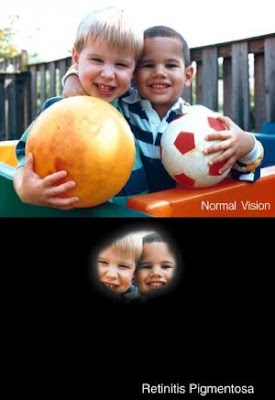
Scientists from Buffalo, Cleveland, and Oklahoma City made a huge step toward making the blind see, and they did it by using a form of gene therapy that does not involve the use of modified viruses. In a research report published in the April 2010 print issue of The FASEB Journal, scientists describe how they used a non-viral, synthetic nanoparticle carrier to improve and save the sight of mice with retinitis pigmentosa, an inherited disease characterized by progressive vision loss and eventual blindness.
Gene Therapy
Top: Normal vision. Bottom: The same scene as it might be viewed by a person with retinitis pigmentosa. (Credit: National Eye Institute, National Institutes of Health)
"We hope the results of our study will be instrumental in generating a cure for the debilitating blindness associated with retinitis pigmentosa and other inherited and acquired retinal diseases," said Muna I. Naash, Ph.D., a researcher involved in the work from the Department of Cell Biology at the University of Oklahoma Health Sciences Center in Oklahoma City. "Compacted DNA nanoparticles are an exciting treatment strategy for these diseases and we look forward to exciting new developments."

To make this discovery, Naash and colleagues used groups of mice with the retinal degeneration slow (Rds) gene, which causes retinitis pigmentosa. The mice received one of three types of "treatments:" nanoparticles containing the normal copy of the Rds gene, the normal gene alone, or saline solution. After these treatments were delivered to the mice, the structure and function of the retina were analyzed by comparing them to untreated mice with retinitis pigmentosa and healthy mice with the normal Rds gene. Researchers also measured the level and pattern of Rds gene expression, as well as functional, structural and biochemical improvements in disease symptoms. They discovered that mice receiving the nanoparticle gene therapy show significant signs of healing. These mice had structural improvement in their retinas, as well as functional vision improvements, which lasted throughout the duration of the study. The mice that received the gene alone or saline continued to lose their vision. The nanoparticles were safe and well-tolerated with no adverse effects.

"Making the blind see was once called a miracle," said Gerald Weissmann, M.D., Editor-in-Chief of The FASEB Journal. "As we have expanded our understanding of evolution, genetics, and nanotechnology, chances are that "miraculous" cures will become as commonplace as those claimed by faith-healers past and present."

According to the National Institutes of Health Office of Rare Diseases Research, retinitis pigmentosa is a group of inherited eye diseases that affect the retina. Retinitis pigmentosa causes cells in the retina to die prematurely, eventually leading to vision loss. There is no cure.

Sunday, January 24, 2010

Neuron Connections Seen in 3-D


A team of researchers from the Max Planck Institute of Biochemistry, in Germany, led by the Spanish physicist Rubén Fernández-Busnadiego, has managed to obtain 3D images of the vesicles and filaments involved in communication between neurons. The method is based on a novel technique in electron microscopy, which cools cells so quickly that their biological structures can be frozen while fully active.

This three-dimensional visualization of synapses shows the tomography mail synaptic vesicles (yellow), cell membrane (purple), connectors between vesicles (red), filaments that anchor the vesicles to the cell membrane (blue), microtubule (dark green), material synaptic space (light green) and postsynaptic density (orange). (Credit: Fernández-Busnadiego et al.)

"We used electron cryotomography, a new technique in microscopy based on ultra-fast freezing of cells, in order to study and obtain three-dimensional images of synapsis, the cellular structure in which the communication between neurons takes place in the brains of mammals" Rubén Fernández-Busnadiego, lead author of the study which features on the front cover of this month's Journal of Cell Biology and a physicist at the Max Planck Institute of Biochemistry, in Germany, said.

Thursday, September 3, 2009

Tumors Feel The Deadly Sting Of Nanobees


When bees sting, they pump poison into their victims. Now the toxin in bee venom has been harnessed to kill tumor cells by researchers at Washington University School of Medicine in St. Louis. The researchers attached the major component of bee venom to nano-sized spheres that they call nanobees.


Bee on a finger. Researchers have recently harnessed the toxin in bee venom
to kill tumor cells. (Credit: iStockphoto/Tatiana Buzuleac)

In mice, nanobees delivered the bee toxin melittin to tumors while protecting other tissues from the toxin's destructive power. The mice's tumors stopped growing or shrank. The nanobees' effectiveness against cancer in the mice is reported in advance online publication Aug. 10 in the Journal of Clinical Investigation.


"The nanobees fly in, land on the surface of cells and deposit their cargo of melittin which rapidly merges with the target cells," says co-author Samuel Wickline, M.D., who heads the Siteman Center of Cancer Nanotechnology Excellence at Washington University. "We've shown that the bee toxin gets taken into the cells where it pokes holes in their internal structures."


Melittin is a small protein, or peptide, that is strongly attracted to cell membranes, where it can form pores that break up cells and kill them.


"Melittin has been of interest to researchers because in high enough concentration it can destroy any cell it comes into contact with, making it an effective antibacterial and antifungal agent and potentially an anticancer agent," says co-author Paul Schlesinger, M.D., Ph.D., associate professor of cell biology and physiology. "Cancer cells can adapt and develop resistance to many anticancer agents that alter gene function or target a cell's DNA, but it's hard for cells to find a way around the mechanism that melittin uses to kill."


The scientists tested nanobees in two kinds of mice with cancerous tumors. One mouse breed was implanted with human breast cancer cells and the other with melanoma tumors. After four to five injections of the melittin-carrying nanoparticles over several days, growth of the mice's breast cancer tumors slowed by nearly 25 percent, and the size of the mice's melanoma tumors decreased by 88 percent compared to untreated tumors.


The researchers indicate that the nanobees gathered in these solid tumors because tumors often have leaky blood vessels and tend to retain material. Scientists call this the enhanced permeability and retention effect of tumors, and it explains how certain drugs concentrate in tumor tissue much more than they do in normal tissues.


But the researchers also developed a more specific method for making sure nanobees go to tumors and not healthy tissue by loading the nanobees with additional components. When they added a targeting agent that was attracted to growing blood vessels around tumors, the nanobees were guided to precancerous skin lesions that were rapidly increasing their blood supply. Injections of targeted nanobees reduced the extent of proliferation of precancerous skin cells in the mice by 80 percent.


Overall, the results suggest that nanobees could not only lessen the growth and size of established cancerous tumors but also act at early stages to prevent cancer from developing.


"Nanobees are an effective way to package the useful, but potentially deadly, melittin, sequestering it so that it neither harms normal cells nor gets degraded before it reaches its target," Schlesinger says.


If a significant amount of melittin were injected directly into the bloodstream, widespread destruction of red blood cells would result. The researchers showed that nanoparticles protected the mice's red cells and other tissues from the toxic effects of melittin. Nanobees injected into the bloodstream did not harm the mice. They had normal blood counts, and tests for the presence of blood-borne enzymes indicative of organ damage were negative.


When secured to the nanobees, melittin is safe from protein-destroying enzymes that the body produces. Although unattached melittin was cleared from the mice's circulation within minutes, half of the melittin on nanobees was still circulating 200 minutes later. Schlesinger indicates that is long enough for the nanobees to circulate through the mice's bloodstream 200 times, giving them ample time to locate tumors.


"Melittin is a workhorse," says Wickline, also professor of medicine in the Cardiovascular Division and professor of physics, of biomedical engineering and of cell biology and physiology. "It's very stable on the nanoparticles, and it's easily and cheaply produced. We are now using a nontoxic part of the melittin molecule to hook other drugs, targeting agents or imaging compounds onto nanoparticles."


The core of the nanobees is composed of perfluorocarbon, an inert compound used in artificial blood. The research group developed perfluorocarbon nanoparticles several years ago and have been studying their use in various medical applications, including diagnosis and treatment of atherosclerosis and cancer. About six millionths of an inch in diameter, the nanoparticles are large enough to carry thousands of active compounds, yet small enough to pass readily through the bloodstream and to attach to cell membranes.


"We can add melittin to our nanoparticles after they are built," Wickline says. "If we've already developed nanoparticles as carriers and given them a targeting agent, we can then add a variety of components using native melittin or melittin-like proteins without needing to rebuild the carrier. Melittin fortunately goes onto the nanoparticles very quickly and completely and remains on the nanobee until cell contact is made."


The flexibility of nanobees and other nanoparticles made by the group suggests they could be readily adapted to fit medical situations as needed. The ability to attach imaging agents to nanoparticles means that the nanoparticles can give a visible indication of how much medication gets to tumors and how tumors respond.


"Potentially, these could be formulated for a particular patient," Schlesinger says. "We are learning more and more about tumor biology, and that knowledge could soon allow us to create nanoparticles targeted for specific tumors using the nanobee approach."


Funding from the National Institutes of Health and the American Heart Association supported this research.


If you like this post, buy me a Pittza at $1!
Reblog this post [with Zemanta]

Thursday, July 9, 2009

Spontaneous Assembly: A New Look At How Proteins Assemble And Organize Themselves Into Complex Patterns


Self-assembling and self-organizing systems are the Holy Grails of nanotechnology, but nature has been producing such systems for millions of years. A team of scientists has taken a unique look at how thousands of bacterial membrane proteins are able to assemble into clusters that direct cell movement to select chemicals in their environment. Their results provide valuable insight into how complex periodic patterns in biological systems can be generated and repaired.

PALM is an an ultrahigh-precision visible light microscopy
technique that enables scientists to photo-actively fluoresce
and image individual proteins. This PALM composite of an
E.coli bacterial cell shows the organization of proteins in
the chemotaxis signaling network.
(Credit: Image courtesy of DOE/Lawrence Berkeley National Laboratory)


Researchers with Berkeley Lab, the University of California (UC) Berkeley, the Howard Hughes Medical Institute, and Princeton University, used an ultrahigh-precision visible light microscopy technique called PALM - for Photo-Activated Localization Microscopy - to show that the chemotaxis network of signaling proteins in E.coli bacteria is able to spontaneously form from clusters of proteins without being actively distributed or attached to specific locations in cells. This simple organizational mechanism - dubbed “stochastic self-assembly” - is related to the self-organizing patterns first described in 1952 by the British computer scientist Alan Turing.


“It is not widely appreciated that complex periodic patterns can spontaneously emerge from simple mechanisms, but that is probably what is happening here,” said Jan Liphardt, the biophysicist who led this research.


Liphardt holds a joint appointment with Berkeley Lab’s Physical Biosciences Division and UC Berkeley’s Physics Department. He is the principal author of a paper now available PLoS Biology. Co-authoring the paper with Liphardt were Derek Greenfield, Ann McEvoy, Hari Shroff, Gavin Crooks, Ned Wingreen and Eric Betzig.


Key to a cell’s survival is the manner in which its critical components - proteins, lipids, nucleic acids, etc. - are arranged. For cells to thrive, the organization of these components must be optimized for their respective activities and also reproducible for succeeding generations of cells. Eukaryotic cells feature distinct subcellular structures, such as membrane-bound organelles and protein transport systems, whose complex organization is readily apparent. However, there is also complex spatial organization to be found within prokaryotic cells, such as rod-shaped bacteria like E. coli.


“It has remained somewhat mysterious how bacteria are able to organize and spatially segregate their interiors and membranes,” said Liphardt. “Two cells which are biochemically identical can have very different behaviors, depending upon their spatial organization. With new technologies such as PALM, we are able to see exactly how cells are organized and relate spatial organization with biological function.”


PALM and the Chemotaxis Network


In the PALM technique, target proteins are labeled with tags that fluoresce when activated by weak ultraviolet light. By keeping the intensity of this light sufficiently low, researchers can photoactivate individual proteins.


“Since individual proteins are imaged one at a time, we can localize and count them, and then computationally assemble the locations of all proteins into a composite, high-precision image,” said Liphardt. “With other technologies, we have to choose between observing large clusters or observing single proteins. With PALM, we can examine a cell and see single proteins, protein dimers, and so forth, all the way up to large clusters containing thousands of proteins. This enables us to see the relative organization of individual proteins within clusters and at the same time see how clusters are arranged with respect to one-another.”


Liphardt and his colleagues applied the PALM technique to the E.coli chemotaxis network of signaling proteins, which direct the movement of the bacteria towards or away from sugars, amino acids, and many other soluble molecules in response to environmental cues. The E.coli chemotaxis network is one of the best-understood of all biological signaling systems and is a model for studying bacterial spatial organization because its components display a nonrandom, periodic distribution in the cell membrane.


“Chemotaxis proteins cluster into large sensory complexes that localize to the poles of the bacterial cell,” Liphardt said. “We wanted to understand how these clusters form, what controls their size and density, and how the cellular location of clusters is robustly maintained in growing and dividing cells.”


Using PALM, Liphardt and his colleagues mapped the cellular locations of three proteins central to the chemotaxis signaling network - Tar, CheY and CheW - with a mean precision of 15 nanometers. They found that cluster sizes were distributed with no one size being “characteristic.” For example, a third of the Tar proteins were part of smaller lateral clusters and not of the large polar clusters. Analysis of the relative cellular locations of more than one million individual proteins from 326 cells determined that they are not actively distributed or attached to specific locations in cells, as had been hypothesized.


“Instead,” said Liphardt, “random lateral protein diffusion and protein-protein interactions are probably sufficient to generate the observed complex, ordered patterns. This simple stochastic self-assembly mechanism, which can create and maintain periodic structures in biological membranes without direct cytoskeletal involvement or active transport, may prove to be widespread in both prokaryotic and eukaryotic cells.”


Liphardt and his research group are now applying PALM to signaling complexes in eukaryotic membranes to see how widespread is stochastic self-assembly in nature. Given that biological systems are nature’s version of nanotechnology, the demonstration that stochastic self-assembly is capable of organizing thousands of proteins into complex and reproducible patterns holds promise for a wide range of applications in nanotechnology, including the fabrication of nanodevices and the development of nanoelectronic circuits.


This work was funded by the U.S. Department of Energy’s Office of Science, Energy Biosciences Program, the Sloan and Searle Foundations, and National Institutes of Health grants.


If you like this post, buy me a beer at $3!
Reblog this post [with Zemanta]