BTemplates.com

Powered by Blogger.

Pageviews past week

Quantum mechanics

Auto News

artificial intelligence

About Me

Recommend us on Google!

Information Technology

Popular Posts

Showing posts with label Infant. Show all posts

Sunday, June 5, 2011

Inside the Infant Mind: Babies Can Perform Sophisticated Analyses of How the Physical World Should Behave


Over the past two decades, scientists have shown that babies only a few months old have a solid grasp on basic rules of the physical world. They understand that objects can't wink in and out of existence, and that objects can't "teleport" from one spot to another.
Baby playing. Scientists have found that infants 
can form surprisingly sophisticated expectations 
of how novel situations will unfold. And if 
something does not fit their expectations, an 
infants' level of surprise can be measured by 
how long they look at something: The more 
unexpected the event, the longer they watch. 
(Credit: © Galina Barskaya / Fotolia)

Now, an international team of researchers co-led by MIT's Josh Tenenbaum has found that infants can use that knowledge to form surprisingly sophisticated expectations of how novel situations will unfold.

Furthermore, the scientists developed a computational model of infant cognition that accurately predicts infants' surprise at events that violate their conception of the physical world.

The model, which simulates a type of intelligence known as pure reasoning, calculates the probability of a particular event, given what it knows about how objects behave. The close correlation between the model's predictions and the infants' actual responses to such events suggests that infants reason in a similar way, says Tenenbaum, associate professor of cognitive science and computation at MIT.

"Real intelligence is about finding yourself in situations that you've never been in before but that have some abstract principles in common with your experience, and using that abstract knowledge to reason productively in the new situation," he says.

The study, which appears in the May 27 issue of Science, is the first step in a long-term effort to "reverse-engineer" infant cognition by studying babies at ages 3-, 6- and 12-months (and other key stages through the first two years of life) to map out what they know about the physical and social world. That "3-6-12" project is part of a larger Intelligence Initiative at MIT, launched this year with the goal of understanding the nature of intelligence and replicating it in machines.

Tenenbaum and Luca Bonatti of the Universitat Pompeu Fabra in Barcelona are co-senior authors of the Science paper; the co-lead authors are Erno Teglas of Central European University in Hungary and Edward Vul, a former MIT student who worked with Tenenbaum and is now at the University of California at San Diego.

Elizabeth Spelke, a professor of psychology at Harvard University, did much of the pioneering work showing that babies understand abstract principles about the physical world. Spelke also demonstrated that infants' level of surprise can be measured by how long they look at something: The more unexpected the event, the longer they watch.

Tenenbaum and Vul developed a computational model, known as an "ideal-observer model," to predict how long infants would look at animated scenarios that were more or less consistent with their knowledge of objects' behavior. The model starts with abstract principles of how objects can behave in general (the same principles that Spelke showed infants have), then runs multiple simulations of how objects could behave in a given situation.

In one example, 12-month-olds were shown four objects -- three blue, one red -- bouncing around a container. After some time, the scene would be covered, and during that time, one of the objects would exit the container through an opening.

If the scene was blocked very briefly (0.04 seconds), infants would be surprised if one of the objects farthest from the exit had left the container. If the scene was obscured longer (2 seconds), the distance from exit became less important and they were surprised only if the rare (red) object exited first. At intermediate times, both distance to the exit and number of objects mattered.

The computational model accurately predicted how long babies would look at the same exit event under a dozen different scenarios, varying number of objects, spatial position and time delay. This marks the first time that infant cognition has been modeled with such quantitative precision, and suggests that infants reason by mentally simulating possible scenarios and figuring out which outcome is most likely, based on a few physical principles.

"We don't yet have a unified theory of how cognition works, but we're starting to make progress on describing core aspects of cognition that previously were only described intuitively. Now we're describing them mathematically," Tenenbaum says.

In addition to performing similar studies with younger infants, Tenenbaum plans to further refine his model by adding other physical principles that babies appear to understand, such as gravity or friction. "We think infants are much smarter, in a sense, than this model is," he says. "We now need to do more experiments and model a broader range of the existing literature to test exactly what they know."

He is also developing similar models for infants' "intuitive psychology," or understanding of how other people act. Such models of normal infant cognition could help researchers figure out what goes wrong in disorders such as autism. "We have to understand more precisely what the normal case is like in order to understand how it breaks," Tenenbaum says.

The research was funded by the Ministerio de Ciencia E Innovación (Spain), the James S. McDonnell Foundation, the Office of Naval Research, the Army Research Office, and the Marie Curie Disorders and Coherence of the Embodied Self Research Training Network.
Enhanced by Zemanta

Friday, October 22, 2010

New Mothers Grow Bigger Brains Within Months of Giving Birth: Warmer Feelings Toward Babies Linked to Bigger Mid-Brains


Motherhood may actually cause the brain to grow, not turn it into mush, as some have claimed. Exploratory research published by the American Psychological Association found that the brains of new mothers bulked up in areas linked to motivation and behavior, and that mothers who gushed the most about their babies showed the greatest growth in key parts of the mid-brain.
Mother holding newborn baby. 
(Credit: iStockphoto/Kati Molin)

Led by neuroscientist Pilyoung Kim, PhD, now with the National Institute of Mental Health, the authors speculated that hormonal changes right after birth, including increases in estrogen, oxytocin and prolactin, may help make mothers' brains susceptible to reshaping in response to the baby. Their findings were published in the October issue of Behavioral Neuroscience.

The motivation to take care of a baby, and the hallmark traits of motherhood, might be less of an instinctive response and more of a result of active brain building, neuroscientists Craig Kinsley, PhD, and Elizabeth Meyer, PhD, wrote in a special commentary in the same journal issue.

The researchers performed baseline and follow-up high-resolution magnetic-resonance imaging on the brains of 19 women who gave birth at Yale-New Haven Hospital, 10 to boys and nine to girls. A comparison of images taken two to four weeks and three to four months after the women gave birth showed that gray matter volume increased by a small but significant amount in various parts of the brain. In adults, gray matter volume doesn't ordinarily change over a few months without significant learning, brain injury or illness, or major environmental change.

The areas affected support maternal motivation (hypothalamus), reward and emotion processing (substantia nigra and amygdala), sensory integration (parietal lobe), and reasoning and judgment (prefrontal cortex).

In particular, the mothers who most enthusiastically rated their babies as special, beautiful, ideal, perfect and so on were significantly more likely to develop bigger mid-brains than the less awestruck mothers in key areas linked to maternal motivation, rewards and the regulation of emotions.

The mothers averaged just over 33 years in age and 18 years of school. All were breastfeeding, nearly half had other children and none had serious postpartum depression.

Although these early findings require replication with a larger and more representative sample, they raise intriguing questions about the interaction between mother and child (or parent and child, since fathers are also the focus of study). The intense sensory-tactile stimulation of a baby may trigger the adult brain to grow in key areas, allowing mothers, in this case, to "orchestrate a new and increased repertoire of complex interactive behaviors with infants," the authors wrote. Expansion in the brain's "motivation" area in particular could lead to more nurturing, which would help babies survive and thrive physically, emotionally and cognitively.

Further study using adoptive mothers could help "tease out effects of postpartum hormones versus mother-infant interactions," said Kim, and help resolve the question of whether the brain changes behavior or behavior changes the brain -- or both.

The authors said that postpartum depression may involve reductions in the same brain areas that grew in mothers who were not depressed. "The abnormal changes may be associated with difficulties in learning the rewarding value of infant stimuli and in regulating emotions during the postpartum period," they said. Further study is expected to clarify what happens in the brains of mothers at risk, which may lead to improved interventions.

In their "Theoretical Comment," Kinsley and Meyer, of the University of Richmond, connected this research on human mothers to similar basic research findings in laboratory animals. All the scientists agreed that further research may show whether increased brain volumes are due to growth in nerve cells themselves, longer and more complex connections (dendrites and dendritic spines) between them, or bushier branching in nerve-cell networks.

Editor's Note: This article is not intended to provide medical advice, diagnosis or treatment.

Friday, May 14, 2010

Why Is Breast Milk Best? It's All in the Genes


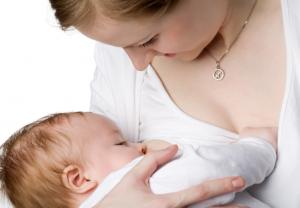
Is breast milk so different from infant formula? The ability to track which genes are operating in an infant's intestine has allowed University of Illinois scientists to compare the early development of breast-fed and formula-fed babies. They say the difference is very real.

Me
Breast milk induces genetic pathways that are quite 
different from those in formula-fed infants, new research 
has found. (Credit: iStockphoto/Oleg Kozlov)

"For the first time, we can see that breast milk induces genetic pathways that are quite different from those in formula-fed infants. Although formula makers have tried to develop a product that's as much like breast milk as possible, hundreds of genes were expressed differently in the breast-fed and formula-fed groups," said Sharon Donovan, a U of I professor of nutrition.

Although both breast-fed and formula-fed babies gain weight and seem to develop similarly, scientists have known for a long time that breast milk contains immune-protective components that make a breast-fed infant's risk lower for all kinds of illnesses, she said.

"The intestinal tract of the newborn undergoes marked changes in response to feeding. And the response to human milk exceeds that of formula, suggesting that the bioactive components in breast milk are important in this response," she noted.

"What we haven't known is how breast milk protects the infant and particularly how it regulates the development of the intestine," she said.

Understanding those differences should help formula makers develop a product that is more like the real thing, she said. The scientists hope to develop a signature gene or group of genes to use as a biomarker for breast-fed infants.

Many of the differences found by the scientists were in fundamental genes that regulate the development of the intestine and provide immune defense for the infant.

In this small proof-of-concept study, Donovan used a new technique patented by Texas A&M colleague Robert Chapkin to examine intestinal gene expression in 22 healthy infants -- 12 breast-fed, 10 formula-fed.

The technique involved isolating intestinal cells shed in the infants' stools, then comparing the expression of different genes between the two groups. Mothers in the study collected fecal samples from their babies at one, two, and three months of age. Scientists were then able to isolate high-quality genetic material, focusing on the RNA to get a gene expression or signature.

Donovan said that intestinal cells turn over completely every three days as billions of cells are made, perform their function, and are exfoliated. Examining the shed cells is a noninvasive way to examine intestinal health and see how nutrition affects intestinal development in infants.

Understanding early intestinal development is important for many reasons, she said.

"An infant's gut has to adapt very quickly. A new baby is coming out of a sterile environment, having received all its nutrients intravenously through the placenta. At that point, babies obviously must begin eating, either mother's milk or formula.

"They also start to become colonized with bacteria, so it's very important that the gut learns what's good and what's bad. The baby's body needs to be able to recognize a bad bacteria or a bad virus and fight it, but it also needs to recognize that even though a food protein is foreign, that protein is okay and the body doesn't want to develop an immune response to it," she said.

If anything goes wrong at this stage, babies can develop food allergies, inflammatory bowel disease, and even asthma. "We're very interested in frequent sampling at this early period of development," she added.

Donovan also would like to learn how bacteria in the gut differ in formula- and breast-fed babies, and this technique should make that possible. "Now we'll be able to get a complete picture of what's happening in an infant -- from the composition of the diet to the microbes in the gut and the genes that are activated along the way."

Of potential clinical importance: The gene expressed most often in breast-fed infants is involved in the cell's response to oxygen deprivation. Lack of oxygen is a factor in the development of necrotizing enterocolitis (NEC), a kind of gangrene of the intestine that can be fatal in premature babies. NEC is a leading cause of disease and death in neonatal intensive care units, with a reported 2,500 cases occurring annually in the United States and a mortality rate of 26 percent.

The study will appear in the June 2010 issue of the American Journal of Physiology, Gastrointestinal and Liver Physiology. Co-authors are Robert S. Chapkin, Chen Zhao, Ivan Ivanov, Laurie A. Davidson, Jennifer S. Goldsby, Joanne R. Lupton, and Edward R. Dougherty, all of Texas A&M University, Rose Ann Mathai and Marcia H. Monaco of the U of I, and Deshanie Rai and W. Michael Russell of Mead Johnson Nutrition. The study was funded by Mead Johnson Nutrition.
Reblog this post [with Zemanta]

Sunday, February 28, 2010

Babies, Even When Premature, 'See' With Their Hands


Even premature babies at 33 weeks post-conceptional age, about 2 months before term (40 gestational weeks), are capable of recognizing and distinguishing two objects of different shapes (a prism and a cylinder) with their right or left hands. This is the first demonstration of fully efficient manual perception in preterm human infants.

A premature baby holding a cylinder. (Credit: Copyright Frédérique Berne-Audéoud)

The phenomenon was discovered by researchers at two laboratories: the Laboratoire de psychologie et neurocognition (CNRS / University of Grenoble 2 / University of Chambéry) and the Laboratoire de psychologie de la perception (CNRS / University of Paris Descartes) in cooperation with a team from the Neonatology Department of the Grenoble University Hospitals. The findings have been published on the PLoS One website.

The source of all perceptual knowledge, the sense organs and sensory systems of premature babies are less efficient than those of full-term babies, even though the latter are also not yet fully developed. Starting in the very first minutes after birth, a full-term infant is subjected to extensive tactile stimulation: it is washed, held on its mother's stomach, nursed, diapered, etc. Its body almost immediately experiences contact with skin other than its own, with towels, sheets, nipples -- in short, with objects of different textures, shapes and consistencies. It is common knowledge that a baby will flex its fingers tightly if its palm is touched by a finger, but this grasping reaction is not just a simple reflex. Even in the first hours of its life, a full-term newborn already has effective manual perception, a tactile capacity that enables it to make sense of its environment. But what about the premature infant, whose neurological functions are even less developed due to its early birth?

To find out, the researchers conducted an experiment with 24 premature babies aged 33 to 34+6 gestational weeks (GW), approximately 2 weeks after their birth. Their average gestational age (age at birth) was 31 GW (which corresponds to about 7 months of pregnancy) and their average weight at birth was 1500 g. The research team adopted an experimental method based on habituation (first phase) and reaction to novelty (second phase), similar to that used for full-term newborns. This method relies on a simple universal principle: the gradual loss of interest that all humans experience in relation to a familiar object and the renewed attention elicited by a new, unfamiliar object. In the first phase, the researcher places a small object (a prism for half of the babies and a cylinder for the other half) in one of the baby's hands (the right hand for half of the group and the left for the other half). As soon as the infant lets go of the object, the experimenter places it back in the same hand and measures how long the baby holds the object each time. The researchers observed that the holding time decreased over the course of the trials, indicating that the baby had become "habituated" to the shape of the object.

In the second phase, once the babies are habituated to their first objects, the researchers present an object with a new shape to half of the group and a familiar object (the same as in the habituation phase) to the other half. The result: the holding time is longer for the new object (reaction to novelty) than for the familiar object. This proves that the decrease in holding time (observed in the first phase) is not due to the babies' simply growing tired, because otherwise they would not be more interested in something new.

This experiment reveals for the first time that preterm infants are capable of recognizing an object with their hands (tactile habituation) and that they show a preference for a novel object, reflecting their capacity to differentiate between two objects of different shapes (tactile discrimination). In other words, each time they hold an object, premature babies, like those born at term, are capable of extracting information tactilely on its shape, temporarily storing this information in their memory and comparing it with new tactile input. If the object is the same they soon stop holding it, but if it is different they show greater interest. Therefore, preterm infants, like full-term newborns, are receptive to tactile information and are already learning.

These findings improve our understanding of the perceptual capacities of premature babies and should help neonatology professionals optimize the handling and treatment of their preterm charges, in particular for the purpose of reducing their stress and offering them optimal conditions for their development.
Reblog this post [with Zemanta]