BTemplates.com

Powered by Blogger.

Pageviews past week

Quantum mechanics

Auto News

artificial intelligence

About Me

Recommend us on Google!

Information Technology

Popular Posts

Showing posts sorted by relevance for query matter. Sort by date Show all posts

Thursday, August 5, 2010

Dark Matter May Be Lurking at Heart of the Sun


A scientist at Royal Holloway, University of London believes dark matter is lurking at the centre of the sun and cooling down its core temperature.
Image
A full-disk multiwavelength extreme ultraviolet 
image of the sun taken by SDO on March 30, 2010. 
False colors trace different gas temperatures. Reds 
are relatively cool (about 60,000 Kelvin, or 107,
540 F); blues and greens are hotter (greater than 
1 million Kelvin, or 1,799,540 F). (Credit: NASA/
Goddard/SDO AIA Team)

The latest study, led by Dr Stephen West from the Department of Physics at Royal Holloway, looks at the possible effects of dark matter on the properties of the sun, if these elusive particles become trapped at its centre.

"Dark matter makes up more than 80 per cent of the total mass of the universe. We know that dark matter exists but to date it has never been produced in a laboratory or directly observed in any experiment, as a result we have very little information about what it actually is. It is important that we examine all possible ways of probing the nature of dark matter and the sun could provide us with an unexpected laboratory in which to do this," says Dr West.

Dark matter is expected to form a halo around our galaxy and since the sun is in motion around the galaxy it experiences a dark matter "wind" as it moves through this halo. Some of the dark matter particles may collide with the elements in the sun and become gravitationally captured by the sun. This could lead to a build up of dark matter particles at the centre of the sun.

The research team's simulations show that the effect of this build up is to reduce the temperature of the solar core. The dark matter particles can absorb heat at the core and transfer it out towards the surface, decreasing the temperature of the core. This change in temperature affects the number of neutrinos produced as by-products in nuclear reactions within the Sun and it is hoped that by examining these neutrinos we can gain information about the Sun's core temperature and whether dark matter plays an important role in solar physics. This in turn could provide information about the mass of individual dark matter particles and how they interact with the elements in the sun.

Dr West adds, "The next step in the work is to look more closely at the change in the predicted number of neutrinos produced in the sun as a result of dark matter collecting at the core and to examine the sensitivity of existing neutrino experiments to this change. In addition, an investigation of the possibility of probing this type of dark matter at the Large Hadron Collider is planned. The LHC could provide complimentary information about the properties of dark matter which along with the information from the sun may lead to a clearer picture of one of the more puzzling issues in physics."
Enhanced by Zemanta

Friday, August 13, 2010

Dark-Matter Search Plunges Physicists to New Depths


This month physicist Juan Collar and his associates are taking their attempt to unmask the secret identity of dark matter into a Canadian mine more than a mile underground.
Pictured here is the 1-liter bubble chamber during 
testing at MINOS Hall, 350 feet underneath Fermi 
National Accelerator Laboratory. Physicists installed 
a similar but larger bubble chamber for detecting 
dark matter this summer in a laboratory more than 
a mile underground in Sudbury, Canada. 
(Credit: Reidar Hahn/Fermilab)

The team is deploying a 4-kilogram bubble chamber at SNOLab, which is part of the Sudbury Neutrino Observatory in Ontario, Canada. A second 60-kilogram chamber will follow later this year. Scientists anticipate that dark matter particles will leave bubbles in their tracks when passing through the liquid in one of these chambers.

Dark matter accounts for nearly 90 percent of all matter in the universe. Although invisible to telescopes, scientists can observe the gravitational influence that dark matter exerts over galaxies. "There is a lot more mass than literally meets the eye," said Collar, Associate Professor in Physics at the University of Chicago. "When you look at the matter budget of the universe, we have a big void there that we can't explain."

Likely suspects for what constitutes dark matter include Weakly Interacting Massive Particles (WIMPS) and axions. Theorists originally proposed the existence of both these groups of subatomic particles to address issues unrelated to dark matter. "These seem to be perfect to explain all of these observations that give us this evidence for dark matter, and that makes them very appealing," Collar said.

SNOLab will be the most ambitious in a series of underground locations where Collar and his colleagues have searched for dark matter. In 2004, they established the Chicagoland Observatory for Underground Particle Physics (COUPP) at Fermi National Accelerator Laboratory.

"We started with a detector the size of a test tube and now have increased the mass by a factor of more than a thousand," said Fermilab physicist Andrew Sonnenschein. "It's exciting to see the first bubble chamber being sent off to SNOLab, because the low level of interference we can expect from the cosmic rays there will make our search for dark matter enormously more sensitive."

The COUPP collaboration consists of scientists from UChicago, Fermilab and Indiana University at South Bend. In 2008 the collaboration released its first results that established an old technology of particle physics -- the bubble chamber -- as a potential dark-matter detector.

COUPP extends to the city of Chicago's flood-control infrastructure, called the Tunnel and Reservoir Project. The city has granted COUPP scientists access to the tunnels, 330 feet underground, to test prototypes of their instruments. The collaboration also tested instruments in a chamber 350 feet below Fermilab, and in a sub-basement of the Laboratory for Astrophysics and Space Research on the UChicago campus.

Collar continually seeks underground venues for his research in order to screen out false signals from various natural radiation sources, including cosmic rays from deep space. "It's an interesting lifestyle," Collar said.

The troublesome underground radiation sources consist of charged particles that lose energy as they traverse through a mile or more of rock. But rock has no impact on particles that interact weakly with matter, such as WIMPS, thus the move to Sudbury.

"SNOLab is a very special, spectacular place, because the infrastructure that the Canadians have developed down there is nothing short of amazing," Collar said. Even though SNOLab sits atop a working nickel mine, conditions there are pristinely antiseptic.

"As you walk in, you have to shower to remove any trace of dust," he said. "It's a clean-room atmosphere, meaning that there's essentially no specks of dust anywhere. We have to worry about such things, sources of radiation associated with dust."

Collar also is a member of the Coherent Germanium Neutrino Technology (CoGeNT) collaboration, which operates a detector that sits nearly half a mile deep at the Soudan Underground Mine State Park in northern Minnesota. The 60-kilogram detector that Collar and colleagues will install at SNOLab later this year, meanwhile, undergoes testing in a tunnel 350 feet beneath Fermilab.

Linking the two sites is an invisible beam of neutrinos that stretches 450 miles from Fermi to Soudan. The beam is part of the Main Injector Neutrino Oscillation Search (MINOS), a particle-physics experiment that is unrelated to the search for dark matter.

The two detectors rely on entirely different techniques. CoGeNT uses a new type of germanium detector that targets the detection of light WIMPS.

"Most of us have been concentrating on intermediate-mass WIMPS for decades," Collar said. "In the last few years the theoreticians have been telling us more and more, look, under these other sets of assumptions, it could be a lighter WIMP. This device is actually the first of its kind in the sense that it's targeted specifically for light WIMPS. We're seeing interesting things with it that we don't fully understand yet."

Collar estimates that it'll take a decade or more for physicists to become completely convinced that they've seen dark-matter particles.

"It's going to take a lot of information from very many different points of view and entirely independent techniques," he said. "One day we'll figure it out."

Monday, December 6, 2010

Dark Matter Could Transfer Energy in the Sun


Researchers from the Institute for Corpuscular Physics (IFIC) and other European groups have studied the effects of the presence of dark matter in the Sun. According to their calculations, low mass dark matter particles could be transferring energy from the core to the external parts of the Sun, which would affect the quantity of neutrinos that reach Earth.
Scientists believe that the majority of the dark matter 
particles gather together in the centre of the Sun, 
but in their elliptic orbits they also travel to the outer
part, interacting and exchanging with the solar atoms. 
In this way, the WIMPs transport the energy from the 
burning central core to the cooler peripheral
parts. (Credit: Hinode JAXA/NASA/PPARC)

"We assume that the dark matter particles interact weakly with the Sun's atoms, and what we have done is calculate at what level these interactions can occur, in order to better describe the structure and evolution of the Sun," Marco Taoso, researcher at the IFIC, a combined centre of the Spanish National Research Council and the University of Valencia, explains.

The astrophysical observations suggest that our galaxy is situated in a halo of dark matter particles. According to the models, some of these particles, the WIMPs (Weakly Interacting Massive Particles) interact weakly with other normal ones, such as atoms, and could be building up on the inside of stars. The study, recently published in the journal Physical Review D, carries out an in-depth study of the case of the Sun in particular.

"When the WIMPs pass through the Sun they can break up the atoms of our star and lose energy. This prevents them from escaping the gravitational force of the Sun which captures them, and they become trapped, orbiting inside it, with no way of escaping," the researcher points out.

The dark matter cools down the Sun's core

Scientists believe that the majority of the dark matter particles gather together in the centre of the Sun, but in their elliptic orbits they also travel to the outer part, interacting and exchanging with the solar atoms. In this way, the WIMPs transport the energy from the burning central core to the cooler peripheral parts.

"This effect produces a cooling down of the core, the region from where the neutrinos originate due to the nuclear reactions of the Sun," Taoso points out. "And this corresponds to a reduction in the flux of solar neutrinos, since these depend greatly on the temperature of the core."

The neutrinos that reach Earth can be measured by means of different techniques. These data can be used to detect the modifications of the solar temperature caused by the WIMPs. The transport of energy by these particles depends on the likelihood of them interacting with the atoms, and the "size" of these interactions is related to the reduction in the neutrino flux.

"As a result, current data about solar neutrinos can be used to put limits on the extent of the interactions between dark matter and atoms, and using numerical codes we have proved that certain values correspond to a reduction in the flux of solar neutrinos and clash with the measurements," the scientist reveals.

The team has applied their calculations to better understand the effects of low mass dark matter particles (between 4 and 10 gigaelectronvolts). At this level we find models that attempt to explain the results of experiments such as DAMA (beneath an Italian mountain) or CoGent (in a mine in the USA), which look for dark material using "scintillators" or WIMP detectors.

Debate about WIMP and solar composition

This year another study by scientists from Oxford University (United Kingdom) also appeared. It states that WIMPs not only reduce the fluxes of solar neutrinos, but also, furthermore, modify the structure of the Sun and can explain its composition.

"Our calculations, however, show that the modifications of the star's structure are too small to support this claim and that the WIMPs cannot explain the problem of the composition of the sun," Taoso concludes.

Monday, September 20, 2010

Brain Matter Linked to Introspective Thoughts Structure of Prefrontal Cortex Helps Humans Think About One's Own Thinking


A specific region of the brain appears to be larger in individuals who are good at turning their thoughts inward and reflecting upon their decisions, according to new research published in the journal Science. This act of introspection -- or "thinking about your thinking" -- is a key aspect of human consciousness, though scientists have noted plenty of variation in peoples' abilities to introspect.
Views of inflated cortical surface showing areas of brain gray matter correlating with introspective accuracy. (Credit: Image © Science/AAAS)

The new study will be published in the 17 September issue of the journal Science. Science is published by AAAS, the nonprofit science society.

In light of their findings, this team of researchers, led by Prof. Geraint Rees from University College London, suggests that the volume of gray matter in the anterior prefrontal cortex of the brain, which lies right behind our eyes, is a strong indicator of a person's introspective ability. Furthermore, they say the structure of white matter connected to this area is also linked to this process of introspection.

It remains unclear, however, how this relationship between introspection and the two different types of brain matter really works. These findings do not necessarily mean that individuals with greater volume of gray matter in that region of the brain have experienced -- or will experience -- more introspective thoughts than other people. But, they do establish a correlation between the structure of gray and white matter in the prefrontal cortex and the various levels of introspection that individuals may experience.

In the future, the discovery may help scientists understand how certain brain injuries affect an individual's ability to reflect upon their own thoughts and actions. With such an understanding, it may eventually be possible to tailor appropriate treatments to patients, such as stroke victims or those with serious brain trauma, who may not even understand their own conditions.

"Take the example of two patients with mental illness -- one who is aware of their illness and one who is not," said one of the study's authors, Stephen Fleming from University College London. "The first person is likely to take their medication, but the second is less likely. If we understand self-awareness at the neurological level, then perhaps we can also adapt treatments and develop training strategies for these patients."

This new study was born from collaboration between Rees' group, which investigates consciousness, and another group at University College London led by Prof. Ray Dolan, which studies decision-making. Fleming, together with co-author Rimona Weil, designed an experiment to measure both an individual's performance at a task, as well as how confident that individual felt about his or her decisions during the task. By taking note of how accurately the study's participants were able to judge their own decision-making, the researchers were able to gain insight into the participants' introspective abilities.

To begin, Fleming and Weil recruited 32 healthy human participants and showed them two screens, each containing six patterned patches. One of the screens, however, contained a single patch that was brighter than all the rest. The researchers asked the participants to identify which screen contained the brighter patch, and then to rate how confident they felt about their final answer. After the experiment, participants' brains were scanned using magnetic resonance imaging, or MRI.

Fleming and the researchers designed the task to be difficult, so that participants were never completely sure if their answer was correct. They reasoned that participants who are good at introspection would be confident after making correct decisions about the patch, and less confident when they were incorrect about the patch. By adjusting the task, the researchers ensured all of the participants' decision-making abilities were on par with each others' -- only the participants' knowledge of their own decision-making abilities differed.

"It's like that show, 'Who Wants to Be a Millionaire?'" said Weil. "An introspective contestant will go with his or her final answer when they are quite sure of it, and perhaps phone a friend when they are unsure. But, a contestant who is less introspective would not be as effective at judging how likely their answer is to be correct."

So, although each participant performed equally well at the task, their introspective abilities did vary considerably, the researchers confirmed. By comparing the MRI scans of each participant's brain, they could then identify a correlation between introspective ability and the structure of a small area of the prefrontal cortex. An individual's meta-cognitive, or "higher-thinking," abilities were significantly correlated with the amount of gray matter in the right anterior prefrontal cortex and the structure of neighboring white matter, Rees and his team found.

These findings, however, could reflect the innate differences in our anatomy, or alternatively, the physical effects of experience and learning on the brain. The latter possibility raises the exciting prospect that there may be a way to "train" meta-cognitive abilities by exploiting the malleable nature of these regions of prefrontal cortex. But, more research is needed to explore the mental computations behind introspection -- and then to link these computations to actual biological processes.

"We want to know why we are aware of some mental processes while others proceed in the absence of consciousness," said Fleming. "There may be different levels of consciousness, ranging from simply having an experience, to reflecting upon that experience. Introspection is on the higher end of this spectrum -- by measuring this process and relating it to the brain we hope to gain insight into the biology of conscious thought."

Monday, December 13, 2010

Neutron Stars and String Theory in a Lab: Chilled Atoms Give Clues to Deep Space and Particle Physics


Using lasers to contain some ultra-chilled atoms, a team of scientists has measured the viscosity or stickiness of a gas often considered to be the sixth state of matter. The measurements verify that this gas can be used as a "scale model" of exotic matter, such as super-high temperature superconductors, the nuclear matter of neutron stars, and even the state of matter created microseconds after the Big Bang.
Artist's rendering of a neutron star. (Credit: NASA/Dana Berry)

The results may also allow experimental tests of string theory in the future.

Duke physicist John Thomas made the viscosity measurements using an ultra-cold Fermi gas of lithium-6 atoms trapped in a millimeter-sized bowl made of laser light. When cooled and placed inside a magnetic field of the correct size, the atoms interact as strongly as the laws of quantum mechanics allow. This strongly interacting gas exhibits "remarkable properties," such as nearly frictionless fluid flow, Thomas said.

The team's report appears in the Dec. 10 issue of Science.

Under the ultra-cold conditions, the properties of the gas are determined by a universal ruler, or natural length scale, much like the scale on an architect's drawing. The ruler for the atomic gas is the average spacing between the atoms. According to quantum physics, this spacing determines all other natural scales, such as the scale for energy, temperature and viscosity, making the ultra-cold gas a scale model for other exotic matter. Thomas said that he and others have verified the gas as a universal scale model for properties such as temperature, but this is the first time they've tested the scaling of viscosity, which happens to be of particular interest to scientists right now.

Thomas first measured the viscosity of the gas at a few billionths of a degree Kelvin, or -459 degrees Fahrenheit. Turning off the trap that confines the gas, and then recapturing it caused the radius of the Fermi gas to vibrate. The oscillation, called a breathing mode, resembles the jiggling of a piece of jelly. The longer the vibrations lasted, the lower the viscosity. At slightly higher temperatures, millionths of a degree Kelvin, the researchers instead observed how fast the gas changed from a cigar shape to a pancake after being released from the trap. A slower change in shape had a higher viscosity.

These results are "extremely important to the field of condensed matter physics and to high temperature superconductivity in particular," said Kathy Levin, a theorist at the University of Chicago, who was not involved in the research. She said that the viscosity of the Fermi gas is similar to the conductivity of a superfluid, which flows with no resistance. This "perfect fluidity" is also observed in the condensed matter world, especially in materials used to make high temperature superconductors. The new data, especially at lower temperatures, "seem quite consistent" with predictions of how superconductors should flow, Levin said.

The Fermi gas as a scale model is also important for studying elements of the cosmos that scientists can't probe in a lab, said Duke physicist Berndt Mueller. Even a very small chunk of a neutron star, a dead star that hasn't become a black hole, would weigh billions of tons on Earth and be much too dense to study. The data showing the universal properties of the Fermi gas, however, let physicists calculate the scale from lithium-6 atomic spacing to the spacing between neutrons in these stars. The measurements made on the Fermi gas can then be used to determine the natural energy and other properties for these stars, which can be compared to theorists' predictions. Similar calculations can be made for the quark-gluon plasma, the state of matter created just microseconds after the Big Bang and being studied in particle accelerators such as the Large Hadron Collider in Geneva.

Thomas said the new results also give experimental insight into predictions made using string theory, the mathematical construct uniting the classical world of gravity with quantum physics. String theorists have provided a lower bound for the ratio of the viscosity or fluid flow to the entropy, or disorder, in a strongly-interacting system. The new experiments measured both properties in the Fermi gas and showed that the gas minimum is between four and five times the string theorists' lower bound.

"The measurements do not test string theory directly," Thomas said, noting a few caveats-- the lower bound is derived for high-energy systems, where Einstein's theory of relativity is essential, while the Fermi gas experiments study low-energy gases. If string theorists create new calculations specifically for a Fermi gas, scientists would be able to make precise experimental tests of the theory with equipment no larger than a desktop.

Disclaimer: Views expressed in this article do not necessarily reflect to us.

Friday, March 5, 2010

Exotic Antimatter: Heaviest Antinucleus Made


An international team of scientists studying high-energy collisions of gold ions at the Relativistic Heavy Ion Collider (RHIC), a 2.4-mile-circumference particle accelerator located at the U.S. Department of Energy's (DOE) Brookhaven National Laboratory, has published evidence of the most massive antinucleus discovered to date.

The diagram above is known as the 3-D chart of the nuclides. The familiar Periodic Table arranges the elements according to their atomic number, Z, which determines the chemical properties of each element. Physicists are also concerned with the N axis, which gives the number of neutrons in the nucleus. The third axis represents strangeness, S, which is zero for all naturally occurring matter, but could be non-zero in the core of collapsed stars. Antinuclei lie at negative Z and N in the above chart, and the newly discovered antinucleus (magenta) now extends the 3-D chart into the new region of strange antimatter. (Credit: Image courtesy of DOE/Brookhaven National Laboratory)

The new antinucleus, discovered at RHIC's STAR detector, is a negatively charged state of antimatter containing an antiproton, an antineutron, and an anti-Lambda particle. It is also the first antinucleus containing an anti-strange quark. The results are published online by Science Express on March 4, 2010.

"This experimental discovery may have unprecedented consequences for our view of the world," commented theoretical physicist Horst Stoecker, Vice President of the Helmholtz Association of German National Laboratories. "This antimatter pushes open the door to new dimensions in the nuclear chart -- an idea that just a few years ago, would have been viewed as impossible."

The discovery may help elucidate models of neutron stars and opens up exploration of fundamental asymmetries in the early universe.

New nuclear terrain

All terrestrial nuclei are made of protons and neutrons (which in turn contain only up and down quarks). The standard Periodic Table of Elements is arranged according to the number of protons, which determine each element's chemical properties. Physicists use a more complex, three-dimensional chart to also convey information on the number of neutrons, which may change in different isotopes of the same element, and a quantum number known as "strangeness," which depends on the presence of strange quarks (see diagram). Nuclei containing one or more strange quarks are called hypernuclei.

For all ordinary matter, with no strange quarks, the strangeness value is zero and the chart is flat. Hypernuclei appear above the plane of the chart. The new discovery of strange antimatter with an antistrange quark (an antihypernucleus) marks the first entry below the plane.

This study of the new antihypernucleus also yields a valuable sample of normal hypernuclei, and has implications for our understanding of the structure of collapsed stars.

"The strangeness value could be non-zero in the core of collapsed stars," said Jinhui Chen, one of the lead authors, a postdoctoral researcher at Kent State University and currently a staff scientist at the Shanghai Institute of Applied Physics, "so the present measurements at RHIC will help us distinguish between models that describe these exotic states of matter."

The findings also pave the way towards exploring violations of fundamental symmetries between matter and antimatter that occurred in the early universe, making possible the very existence of our world.

Collisions at RHIC fleetingly produce conditions that existed a few microseconds after the Big Bang, which scientists believe gave birth to the universe as we know it some 13.7 billion years ago. In both nucleus-nucleus collisions at RHIC and in the Big Bang, quarks and antiquarks emerge with equal abundance. At RHIC, among the collision fragments that survive to the final state, matter and antimatter are still close to equally abundant, even in the case of the relatively complex antinucleus and its normal-matter partner featured in the present study. In contrast, antimatter appears to be largely absent from the present-day universe.

"Understanding precisely how and why there's a predominance of matter over antimatter remains a major unsolved problem of physics," said Brookhaven physicist Zhangbu Xu, another one of the lead authors. "A solution will require measurements of subtle deviations from perfect symmetry between matter and antimatter, and there are good prospects for future antimatter measurements at RHIC to address this key issue."

The STAR team has found that the rate at which their heaviest antinucleus is produced is consistent with expectations based on a statistical collection of antiquarks from the soup of quarks and antiquarks generated in RHIC collisions. Extrapolating from this result, the experimenters believe they should be able to discover even heavier antinuclei in upcoming collider running periods. Theoretical physicist Stoecker and his team have predicted that strange nuclei around double the mass of the newly discovered state should be particularly stable.

RHIC's STAR collaboration is now poised to resume antimatter studies with greatly enhanced capabilities. The scientists expect to increase their data by about a factor of 10 in the next few years.

The STAR collaboration is composed of 54 institutions from 13 countries. Research at RHIC is funded primarily by the U.S. Department of Energy's Office of Science and by various national and international collaborating institutions.
Reblog this post [with Zemanta]

Friday, March 26, 2010

Astronomers Confirm Einstein's Theory of Relativity


A group of astronomers [1], led by Tim Schrabback of the Leiden Observatory, conducted an intensive study of over 446 000 galaxies within the COSMOS field, the result of the largest survey ever conducted with Hubble. In making the COSMOS survey, Hubble photographed 575 slightly overlapping views of the same part of the Universe using the Advanced Camera for Surveys (ACS) onboard Hubble. It took nearly 1000 hours of observations.

Me
This image shows a smoothed reconstruction of the total (mostly dark) matter distribution in the COSMOS field, created from data taken by the NASA/ESA Hubble Space Telescope and ground-based telescopes. It was inferred from the weak gravitational lensing distortions that are imprinted onto the shapes of background galaxies. The color coding indicates the distance of the foreground mass concentrations as gathered from the weak lensing effect. Structures shown in white, cyan and green are typically closer to us than those indicated in orange and red. To improve the resolution of the map, data from galaxies both with and without redshift information were used. The new study presents the most comprehensive analysis of data from the COSMOS survey. The researchers have, for the first time ever, used Hubble and the natural "weak lenses" in space to characterise the accelerated expansion of the universe. (Credit: NASA, ESA, P. Simon (University of Bonn) and T. Schrabback (Leiden Observatory))
In addition to the Hubble data, researchers used redshift [2] data from ground-based telescopes to assign distances to 194 000 of the galaxies surveyed (out to a redshift of 5). "The sheer number of galaxies included in this type of analysis is unprecedented, but more important is the wealth of information we could obtain about the invisible structures in the Universe from this exceptional dataset," says co-author Patrick Simon from Edinburgh University.

In particular, the astronomers could "weigh" the large-scale matter distribution in space over large distances. To do this, they made use of the fact that this information is encoded in the distorted shapes of distant galaxies, a phenomenon referred to as weak gravitational lensing [3]. Using complex algorithms, the team led by Schrabback has improved the standard method and obtained galaxy shape measurements to an unprecedented precision. The results of the study will be published in an upcoming issue of Astronomy and Astrophysics.

The meticulousness and scale of this study enables an independent confirmation that the expansion of the Universe is accelerated by an additional, mysterious component named dark energy. A handful of other such independent confirmations exist. Scientists need to know how the formation of clumps of matter evolved in the history of the Universe to determine how the gravitational force, which holds matter together, and dark energy, which pulls it apart by accelerating the expansion of the Universe, have affected them. "Dark energy affects our measurements for two reasons. First, when it is present, galaxy clusters grow more slowly, and secondly, it changes the way the Universe expands, leading to more distant -- and more efficiently lensed -- galaxies. Our analysis is sensitive to both effects," says co-author Benjamin Joachimi from the University of Bonn. "Our study also provides an additional confirmation for Einstein's theory of general relativity, which predicts how the lensing signal depends on redshift," adds co-investigator Martin Kilbinger from the Institut d'Astrophysique de Paris and the Excellence Cluster Universe.

The large number of galaxies included in this study, along with information on their redshifts is leading to a clearer map of how, exactly, part of the Universe is laid out; it helps us see its galactic inhabitants and how they are distributed. "With more accurate information about the distances to the galaxies, we can measure the distribution of the matter between them and us more accurately," notes co-investigator Jan Hartlap from the University of Bonn. "Before, most of the studies were done in 2D, like taking a chest X-ray. Our study is more like a 3D reconstruction of the skeleton from a CT scan. On top of that, we are able to watch the skeleton of dark matter mature from the Universe's youth to the present," comments William High from Harvard University, another co-author.

The astronomers specifically chose the COSMOS survey because it is thought to be a representative sample of the Universe. With thorough studies such as the one led by Schrabback, astronomers will one day be able to apply their technique to wider areas of the sky, forming a clearer picture of what is truly out there.

Notes:

The Hubble Space Telescope is a project of international cooperation between ESA and NASA.

[1] The international team of astronomers in this study was led by Tim Schrabback of the Leiden University. Other collaborators included: J. Hartlap (University of Bonn), B. Joachimi (University of Bonn), M. Kilbinger (IAP), P. Simon (University of Edinburgh), K. Benabed (IAP), M. Bradac (UCDavis), T. Eifler (University of Bonn), T. Erben (University of Bonn), C. Fassnacht (University of California, Davis), F. W. High(Harvard), S. Hilbert (MPA), H. Hildebrandt (Leiden Observatory), H. Hoekstra (Leiden Observatory), K. Kuijken (Leiden Observatory), P. Marshall (KIPAC), Y. Mellier (IAP), E. Morganson (KIPAC), P. Schneider (University of Bonn), E. Semboloni (University of Bonn), L. Van Waerbeke (UBC) and M. Velander (Leiden Observatory).

[2] In astronomy, the redshift denotes the fraction by which the lines in the spectrum of an object are shifted towards longer wavelengths due to the expansion of the Universe. The observed redshift of a remote galaxy provides an estimate of its distance. In this study the researchers used redshift information computed by the COSMOS team (http://ukads.nottingham.ac.uk/abs/2009ApJ...690.1236I) using data from the SUBARU, CFHT, UKIRT, Spitzer, GALEX, NOAO, VLT, and Keck telescopes.

[3] Weak gravitational lensing: The phenomenon of gravitational lensing is the warping of spacetime by the gravitational field of a concentration of matter, such as a galaxy cluster. When light rays from distant background galaxies pass this matter concentration, their path is bent and the galaxy images are distorted. In the case of weak lensing, these distortions are small, and must be measured statistically. This analysis provides a direct estimate for the strength of the gravitational field, and therefore the mass of the matter concentration. When determining precise shapes of galaxies, astronomers have to deal with three main factors: the intrinsic shape of the galaxy (which is unknown), the gravitational lensing effect they want to measure, and systematic effects caused by the telescope and camera, as well as the atmosphere, in case of ground-based observations.
Reblog this post [with Zemanta]

Sunday, April 25, 2010

Particulate Matter from Fires in the Amazon Affects Lightning Patterns


Native Americans used smoke signals to indicate danger, and a white plume is sent up by the Vatican when a new Pope is chosen. Now, a new research project by Tel Aviv University researchers and their colleagues shows that where there's "smoke" there may be significant consequences for local weather patterns, rainfall and thunderstorms.
Me
Lightning. Scientists researched data on lightning patterns in the Amazon to show how clouds are affected by particulate matter emitted by the fires used for slash-and-burn foresting practices. Researchers found that while low levels of particulate matter actually help the development of thunderstorms, the reverse is true once a certain concentration is reached -- the particles then inhibit the formation of clouds and thunderstorms. 
(Credit: iStockphoto/Chee Ming Wong)

In a new study, Prof. Colin Price, head of Tel Aviv University's Department of Geophysics and Planetary Science, researched data on lightning patterns in the Amazon to show how clouds are affected by particulate matter emitted by the fires used for slash-and-burn foresting practices. His findings, recently published in the journal Geophysical Research Letters, could be used by climate change researchers trying to understand the impact of pollution on global weather patterns.

Along with colleagues at the Weizmann Institute and the Open University in Israel, Prof. Price demonstrated how pollution's effects on cloud development could negatively impact our environment. While low levels of particulate matter actually help the development of thunderstorms, the reverse is true once a certain concentration is reached -- the particles then inhibit the formation of clouds and thunderstorms.

"The clouds just dry up," he says.

Lightning strikes to the center of the issue

Scientists have known for some time that man-made aerosols affect cloud formation, but specific scientific findings have been inconclusive. How clouds and storms change in response to air pollution is central to the debate about climate change and global warming, since clouds have a general cooling effect on the Earth's climate.

But how man-made pollution impacts clouds, rainfall and weather patterns remains poorly understood, and natural particulates, such as those generated by Iceland's recent volcano eruptions may add to this effect. The thick volcanic ash cloud absorbs solar radiation, heating the upper atmosphere, similar to the forest fire smoke, and can hence also impact the development of clouds and rainfall, Price said.

While studying the climatology of the Amazon forest during its annual dry season, the researchers noticed how thousands of man-made forest fires injected smoke into the atmosphere. Since thunderstorms still occur during the dry season, it was the perfect opportunity for studying the effects of these particulates on thundercloud development.

Cloud droplets form on small particles called "cloud condensation nuclei" (CCN). As the number of CCN increase due to the fire activity, the lightning activity increased in the storms ingesting the smoke. More CCN implies more small droplets that can be carried aloft into the upper parts of the cloud where lightning is generated. Increased lightning activity generally also implies increasing rainfall over the Amazon. But when particulate matter became too dense, they observed, clouds didn't form, and the lightning activity in thunderstorms diminished dramatically.

Seeking answers to vital questions

These results may have significant implications for polluted regions of the world that rely on rainfall for agriculture and human consumption. "One of the most debated topics related to future climate change is what will happen to clouds, and rainfall, if the earth warms up," says Prof. Price, "and how will clouds react to more air pollution in the atmosphere?"

Clouds deflect the sun's rays, cooling the Earth's climate. If we change the duration of cloud cover, the aerial coverage of clouds, or the brightness of clouds, we can significantly impact the climate, Prof. Price and his colleagues explain. And too many aerosols may have disastrous impacts on rainfall patterns as well.

Air pollution from car exhausts and smokestacks at power plants and factories contribute to increasing particulate matter in our atmosphere. This is the first study of its kind that uses lightning as a quantitative way to measure the impact of air pollution on cloud development over a large area, and across a number of years.

"Lightning is a sensitive index to the inner workings of polluted clouds over the Amazon Basin," concludes Prof. Price.
Reblog this post [with Zemanta]

Thursday, April 22, 2010

Bizarre Matter Could Find Use in Quantum Computers


There are enticing new findings in the search for materials that support fault-tolerant quantum computing. New results from Rice University and Princeton University indicate that a bizarre state of matter that acts like a particle with one-quarter electron charge also has a "quantum registry" that is immune to information loss from external perturbations.
Me
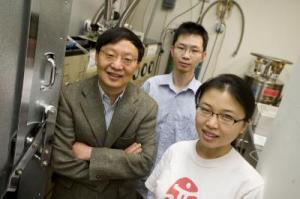
From left, Rice physicist Rui-Rui Du, graduate students Chi Zhang and Yanhua Dai, and former postdoctoral researcher Tauno Knuuttila (not pictured) have found that odd groupings of ultracold electrons could be useful in making fault-tolerant quantum computers. (Credit: Jeff Fitlow/Rice University)

The research appeared online April 21 in Physical Review Letters. The team of physicists found that ultracold mixes of electrons caught in magnetic traps could have the necessary properties for constructing fault-tolerant quantum computers -- future computers that could be far more powerful than today's computers. The mixes of electrons are dubbed "5/2 quantum Hall liquids" in reference to the unusual quantum properties that describe their makeup.

"The big goal, the whole driving force, besides deep academic curiosity, is to build a quantum computer out of this," said the study's lead author Rui-Rui Du, professor of physics at Rice. "The key for that is whether these 5/2 liquids have 'topological' properties that would render them immune to the sorts of quantum perturbations that could cause information degradation in a quantum computer."

Du said the team's results indicate the 5/2 liquids have the desired properties. In the parlance of condensed-matter physics, they are said to represent a "non-Abelian" state of matter.

Non-Abelian is a mathematical term for a system with "noncommutative" properties. In math, commutative operations, like addition, are those that have the same outcome regardless of the order in which they are carried out. So, one plus two equals three, just as two plus one equals three. In daily life, commutative and noncommutative tasks are commonplace. For example, when doing the laundry, it doesn't matter if the detergent is added before the water or the water before the detergent, but it does matter if the clothes are washed before they're placed in the dryer.

"It will take a while to fully understand the complete implications of our results, but it is clear that we have nailed down the evidence for 'spin polarization,' which is one of the two necessary conditions that must be proved to show that the 5/2 liquids are non-Abelian," Du said. "Other research teams have been tackling the second condition, the one-quarter charge, in previous experiments."

The importance of the noncommutative quantum properties is best understood within the context of fault-tolerant quantum computers, a fundamentally new type of computer that hasn't been built yet.

Computers today are binary. Their electrical circuits, which can be open or closed, represent the ones and zeros in binary bits of information. In quantum computers, scientists hope to use "quantum bits," or qubits. Unlike binary ones and zeros, the qubits can be thought of as little arrows that represent the position of a bit of quantum matter. The arrow might represent a one if it points straight up or a zero if it points straight down, but it could also represent any number in between. In physics parlance, these arrows are called quantum "states." And for certain complex calculations, being able to represent information in many different states would present a great advantage over binary computing.

The upshot of the 5/2 liquids being non-Abelian is that they have a sort of "quantum registry," where information doesn't change due to external quantum perturbations.

"In a way, they have internal memory of their previous state," Du said.

The conditions needed to create the 5/2 liquids are extreme. At Rice, Tauno Knuuttila, a former postdoctoral research scientist in Du's group, spent several years building the "demagnetization refrigerator" needed to cool 5-millimeter squares of ultrapure semiconductors to within one-10,000th of a degree of absolute zero. It took a week for Knuuttila to simply cool the nearly one-ton instrument to the necessary temperature for the Rice experiments.

The gallium arsenide semiconductors used in the tests are the most pure on the planet. They were created by Loren Pfieiffer, Du's longtime collaborator at Princeton and Bell Labs. Rice graduate student Chi Zhang conducted additional tests at the National High Magnetic Field Laboratory in Tallahassee, Fla., to verify that the 5/2 liquid was spin- polarized.

Study co-authors include Zhang, Knuuttila, Pfeiffer, Princeton's Ken West and Rice's Yanhua Dai. The research is supported by the Department of Energy, the National Science Foundation and the Keck Foundation.

Saturday, August 21, 2010

Galactic Magnifying Lens to Probe Elusive Dark Energy


An international team of astronomers using gravitational lensing observations from the NASA/ESA Hubble Space Telescope has taken an important step forward in the quest to solve the riddle of dark energy, a phenomenon which mysteriously appears to power the Universe's accelerating expansion.
This image shows the galaxy cluster Abell 1689, with the 
mass distribution of the gravitational lens overlaid 
(in purple). The mass in this lens is made up partly of normal 
(baryonic) matter and partly of dark matter. Distorted 
galaxies are clearly visible around the edges of the 
gravitational lens. The appearance of these distorted galaxies 
depends on the distribution of matter in the lens and on the 
relative geometry of the lens and the distant galaxies, as well
as on the effect of dark energy on the geometry of the universe. 
(Credit: NASA, ESA, E. Jullo (JPL/LAM), P. 
Natarajan (Yale) and J-P. Kneib (LAM).)

Their results appear in the 20 August 2010 issue of the journal Science.

Normal matter like that found in stars, planets and dust clouds only makes up a tiny fraction of the mass-energy content of the Universe. It is dwarfed by the amount of dark matter -- which is invisible, but can be detected by its gravitational pull. In turn, the amount of dark matter in the Universe is itself overwhelmed by the diffuse dark energy that permeates the entire Universe. Scientists believe that the pressure exerted by this dark energy is what pushes the Universe to expand at an ever-increasing rate.

Probing the nature of dark energy is, therefore, one of the key challenges in modern cosmology. Since its discovery in 1998, the quest has been to characterise and understand it better. This work presents an entirely new way to do so.

Eric Jullo, lead author of a new paper in the journal Science explains: "Dark energy is characterised by the relationship between its pressure and its density: this is known as its equation of state. Our goal was to try to quantify this relationship. It teaches us about the properties of dark energy and how it has affected the development of the Universe."

The team measured the properties of the gravitational lensing in the galaxy cluster Abell 1689. Gravitational lensing is a phenomenon predicted by Einstein's theory of general relativity, and was here used by the team to probe how the cosmological distances (and thus the shape of space-time) are modified by dark energy. At cosmic distances, a huge cluster of galaxies in the foreground has so much mass that its gravitational pull bends beams of light from very distant galaxies, producing distorted images of the faraway objects. The distortion induced by the lens depends in part on the distances to the objects, which have been precisely measured with large ground-based telescopes such as ESO's Very Large Telescope and the Keck Telescopes.

"The precise effects of lensing depend on the mass of the lens, the structure of space-time, and the relative distance between us, the lens and the distant object behind it," explains Priyamvada Natarajan, a co-author of the paper. "It's like a magnifying glass, where the image you get depends on the shape of the lens and how far you hold it from the object you're looking at. If you know the shape of the lens and the image you get, you can work out the path that light followed between the object and your eye."

Looking at the distorted images allows astronomers to reconstruct the path that light from distant galaxies takes to make its long journey to Earth. It also lets them study the effect of dark energy on the geometry of space in the light path from the distant objects to the lensing cluster and then from the cluster to us. As dark energy pushes the Universe to expand ever faster, the precise path that the light beams follow as they travel through space and are bent by the lens is subtly altered. This means that the distorted images from the lens encapsulate information about the underlying cosmology, as well as about the lens itself.

So why is the geometry of the Universe such a big issue?

"The geometry, the content and the fate of the Universe are all intricately linked," says Natarajan. "If you know two, you can deduce the third. We already have a pretty good knowledge of the Universe's mass-energy content, so if we can get a handle on its geometry then we will be able to work out exactly what the fate of the Universe will be."

The real strength of this new result is that it devises a totally new way to extract information about the elusive dark energy. It is a unique and powerful one, and offers great promise for future applications.

According to the scientists, their method required multiple, meticulous steps to develop. They spent several years developing specialised mathematical models and precise maps of the matter -- both dark and "normal" -- that together constitute the Abell 1689 cluster.

Co-author Jean-Paul Kneib explains: "Using our unique method in conjunction with others, we were able to come up with results that were far more precise than any achieved before."

The Hubble Space Telescope is a project of international cooperation between ESA and NASA.

The international team of astronomers in this study consists of Eric Jullo (Jet Propulsion Laboratory/ Cal Tech, USA and Laboratoire d'Astrophysique de Marseille, France), Priyamvada Natarajan (Yale University, USA), Jean-Paul Kneib (Laboratoire d'Astrophysique de Marseille, France), Anson D'Aloisio (Yale University, USA), Marceau Limousin (Laboratoire d'Astrophysique de Marseille, France and University of Copenhagen, Denmark), Johan Richard (Durham University, UK) and Carlo Schimd (Laboratoire d'Astrophysique de Marseille, France)

Saturday, October 13, 2012

Gravity Lenses: When Galaxies Eat Galaxies


Using gravitational "lenses" in space, University of Utah astronomers discovered that the centers of the biggest galaxies are growing denser -- evidence of repeated collisions and mergers by massive galaxies with 100 billion stars.
This image, taken by the Hubble Space Telescope, shows a ring of light from a distant galaxy created when a closer galaxy in the foreground – not shown in this processed image – acts as a “gravitational lens” to bend the light from the more distant galaxy into the ring of light, known as an Einstein ring. In a new study, University of Utah astronomer Adam Bolton and colleagues measured these Einstein rings to determine the mass of 79 lens galaxies that are massive elliptical galaxies, the largest kind of galaxy with 100 billion stars. The study found the centers of these big galaxies are getting denser over time, evidence of repeated collisions between massive galaxies.
This image, taken by the Hubble Space Telescope, shows 
a ring of light from a distant galaxy created when a closer 
galaxy in the  foreground – not shown in this processed 
image – acts as a “gravitational lens” to bend the light 
from the more distant galaxy into the ring of light, 
known as an Einstein ring. In a new study, University of 
Utah astronomer Adam Bolton and colleagues measured 
these Einstein rings to determine the mass of 79 lens 
galaxies that are massive elliptical galaxies, the largest 
kind of galaxy with 100 billion stars. The study found 
the centers of these big galaxies are getting denser over 
time, evidence of repeated collisions between massive 
galaxies. (Credit: Joel Brownstein, University of Utah, 
for NASA/ESA and the Sloan Digital Sky Survey)
"We found that during the last 6 billion years, the matter that makes up massive elliptical galaxies is getting more concentrated toward the centers of those galaxies. This is evidence that big galaxies are crashing into other big galaxies to make even bigger galaxies," says astronomer Adam Bolton, principal author of the new study.

"Most recent studies have indicated that these massive galaxies primarily grow by eating lots of smaller galaxies," he adds. "We're suggesting that major collisions between massive galaxies are just as important as those many small snacks."

The new study -- published recently in The Astrophysical Journal -- was conducted by Bolton's team from the Sloan Digital Sky Survey-III using the survey's 2.5-meter optical telescope at Apache Point, N.M., and the Earth-orbiting Hubble Space Telescope.

The telescopes were used to observe and analyze 79 "gravitational lenses," which are galaxies between Earth and more distant galaxies. A lens galaxy's gravity bends light from a more distant galaxy, creating a ring or partial ring of light around the lens galaxy.

The size of the ring was used to determine the mass of each lens galaxy, and the speed of stars was used to calculate the concentration of mass in each lens galaxy.

Bolton conducted the study with three other University of Utah astronomers -- postdoctoral researcher Joel Brownstein, graduate student Yiping Shu and undergraduate Ryan Arneson -- and with these members of the Sloan Digital Sky Survey: Christopher Kochanek, Ohio State University; David Schlegel, Lawrence Berkeley National Laboratory; Daniel Eisenstein, Harvard-Smithsonian Center for Astrophysics; David Wake, Yale University; Natalia Connolly, Hamilton College, Clinton, N.Y.; Claudia Maraston, University of Portsmouth, U.K.; and Benjamin Weaver, New York University.

Big Meals and Snacks for Massive Elliptical Galaxies

The new study deals with the biggest, most massive kind of galaxies, known as massive elliptical galaxies, which each contain about 100 billion stars. Counting unseen "dark matter," they contain the mass of 1 trillion stars like our sun.

"They are the end products of all the collisions and mergers of previous generations of galaxies," perhaps hundreds of collisions," Bolton says.

Despite recent evidence from other studies that massive elliptical galaxies grow by eating much smaller galaxies, Bolton's previous computer simulations showed that collisions between large galaxies are the only galaxy mergers that lead, over time, to increased mass density on the center of massive elliptical galaxies.

When a small galaxy merges with a larger one, the pattern is different. The smaller galaxy is ripped apart by gravity from the larger galaxy. Stars from the smaller galaxy remain near the outskirts -- not the center -- of the larger galaxy.

"But if you have two roughly comparable galaxies and they are on a collision course, each one penetrates more toward the center of the other, so more mass ends up in the center," Bolton says.

Other recent studies indicate stars are spread more widely within galaxies over time, supporting the idea that massive galaxies snack on much smaller ones.

"We're finding galaxies are getting more concentrated in their mass over time even though they are getting less concentrated in the light they emit," Bolton says.

He believes large galaxy collisions explain the growing mass concentration, while galaxies gobbling smaller galaxies explain more starlight away from galactic centers.

"Both processes are important to explain the overall picture," Bolton says. "The way the starlight evolves cannot be explained by the big collisions, so we really need both kinds of collisions, major and minor -- a few big ones and a lot of small ones."

The new study also suggests the collisions between large galaxies are "dry collisions" -- meaning the colliding galaxies lack large amounts of gas because most of the gas already has congealed to form stars -- and that the colliding galaxies hit each other "off axis" or with what Bolton calls "glancing blows" rather than head-on.

Sloan Meets Hubble: How the Study Was Conducted

The University of Utah joined the third phase of the Sloan Digital Sky Survey, known as SDSS-III, in 2008. It involves about 20 research institutions around the world. The project, which continues until 2014, is a major international effort to map the heavens as a way to search for giant planets in other solar systems, study the origin of galaxies and expansion of the universe, and probe the mysterious dark matter and dark energy that make up most of the universe.

Bolton says his new study was "almost gravy" that accompanied an SDSS-III project named BOSS, for Baryon Oscillation Spectrographic Survey. BOSS is measuring the history of the universe's expansion with unprecedented precision. That allows scientists to study the dark energy that accelerates expansion of the universe. The universe is believed to be made of only 4 percent regular matter, 24 percent unseen "dark matter" and 72 percent yet-unexplained dark energy.

During BOSS' study of galaxies, computer analysis of light spectra emitted by galaxies revealed dozens of gravitational lenses, which were discovered because the signatures of two different galaxies are lined up.

Bolton's new study involved 79 gravitational lenses observed by two surveys:

- The Sloan Survey and the Hubble Space Telescope collected images and emitted-light color spectra from relatively nearby, older galaxies -- including 57 gravitational lenses -- 1 billion to 3 billion years back into the cosmic past.

- Another survey identified 22 lenses among more distant, younger galaxies from 4 billion to 6 billion years in the past.

The rings of light around gravitational-lens galaxies are named "Einstein rings" because Albert Einstein predicted the effect, although he wasn't the first to do so.

"The more distant galaxy sends out diverging light rays, but those that pass near the closer galaxy get bent into converging light rays that appear to us as of a ring of light around the closer galaxy," says Bolton.

The greater the amount of matter in a lens galaxy, the bigger the ring. That seems counterintuitive, but the larger mass pulls with enough gravity to make the distant star's light bend so much that lines of light cross as seen by the observer, creating a bigger ring.

If there is more matter concentrated near the center of a galaxy, the faster stars will be seen moving toward or being slung away from the galactic center, Bolton says.

Alternative Theories

Bolton and colleagues acknowledge their observations might be explained by theories other than the idea that galaxies are getting denser in their centers over time:

- Gas that is collapsing to form stars can increase the concentration of mass in a galaxy. Bolton argues the stars in these galaxies are too old for that explanation to work.

- Gravity from the largest massive galaxies strips neighboring "satellite" galaxies of their outskirts, leaving more mass concentrated in the centers of the satellite galaxies. Bolton contends that process is not likely to produce the concentration of mass observed in the new study and explain how the extent of that central mass increases over time.

- The researchers merely detected the boundary in each galaxy between the star-dominated inner regions and the outer regions, which are dominated by unseen dark matter. Under this hypothesis, the appearance of growing galaxy mass concentration over time is due to a coincidence in researchers' measurement method, namely that they are measuring younger galaxies farther from their centers and measuring older galaxies closer to their centers, giving an illusion of growing mass concentration in galactic centers over time. Bolton says this measurement difference is too minor to explain the observed pattern of matter density within the lens galaxies.