BTemplates.com

Powered by Blogger.

Pageviews past week

Quantum mechanics

Auto News

artificial intelligence

About Me

Recommend us on Google!

Information Technology

Popular Posts

Monday, July 5, 2010

How Rules of Physics in Quantum World Change When Applied to Classical World


Dartmouth researchers have discovered a potentially important piece of the quantum/classical puzzle -- learning how the rules of physics in the quantum world (think smaller than microscopic) change when applied to the classical world (think every day items, like cars and trees).
Image
In a study published in the July 1, 2010, issue of the 
journal Nature, Associate Professor of Physics and 
Astronomy Alex Rimberg and his colleagues describe one 
example of the microscopic quantum world influencing, 
even dominating they say, the behavior of something in 
the macroscopic classical world. 
(Credit: Joseph Mehling, Dartmouth College)

In a study published in the July 1 issue of the journal Nature, Associate Professor of Physics and Astronomy Alex Rimberg and his colleagues describe one example of the microscopic quantum world influencing, even dominating they say, the behavior of something in the macroscopic classical world. They used tiny semiconducting crystals that contain two separate reservoirs of electrons to explore the different influences of both classical and quantum physics.

"We found that the motion of the crystals is not dominated by something classical like thermal motion, but instead by random quantum fluctuations in the number of electrons tunneling through the barrier; the fluctuations were the size of about 10,000 electrons," says Rimberg. "But the macroscopic world in this study also influences the quantum world, in that the vibrations of the crystal caused the electrons to tunnel in big bunches, more or less in sync with the vibrations of the crystal."

One major question in quantum physics deals with the connection between the microscopic and macroscopic worlds. Rimberg explains that scientists know that microscopic objects such as electrons obey the laws of quantum mechanics, while macroscopic objects obey Newton's laws. Researchers are still learning exactly how classical behavior emerges from quantum behavior as systems become larger and larger.

Rimberg says that the difference in size between the classical and quantum parts of thesystem described in this paper is really extreme. "To give a sense of perspective, we could imagine that the 10,000 electrons correspond to something small like a flea. To complete the analogy, the crystal would have to be the size of Mt. Everest. If we imagine the flea jumping on Mt. Everest to make it move, then the resulting vibrations would be on the order of meters."

Rimberg's future work will use nonlinear superconducting systems, different from using the semiconducting crystals in this experiment, to make very strongly quantum mechanical systems. Nonlinear classical systems can show unpredictable, chaotic behavior; the behavior of the corresponding quantum systems is not well understood. This effort will be a prelude to studying the quantum properties of mechanical resonators that are smaller than the crystals in this experiment, but definitely not microscopic either; they are the things in the murky borderland between quantum and classical regimes.

Rimberg was worked on this study with colleagues at Dartmouth, Miles Blencowe, Joel Stettenheim, Feng Pan, Mustafa Bal, and Weiwei Zue. They were joined by Madhu Thalakulam and Zhonquig Ji from Rice University; and Loren Pfeiffer and K.W. West from Bell Laboratories.

The research was funded by the U.S. Army Research Office and the National Science Foundation.

Saturday, July 3, 2010

Scientists Find Direct Line from Development to Growth


It may seem intuitive that growth and development somehow go together so that plants and animals end up with the right number of cells in all the right places. But it is only now that scientists at the Duke Institute for Genome Sciences & Policy have gotten some of the first insights into how this critical coordination actually works in a plant.
Arabidopsis thaliana.
Arabidopsis thaliana. (Credit: iStockphoto)

The answer is surprisingly simple.

A well-known developmental protein called Short-root has been found to directly control the activity, in both time and space, of other well-known genes involved in cell division.

"It's a remarkably straightforward answer," said Philip Benfey, director of the IGSP's Center for Systems Biology. "Considering the level of complexity that is so often found in biology, this is simplicity itself."

The researchers report their findings on July 1 in the journal Nature.

Benfey's group and others have studied the molecular-level events that determine what particular cells in Arabidopsis plants will become in considerable detail. Those events involve genetic partners Short-root and Scarecrow along with a couple of microRNAs.

Researchers also have a pretty good understanding of the intrinsic factors that allow cells to go through their cycle and divide into two daughter cells. "What was missing was a connection between the two," said Rosangela Sozzani, a postdoctoral researcher in Benfey's lab and first author of the new study.

To shed light on that connection, Sozzani and her collaborators combined a number of experimental techniques and technologies to produce a dynamic, genome-wide view of the genetic events that Short-root and its partner Scarecrow set into motion within a single type of cell. At the very same time that cells divide, Short-root and Scarecrow switch on the gene cyclin D6, they report. Cyclin D6 is one of a family of genes that govern cell growth and division.

Benfey says the discovery in plants has immediate practical relevance given the central role of plants to human life, in the form of "food, feed, fuel and fiber." It's also likely that the "logic" behind plants' growth and development will carry over to other species, perhaps even our own. In fact, he and Sozzani note, animals including humans have cyclin D6 too.

"It's not just molecules," Benfey said. "There are evolutionary relationships. Once these fundamental processes got worked out, they are likely to have been kept around."

Jim Murray from the University of Cardiff was a key collaborator on the study. The work was funded by grants from the National Institutes of Health and the National Science Foundation.

Friday, July 2, 2010

Genetic Secrets of Human Longevity


While environment and family history are factors in healthy aging, genetic variants play a critical and complex role in conferring exceptional longevity, according to a new study by a team of researchers from the Boston University Schools of Public Health and Medicine and the Boston Medical Center.
Image
While environment and family history are factors in 
healthy aging, genetic variants play a critical 
and complex role in conferring exceptional 
longevity. (Credit: iStockphoto/Catherine Yeulet)

In a study released July 1 online by the journal Science, the research team identified a group of genetic variants that can predict exceptional longevity in humans with 77 percent accuracy -- a breakthrough in understanding the role of genes in determining human lifespan.

Based upon the hypothesis that exceptionally old individuals are carriers of multiple genetic variants that influence their remarkable survival, the team conducted a genome-wide association study of centenarians. Centenarians are a model of healthy aging, as the onset of disability in these individuals is generally delayed until they are well into their mid-nineties.

Researchers led by Paola Sebastiani, PhD, a professor of biostatistics at the BU School of Public Health and Thomas Perls, MD, MPH, associate professor of medicine at the BU School of Medicine and a geriatrician at Boston Medical Center, built a unique genetic model that includes 150 genetic variants, known as single nucleotide polymorphisms (SNPs). They found that these 150 variants could be used to predict if a person survived to very old ages (late 90s and older) with a high rate of accuracy.

In addition, the team's analysis identified 19 genetic clusters or "genetic signatures" of exceptional longevity that characterized 90 percent of the centenarians studied. The different signatures correlated with differences in the prevalence and age-of-onset of diseases such as dementia and hypertension, and may help identify key subgroups of healthy aging, the authors said.

Notably, the team found that 45 percent of the oldest centenarians -- those 110 years and older -- had a genetic signature with the highest proportion of longevity-associated genetic variants.

"These genetic signatures are a new advance towards personalized genomics and predictive medicine, where this analytic method may prove to be generally useful in prevention and screening of numerous diseases, as well as the tailored uses of medications," said Dr. Perls, founder and director of the New England Centenarian Study.

The researchers developed a novel Bayesian statistical approach to analyze genotype data from more than 1,000 centenarians and several control groups, and to identify those SNPs that were most predictive of being centenarians or controls. The team began by using the SNPs that were most likely associated with exceptional longevity, and once the researchers identified 150 SNPs, they found that adding more variants did not further improve the ability to predict whether a person was a centenarian or a control subject.

Dr. Sebastiani noted: "The methodology that we developed can be applied to other complex genetic traits, including Alzheimer's disease, Parkinson's, cardiovascular disease and diabetes. It reinvigorates the potential high utility of collecting and analyzing such data."

Besides looking at which genetic variants were associated with longevity, the authors looked into whether the absence of disease-associated variants also played an important role. They did this by analyzing how many disease-associated variants each centenarian had, compared to each of the controls. Their analysis found little difference between the two groups, suggesting that the presence of genetic variants associated with longevity is of more importance than the absence of disease-associated variants.

If these findings are confirmed, they would suggest that "predicting disease risk using disease-associated variants may be inaccurate and potentially misleading, without more information about other genetic variants that could attenuate such risk" the authors commented.

Overall, the authors said, their preliminary data "suggest that exceptional longevity may be the result of an enrichment of longevity-associated variants that counter the effect of disease-associated variants and contribute to the compression of morbidity and/or disability towards the end of these very long lives." They added that "further investigation is needed to understand how and why these variants collectively predispose for exceptional longevity."

The researchers noted that the 77-percent accuracy rate of predictions "shows that genetic data can indeed predict exceptional longevity without knowledge of any other risk factor."

But they added: "This prediction is not perfect, however, and although it may improve with better knowledge of the variations in the human genome, its limitations confirm that environmental factors (e.g., lifestyle) also contribute in important ways to the ability of humans to survive to very old ages."

Drs. Sebastiani and Perls also cautioned that they developed this genetic risk model as a way to dissect the complex genetic bases of exceptional longevity and to discover the different genetic paths to age 100 and older. An understanding of the implications of this model's use in the general population would be necessary before this test is marketed, they said.

The study was funded by grants from the National Institute of Aging (NIA) and the National Heart Lung and Blood Institute (NHLBI) of the National Institutes of Health (NIH).

"This is a novel approach to studying genetic contributions to exceptional longevity," said Winifred K. Rossi, deputy director of the NIA's Division of Geriatrics and Clinical Gerontology. "It adds to a growing set of analytical tools that aim to identify and understand the complex genetic and environmental factors that lead to healthy long life."

In addition to Perls and Sebastiani, other authors include: Nadia Solovieff and Stephen W. Hartley of the BU School of Public Health Biostatistics Department; Daniel A. Dworkis, Efthymia Melista and Monty Montano of the BU School of Medicine Department of Medicine; Jemma B. Wilk and Richard H. Myers of the BU School of Medicine Department of Neurology; Martin H. Steinberg and Clinton T. Baldwin of the BU School of Medicine Departments of Medicine and Pediatrics and Boston Medical Center; Stacy Anderson of the BU School of Medicine Department of Medicine, Section of Geriatrics, and Boston Medical Center; and Annibale Puca of IRCCS Multimedica, Milano, Italy.

Thursday, July 1, 2010

Butterfly Effect Makes Brain Unreliable


Next time your brain plays tricks on you, you have an excuse: according to new research by UCL scientists published June 30 in the journal Nature, the brain is intrinsically unreliable.
Brain Intrinsically Unreliable
Researchers introduced a small perturbation into the brain, the neural equivalent of butterfly wings, and ask what would happen to the activity in the circuit. Would the perturbation grow and have a knock-on effect, thus affecting the rest of the brain, or immediately die out? (Credit: Image courtesy of University College London)

This may not seem surprising to most of us, but it has puzzled neuroscientists for decades. Given that the brain is the most powerful computing device known, how can it perform so well even though the behaviour of its circuits is variable?

A long-standing hypothesis is that the brain's circuitry actually is reliable -- and the apparently high variability is because your brain is engaged in many tasks simultaneously, which affect each other.

It is this hypothesis that the researchers at UCL tested directly. The team -- a collaboration between experimentalists at the Wolfson Institute for Biomedical Research and a theorist, Peter Latham, at the Gatsby Computational Neuroscience Unit -- took inspiration from the celebrated butterfly effect -- from the fact that the flap of a butterfly's wings in Brazil could set off a tornado in Texas. Their idea was to introduce a small perturbation into the brain, the neural equivalent of butterfly wings, and ask what would happen to the activity in the circuit. Would the perturbation grow and have a knock-on effect, thus affecting the rest of the brain, or immediately die out?

It turned out to have a huge knock-on effect. The perturbation was a single extra 'spike', or nerve impulse, introduced to a single neuron in the brain of a rat. That single extra spike caused about thirty new extra spikes in nearby neurons in the brain, most of which caused another thirty extra spikes, and so on. This may not seem like much, given that the brain produces millions of spikes every second. However, the researchers estimated that eventually, that one extra spike affected millions of neurons in the brain.

"This result indicates that the variability we see in the brain may actually be due to noise, and represents a fundamental feature of normal brain function," said lead author Dr. Mickey London, of the Wolfson Institute for Biomedical Research, UCL.

This rapid amplification of spikes means that the brain is extremely 'noisy' -- much, much noisier than computers. Nevertheless, the brain can perform very complicated tasks with enormous speed and accuracy, far faster and more accurately than the most powerful computer ever built (and likely to be built in the foreseeable future). The UCL researchers suggest that for the brain to perform so well in the face of high levels of noise, it must be using a strategy called a rate code. In a rate code, neurons consider the activity of an ensemble of many neurons, and ignore the individual variability, or noise, produced by each of them.

So now we know that the brain is truly noisy, but we still don't know why. The UCL researchers suggest that one possibility is that it's the price the brain pays for high connectivity among neurons (each neuron connects to about 10,000 others, resulting in over 8 million kilometres of wiring in the human brain). Presumably, that high connectivity is at least in part responsible for the brain's computational power. However, as the research shows, the higher the connectivity, the noisier the brain. Therefore, while noise may not be a useful feature, it is at least a by-product of a useful feature.
Enhanced by Zemanta

PCs that Work While They Sleep


SleepServer creates a virtual copy of a dozing machine.

Software that lets desktop computers continue to function in sleep mode could reduce the energy consumption of office networks by around 60 percent.

Networked PCs are increasingly being left on 24/7 to allow for out-of-hours access by employees, says Yuvraj Agarwal, at the University of California, San Diego. "The administrator may want to do a backup, or the user may want to be able to connect into it," he says. But most of the time these PCs remain idle, wasting significant amounts of energy, he says.

Image
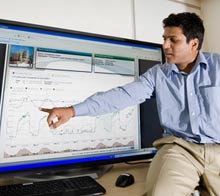
Energy saver: Yuvraj Agarwal
demonstrates the SleepServer control
software.
Credit: UC San Diego / Erik Jepsen


Agarwal's solution, developed with two UCSD professors, Stefan Savage and Rajesh Gupta, is to create a stripped down, virtual copy of a machine. Software running on a remote server maintains a version of a PC's operating systems and applications. The software, called SleepServer, carries on tasks on behalf of the desktop machine while it is put into a low-energy sleep mode.

This lets SleepServer perform basic tasks on behalf of the PC, such as downloading files or staying logged into voice communications or instant-messaging software. When more complex activity is required, the software wakes up the computer, says Agarwal, a process that typically takes less than 10 seconds.

"Normally if I put my computer to sleep, then Skype is going to show that I'm offline, or I won't be able to continue downloading a large file from the Internet," says Agarwal. SleepServer maintains a fast connection, over the internal network, to each desktop, so any files it has downloaded on behalf of a PC can be transferred quickly.

The energy savings come from the fact that each server can host up to 500 virtual machines. Even the latest low-power computers consume around 45 watts of power when idle. In contrast, a single SleepServer machine runs at just 300 watts, Agarwal says. Using fully functional virtual machines and low power "thin client" desktop machines could reduce power consumption further still.

In trials, details of which were presented at the USENIX Annual Technical Conference in Boston last week, 30 PCs used SleepServer for two weeks. The energy they consumed was dropped by between 27 and 86 percent--an average reduction of 60 percent, says Agarwal. With up to 80 percent of electricity consumption in modern offices coming from computing equipment, the savings a SleepServer offers could be roughly equivalent to $60 per computer each year, he says. Fifty PCs in the computer science building of UCSD are now running SleepServer.

Other software can be used to wake up sleeping computers, such as Apple's Wake-on Demand and Microsoft's Sleep Proxy. But these applications do not carry out tasks on behalf of a sleeping machine.

"It's a clever approach," says Howard Noble, principle investigator of the Low Carbon Information and Communication Technology Project, at the University of Oxford, in the U.K.

But Noble says it would be preferable to be able to power down computers completely. Modern computers can still consume as much as five watts when asleep. "We have never found it to be reliable, because often they don't stay asleep," he says.

Enhanced by Zemanta

Tuesday, June 29, 2010

Gene Leads to Longer Shelf Life for Tomatoes


A Purdue University researcher has found a sort of fountain of youth for tomatoes that extends their shelf life by about a week.
Image
The tomato with increased spermidine (top) 
stays fresh longer than those that do not have 
an increased level of the natural organic 
compound. (Credit: Purdue University 
photo/Avtar Handa)


Avtar Handa, a professor of horticulture, found that adding a yeast gene increases production of a compound that slows aging and delays microbial decay in tomatoes. Handa said the results, published in the early online version of The Plant Journal, likely would transfer to most fruits.

"We can inhibit the aging of plants and extend the shelf life of fruits by an additional week for tomatoes," Handa said. "This is basic fundamental knowledge that can be applied to other fruits."

The organic compound spermidine is a polyamine and is found in all living cells. Polyamines' functions aren't yet fully understood. Handa and Autar Mattoo, a research plant physiologist with the U.S. Department of Agriculture's Agricultural Research Service and collaborator in the research, had shown earlier that polyamines such as spermidine and spermine enhance nutritional and processing quality of tomato fruits.

"At least a few hundred genes are influenced by polyamines, maybe more," Mattoo said. "We see that spermidine is important in reducing aging. It will be interesting to discover what other roles it can have."

Savithri Nambeesan, who was a graduate student in Handa's laboratory, introduced the yeast spermidine synthase gene, which led to increased production of spermidine in the tomatoes. Fully ripe tomatoes from those plants lasted about eight days longer before showing signs of shriveling compared with non-transgenic plants. Decay and rot symptoms associated with fungi were delayed by about three days.

"It increased the quality of the fruit," Handa said. "If a tomato goes to market, people won't buy it if it has started to shrivel. If we can stop that wrinkling, we can extend the market time of the fruit."

Mattoo said the finding could have implications for areas that don't often get fresh fruit.

"Shelf life is a major problem for any produce in the world, especially in countries such as in Southeast Asia and Africa that cannot afford controlled-environment storage," Mattoo said.

Handa said tomato growers and possibly other fruit growers could use the finding soon if they wanted through either transgenic plants or natural breeding methods.

"We can add this gene to the tomatoes or look at natural variation and select the cultivars that already have a high level of this gene's expression," Handa said.

Handa and Mattoo will continue to study polyamines to discover how they control biological functions in fruits.

The US-Israel Binational Agricultural Research and Development Fund, the USDA Initiative for Future Agricultural Food Systems, and the Purdue Research Foundation funded the research.
Enhanced by Zemanta

World First for Quantum Memory Storage


An Australian National University-led team has developed the most efficient quantum memory for light in the world, taking us closer to a future of super-fast computers and communication secured by the laws of physics.
Image
Light passes through the crystal in the quantum memory 
experiment. (Credit: Image courtesy of Australian 
National University)

The team at the ANU Research School of Physics and Engineering used a technique they pioneered to stop and control light from a laser, manipulating electrons in a crystal cooled to a chilly -270 degrees Celcius. The unprecedented efficiency and accuracy of the system allows the delicate quantum nature of the light to be stored, manipulated, and recalled.

"Light entering the crystal is slowed all the way to a stop, where it remains until we let it go again," explains lead researcher Morgan Hedges. "When we do let it go, we get out essentially everything that went in as a three-dimensional hologram, accurate right down to the last photon.

"Because of the inherent uncertainty in quantum mechanics, some of the information in this light will be lost the moment it is measured, making it a read-once hologram. Quantum mechanics guarantees this information can only be read once, making it perfect for secure communication."

The same efficient and accurate qualities make the memory a leading prospect for quantum computing, which has the potential to be many times faster and more powerful than contemporary computing.

In addition, the researchers say the light storage will allow tests of fundamental physics, such as how the bizarre phenomenon of quantum entanglement interacts with of the theory of relativity.

"We could entangle the quantum state of two memories, that is, two crystals," says team leader Dr Matthew Sellars. "According to quantum mechanics, reading out one memory will instantly alter what is stored in the other, no matter how large the distance between them. According to relativity, the way time passes for one memory is affected by how it moves. With a good quantum memory, an experiment to measure how these fundamental effects interact could be as simple as putting one crystal in the back of my car and going for a drive."

Dr Sellars' team has previously performed an experiment that 'stopped' light in a crystal for over a second, more than 1,000 times longer than was previously possible. He said that the team is now bringing together systems that combine the high efficiency with storage times of hours.

The research team includes Dr Jevon Longdell from the University of Otago and Dr Yongmin Li from Shanxi University. The findings are published in Nature.
Enhanced by Zemanta

Monday, June 28, 2010

NASA infrared imagery shows well-defined eye in Category 5 Celia


Celia has exploded into a monster hurricane in the Eastern Pacific, and is now a Category 5 storm over open waters. NASA's Aqua satellite captured an infrared image (that shows temperature) of Celia's clouds and clearly shows an eye in the storm. Celia's eye appears well-defined and is between 15-20 nautical miles wide.
Image
AIRS noticed that Celia has a very large area of them where clouds are so very high in the troposphere (to the tropopause) that they're as cold as -94 to -112 (-75 to -80 Celsius) Fahrenheit! Credit: NASA JPL, Ed Olsen


The Atmospheric Infrared Sounder, or AIRS instrument provides infrared imagery of cloud tops and sea surface temperatures, two things that are important to tropical cyclones. High, cold cloud tops indicate strong thunderstorms around a tropical cyclone's center. AIRS imagery on June 25 noticed that Celia had a very large area of high, icy cold clouds that are so very high in the troposphere (to the tropopause) that they're as cold as -94 to -112 (-75 to -80 Celsius) Fahrenheit! The National Hurricane Center called Celia a "very impressive hurricane" this morning.

Warm sea surface temperatures are also critical for a tropical cyclone's development, and AIRS infrared imagery is able to read those temperatures from space, too. AIRS imagery taken on Friday, July 25 at 9:05 UTC (5:05 a.m. EDT) showed that the sea surface temperatures around Celia were over the 80 degree Fahrenheit threshold needed to continue powering tropical cyclones. As Celia continues to move west-northwestward, however, those waters will become cooler and they are expected to weaken Celia.
Image
The Moderate Imaging Spectroradiometer (MODIS) instrument on NASA's Aqua satellite captured this visible image of Hurricane Celia on June 24 at 20:55 UTC (4:55 p.m. EDT). Credit: NASA Goddard/MODIS Rapid Response Team


At 5 a.m. EDT (2 a.m. PDT) on Friday, June 25, powerful Category Five Hurricane Celia was packing maximum sustained winds near 160 mph (260 km/hr). Hurricane force winds extend outward up to 50 miles (85 km) from the center...and tropical storm force winds extend outward up to 140 miles (220 km). Celia's center was located about 805 nautical miles southwest of the southern tip of Baja California, near 13.4 North and 117.0 West. Celia's minimum central pressure is 926 millibars, and she is moving west-northwest near 13 mph (20 km/hr).

The cooler waters that lie in Celia's path are expected to quickly help weaken the storm. The National Hurricane Center expects Celia to be downgraded to tropical storm strength late on Sunday, June 27.

Enhanced by Zemanta

Sunday, June 27, 2010

Computer Program Detects Depression in Bloggers' Texts


Researchers at Ben-Gurion University of the Negev (BGU) developed a software program that can detect depression in blogs and online texts. The software is capable of identifying language that can indicate the writer's psychological state, which could serve as a screening tool.

The software, developed by a team headed by Associate Professor Yair Neuman in BGU's Department of Education, was used to scan more than 300,000 English language blogs that were posted to mental health Web sites. The program identified what it perceived to be the 100 "most depressed" and 100 "least depressed" bloggers. A panel of four clinical psychologists reviewed the samples, and concluded that there was a 78 percent correlation between the computer's findings and the panel's.

Professor Yair Neuman will be presenting his BGU team's work at the 2010 IEEE/WIC/ACM International Conference on Web Intelligence and Intelligent Agency Technology in Toronto, Canada, August 31 -- Sept. 3, 2010. Prof. Neuman's findings will also be published in the conference's proceedings.

"The software program was designed to find depressive content hidden in language that did not mention the obvious terms like "depression" or suicide," explains Prof. Neuman. "A psychologist knows how to spot various emotional states through intuition. Here, we have a program that does this methodically through the innovative use of 'web intelligence.'"

For example, the program spots words that express various emotions, like colors that the writer employs to metaphorically describe certain situations. Words like "black" combined with other terms that describe symptoms of depression, such as sleep deprivation or loneliness, will be recognized by the software as "depressive" texts.

Originally conducted for academic purposes, the findings could potentially be used to screen for would-be suicides.

The software provides a screening process that raises an individual's awareness of his or her condition, enables mental health workers to identify individuals in need of treatment, and can then recommend they seek professional help. Because, "no one can actually replace excellent human judgment," says Neuman.

In the United States, there is a big problem of undiagnosed people suffering from depression. The usual screening process is an online questionnaire, which is a self-selective process. If a person is completing a survey, he already suspects a problem. With this software, it is possible to analyze proactively. If the blogger agrees, he will know whether or not he needs to seek professional counseling.
Enhanced by Zemanta

Saturday, June 26, 2010

Cosmic Clocks Could Help Uncover Ripples in Space-Time


An international team of scientists have developed a promising new technique which could turn pulsars -- superb natural cosmic clocks -- into even more accurate time-keepers.
Pulsars appear to be able to switch between two 
states which differ in the current of charged 
particles flowing from the surface into outer space. 
This change in current results in a change of 
slow-down in their rotation rate, such that the 
pulsar 'brakes' faster (upper panel) when the 
currents are large and 'brakes' less fast when the 
currents are weak (lower panel). These currents 
also result in a change in the shape of the beam 
emittedby the pulsar, and hence in the shape of the 
pulse, or tick, as the beam crosses a radio telescope. 
(Credit: Michael Kramer, University of Manchester)

This important advance, led by scientists at The University of Manchester and appearing June 24 in the journal Science Express, could improve the search for gravitational waves and help studies into the origins of the universe.

The direct discovery of gravitational waves, which pass over cosmic clocks and cause them to change, could allow scientists to study violent events such as the merging of super-massive black holes and help understand the universe shortly after its formation in the Big Bang.

The scientists made their breakthrough using decades-long observations from the 76-m Lovell radio telescope at The University of Manchester's Jodrell Bank Observatory to track the radio signals of extreme stars known as pulsars.

Pulsars are spinning collapsed stars which have been studied in great detail since their discovery in 1967. The extremely stable rotation of these cosmic fly-wheels has previously led to the discovery of the first planets orbiting other stars and provided stringent tests for theories of gravity that shape the Universe.

However, this rotational stability is not perfect and, until now, slight irregularities in their spin have significantly reduced their usefulness as precision tools.

The team, led by the University of Manchester's Professor Andrew Lyne, has used observations from the Lovell telescope to explain these variations and to demonstrate a method by which they may be corrected.

Professor Lyne explains: "Mankind's best clocks all need corrections, perhaps for the effects of changing temperature, atmospheric pressure, humidity or local magnetic field. Here, we have found a potential means of correcting an astrophysical clock."

The rate at which all pulsars spin is known to be decreasing very slowly. What the team has found is that the deviations arise because there are actually two spin-down rates and not one, and that the pulsar switches between them, abruptly and rather unpredictably.

These changes are associated with a change in the shape of the pulse, or tick, emitted by the pulsar. Because of this, precision measurements of the pulse shape at any particular time indicate exactly what the slowdown rate is and allow the calculation of a "correction." This significantly improves their properties as clocks.

The results give a completely new insight into the extreme conditions near neutron stars and also offer the potential for improving already very precise experiments in gravitation.

It is hoped that this new understanding of pulsar spin-down will improve the chances that the fastest spinning pulsars will be used to make the first direct detection of ripples, known as gravitational waves, in the fabric of space-time.

The University of Manchester team worked closely on the project with Dr George Hobbs of the Australia Telescope National Facility, Professor Michael Kramer of the Max Planck Institute for Radioastronomy and Professor Ingrid Stairs of the University of British Columbia.

The research was funded by the Science and Technology Facilities Council. Their Director of Science, Professor John Womersley, said: "Astronomy is unlike most other sciences, as we cannot go out and measure directly the properties of stars and galaxies.

"They have to be calculated based on our understanding of how the Universe works -- which means that something as significant as being able to use pulsars as cosmic clocks, a new standard for time measurement, will have far-reaching consequences for advancing science and our understanding of the Universe."

Many observatories around the world are attempting to use pulsars in order to detect the gravitational waves that are expected to be created by super-massive binary black holes in the Universe.

With the new technique, the scientists may be able to reveal the gravitational wave signals that are currently hidden because of the irregularities in the pulsar rotation.

Head of the Pulsar Group at The University of Manchester Dr Ben Stappers said: "These exciting results were only possible because of the quality and duration of the unique Lovell Telescope pulsar timing database."
Enhanced by Zemanta