BTemplates.com

Powered by Blogger.

Pageviews past week

Quantum mechanics

Auto News

artificial intelligence

About Me

Recommend us on Google!

Information Technology

Popular Posts

Popular Posts

Showing posts with label Tissue engineering. Show all posts

Thursday, July 7, 2011

Functioning Small Intestine Created in Laboratory Experiments


Researchers at The Saban Research Institute of Children's Hospital Los Angeles have successfully created a tissue-engineered small intestine in mice that replicates the intestinal structures of natural intestine -- a necessary first step toward someday applying this regenerative medicine technique to humans.
Tracy C. Grikscheit, MD works at the Saban Research Institute of Children's Hospital Los Angeles. (Credit: Photo courtesy of Children's Hospital Los Angeles)

The study led by Tracy C. Grikscheit, MD -- "A Multicellular Approach Forms a Significant Amount of Tissue-Engineered Small Intestine in the Mouse" -- has been published in the July issue of Tissue Engineering Part A, a biomedical journal.

"In this paper, we are able to report that we can grow tissue-engineered intestine in a mouse model, which opens the doors of basic biology to understand how to grow this tissue better," said Dr. Grikscheit, who is also an assistant professor of surgery at the Keck School of Medicine of the University of Southern California.

As a pediatric surgeon, Dr. Grikscheit is concerned with finding solutions for some of her more vulnerable patients -- newborns. Infants born prematurely are at increased risk for a gastrointestinal disease called necrotizing enterocolitis (NEC), which occurs when the intestine is injured. The cause is unknown.

Early treatment of NEC is essential to stop the potentially life-threatening leakage of bacteria into the abdomen. Often, the only solution is surgical removal of the small intestine. However, this option leaves the baby dependent on intravenous feeding and at risk for liver damage from subsequent intravenous nutrition. Organ transplants are possible but not a long-term solution, with only a 50 percent chance the grafted intestine will last past the child's 5th birthday.

Dr. Grikscheit, a member of The Saban Research Institute's Developmental Biology and Regenerative Medicine program, envisions a better solution. "The small intestine is an exquisitely regenerative organ. The cells are constantly being lost and replaced over the course of our entire lives," she explained. "Why not harness that regenerative capacity to benefit these children?"


Working in the laboratory, the research team took samples of intestinal tissue from mice. This tissue was composed of the layers of the various cells that make up the intestine -- including muscle cells and the cells that line the inside, known as epithelial cells. The investigators then transplanted that mixture of cells within the abdomen on biodegradable polymers or "scaffolding."

What the team wanted to happen did -- new, engineered small intestines grew and had all of the cell types found in native intestine. Because the transplanted cells had carried a green label, the scientists could identify which cells had been provided -- and all of the major components of the tissue-engineered intestine derived from the implanted cells. Critically, the new organs contained the most essential components of the originals.

"What is novel about this research is that this tissue-engineered intestine contains every important cell type needed for functional intestine. For children with intestinal failure, we are always looking for long-term, durable solutions that will not require the administration of toxic drugs to ensure engraftment. This tissue-engineered intestine, which has all of the critical components of the mature intestine, represents a truly exciting albeit preliminary step in the right direction," said Henri Ford, MD, Vice President and Surgeon-in-Chief at Children's Hospital Los Angeles.

"We demonstrated that we are providing all of the important cells -- the muscle, nerve, epithelium, and some of the blood vessels," noted Frédéric Sala, PhD, lead author. "All of these are critical to proper functioning of the tissue, and now we know their origins." Next up are additional tissue-growing experiments -- each one of which may bring that much closer the prospects of clinical testing and a solution for babies in need.

Tuesday, June 28, 2011

First Patients Receive Lab-Grown Blood Vessels from Donor Cells


For the first time, blood vessels created in the lab from donor skin cells were successfully implanted in patients. Functioning blood vessels that aren't rejected by the immune system could be used to make durable shunts for kidney dialysis, and potentially to improve treatment for children with heart defects and adults needing coronary or other bypass graft surgery.
Artist's rendering of blood vessels. Researchers report 
that for the first time, blood vessels created in the lab from 
donor skin cells were successfully implanted in patients. 
(Credit: © Dario Bajurin / Fotolia)

For the first time, human blood vessels grown in a laboratory from donor skin cells have been successfully implanted into patients, according to new research presented in the American Heart Association's Emerging Science Series webinar.

While more testing is needed, such "off-the-shelf" blood vessels could soon be used to improve the process and affordability of kidney dialysis.

"Our approach could allow hundreds of thousands of patients to be treated from one master cell line," said study lead author Todd N. McAllister, Ph.D., co-founder and chief executive officer of Cytograft Tissue Engineering Inc., of Novato, Calif.

The grafts also have the potential to be used in lower limb bypass to route blood around diseased arteries, to repair congenital heart defects in pediatric patients and to fix damaged arteries in soldiers, who might otherwise lose a limb, said McAllister.


The tissue-engineered blood vessels, produced from sheets of cultured skin cells rolled around temporary support structures, were used to create access shunts between arteries and veins in the arm for kidney dialysis in three patients. These shunts, which connect an artery to a vein, provide access to the blood for dialysis. The engineered vessels were about a foot long with a diameter of 4.8 millimeters.

At follow-up exams up to eight months after implantation, none of the patients had developed an immune reaction to the implants, and the vessels withstood the high pressure and frequent needle punctures required for dialysis. Shunts created from patients' own vessels or synthetic materials are notoriously prone to failure.

Investigators previously showed that using vessels individually created from a patient's own skin cells reduced the rate of shunt complications 2.4-fold over a 3-year period. The availability of off-the-shelf vessels could avoid the expense and months-long process involved in creating custom vessels for each patient, making the technique feasible for widespread use.

Besides addressing a costly and vexing problem in kidney dialysis, off-the-shelf blood vessels might someday be used instead of harvesting patients' own vessels for bypass surgery. A larger, randomized trial of the grafts is under way for kidney dialysis, and human trials have been initiated to assess the safety and effectiveness of these grafts for lower-limb bypass.

The study will be presented in the American Heart Association's Emerging Science Series, which will be held at 1 p.m. EDT/ 12 p.m. CDT. The series is a free online webinar presentation of cutting-edge science. The Emerging Science Series provides a new venue for presenting the latest cardiovascular scientific breakthroughs several times a year, when the discoveries are ready to be presented rather than waiting for a regularly scheduled meeting. Each study is handled in a peer-reviewed process similar to late-breaking clinical trials presented at AHA's annual Scientific Sessions.

The series will include the first presentation of data from clinical trials, basic science, key updates of previously presented trials and major bench-to-bedside breakthroughs.

Co-authors are Wojciech Wystrychowski, M.D.; Lech Cierpka, M.D.; Krzysztof Zagalski, M.D.; Sergio A. Garrido, M.D.; Samuel Radochonski, B.S.; Nathalie Dusserre, Ph.D.; and Nicholas L'Heureux, Ph.D.

Wednesday, June 16, 2010

Discarded Livers: Replacement Organs?


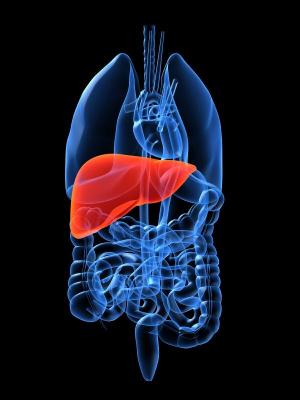
A team led by researchers from the Center for Engineering in Medicine at Massachusetts General Hospital (MGH) has developed a technique that someday may allow growth of transplantable replacement livers. In a study appearing in Nature Medicine, the investigators describe using the structural tissue of rat livers as scaffolding for the growth of tissue regenerated from liver cells introduced through a novel reseeding process.
Image
Researchers have developed a technique that someday 
may allow growth of transplantable replacement livers. 
(Credit: iStockphoto/Sebastian Kaulitzki)

"Having the detailed microvasculature of the liver within a biocompatible, natural scaffold is a major advantage to growing liver tissue in a synthetic environment," says Basak Uygun, PhD, research associate at the MGH Center for Engineering in Medicine (MGH-CEM) and the paper's lead author. "Our technique of 'decellularizing' organs leaves the vascular system intact, which facilitates repopulation of the structural matrix and the subsequent survival and function of the introduced liver cells."

Liver transplantation is the only effective treatment for liver failure but is greatly limited by the shortage of donor organs. Each year 4,000 individuals who might have survived with a liver transplant die in the U.S. The shortage of donor livers and other organs is a major force behind the emerging field of tissue engineering and regenerative medicine. Efforts to build tissues from the ground up have not yet approached the goal of transplantable replacement organs, and replacing the liver -- in which each cell is a metabolic factory requiring constant, direct contact with the vascular system -- has been particularly challenging.

The current report describes a refinement of an approach to re-engineering replacement rat hearts that was reported in 2008 by University of Minnesota researchers. Since liver tissue is much more delicate than the muscular structure of the heart, the MGH-CEM team developed a gentler way of flushing living cells out of the liver's structural matrix, which is primarily made of connective tissue like collagen. After the cells were removed, the lobular structure of the liver and its extracellular matrix remained. Containing specific biochemical signals and cues that would direct liver cells to travel to the correct location and resume function -- something quite difficult to replicate using synthetic methods -- the matrix also maintained the organ's intricate network of blood vessels.

Another novel technique was used to reintroduce hepatocytes, the cells that carry out most of the liver's primary functions, into the decellularized matrix. The MGH-CEM approach actually caused cells to penetrate the vascular network and become embedded in the matrix, leaving major vessels clear to carry the essential blood supply. The repopulated matrix displayed normal liver function for up to 10 days in culture, and recellularized grafts were successfully connected to the circulation of live rats with minimal cellular damage and normal hepatocyte function.

"As far as we know, a transplantable liver graft has never been constructed in a laboratory setting before," explains Korkut Uygun, PhD, of the MGH-CEM, the paper's senior author. "Even though this is very exciting and promising, it is a proof-of-concept study only. Much more work will be required to make long-term functional liver grafts that can actually be transplanted into humans. We haven't been able to go beyond several hours in the rats, but it's a great start."

Martin Yarmush, MD, PhD, director of the MGH-CEM and a co-author of the Nature Medicine study, explains that the quarter of a million donor livers discarded each year because they are not suitable for transplantation would be an obvious source of supply for the creation of whole-organ scaffolds. "There is great potential for constructing full-fledged liver lobes containing animal or human cells, but several thorny issues must first be tackled, including formation of a layer of endothelial cells to line graft blood vessels," he says. "Given enough careful work, this approach could ultimately revolutionize tissue engineering and provide real working grafts for the liver and other complex tissues." Yarmush and Korkut Uygun both have faculty appointments at Harvard Medical School.

Additional co-authors of the Nature Medicine report are Alejandro Soto-Gutierrez, MD, PhD, Hiroshi Yagi, MD, Maria-Louisa Izamis, Maria Guzzardi, Carley Shulman, Jack Milwid, Arno Tilles, MD, Francois Berthiaume, PhD, and Yaahov Nahmias, PhD, MGH Center for Engineering in Medicine; Martin Hertl, MD, MGH Surgery; and Naoya Kobyashi, MD, PhD, Okayama University School of Medicine and Dentistry, Japan. The study was partially supported by grants from the National Institutes of Health, National Science Foundation and Shriners Hospitals for Children.
Enhanced by Zemanta

Sunday, April 11, 2010

DNA Nanotechnology: 'Magic Bullets' Breakthrough Offers Promising Applications in Medicine


A team of McGill Chemistry Department researchers led by Dr. Hanadi Sleiman has achieved a major breakthrough in the development of nanotubes -- tiny "magic bullets" that could one day deliver drugs to specific diseased cells. Sleiman explains that the research involves taking DNA out of its biological context. So rather than being used as the genetic code for life, it becomes a kind of building block for tiny nanometre-scale objects.
Me
Researchers have created the first examples of DNA 
nanotubes that encapsulate and load cargo, and 
then release it rapidly and completely when a specific 
external DNA strand is added. 
(Credit: Image courtesy of McGill University)

Using this method, the team created the first examples of DNA nanotubes that encapsulate and load cargo, and then release it rapidly and completely when a specific external DNA strand is added. One of these DNA structures is only a few nanometres wide but can be extremely long, about 20,000 nanometres. (A nanometre is one-10,000th the diameter of a human hair.)

Until now, DNA nanotubes could only be constructed by rolling a two-dimensional sheet of DNA into a cylinder. Sleiman's method allows nanotubes of any shape to be formed and they can either be closed to hold materials or porous to release them. Materials such as drugs could then be released when a particular molecule is present.

One of the possible future applications for this discovery is cancer treatment. However, Sleiman cautions, "we are still far from being able to treat diseases using this technology; this is only a step in that direction. Researchers need to learn how to take these DNA nanostructures, such as the nanotubes here, and bring them back to biology to solve problems in nanomedicine, from drug delivery, to tissue engineering to sensors," she said.

The team's discovery was published on March 14, 2010 in Nature Chemistry. The research was made possible with funding from the National Science and Engineering Research Council and the Canadian Institute for Advanced Research.
Reblog this post [with Zemanta]