BTemplates.com

Powered by Blogger.

Pageviews past week

Quantum mechanics

Auto News

artificial intelligence

About Me

Recommend us on Google!

Information Technology

Popular Posts

Showing posts sorted by relevance for query Quantum. Sort by date Show all posts

Thursday, July 7, 2011

Mechanical micro-drum cooled to quantum ground state


Showcasing new tools for widespread development of quantum circuits made of mechanical parts, scientists from the National Institute of Standards and Technology have demonstrated a flexible, broadly usable technique for steadily calming the vibrations of an engineered mechanical object down to the quantum "ground state," the lowest possible energy level.
Multiple versions of NIST's superconducting circuit containing a "micro drum" were fabricated on this sapphire chip, shown next to a penny for scale. NIST scientists cooled one such drum to the lowest possible energy level, the quantum ground state. Credit: Teufel/NIST

Described in a Nature paper posted online July 6, the NIST experiments nearly stop the beating motion of a microscopic aluminum drum made of about 1 trillion atoms, placing the drum in a realm governed by quantum mechanics with its energy below a single quantum, or one unit of energy. Like a plucked guitar string that plays the same tone while the sound dissipates, the drum continues to beat 11 million times per second, but its range of motion approaches zero. The cooling technique and drum device together promise new machinery for quantum computing and tests of quantum theory, and could help advance the field of quantum acoustics exploring the quantum nature of mechanical vibrations.

NIST scientists used the pressure of microwave radiation, or light, to calm the motion of the drum, which is embedded in a superconducting circuit. The circuit is designed so that the drum motion can influence the microwaves inside an electromagnetic cavity. The cooling method takes advantage of the microwave light's tendency to change frequency, if necessary, to match the frequency, or tone, at which the cavity naturally resonates.

"I put in the light at the wrong frequency, and it comes out at the right frequency, and it does that by stealing energy from the drum motion," says John Teufel, a NIST research affiliate who designed the drum. Teufel led the cooling experiments in NIST physicist and co-author Konrad Lehnert's lab at JILA, a joint institute of NIST and the University of Colorado Boulder.

Compared to the first engineered object to be coaxed into the quantum ground state, reported by California researchers last year, the NIST drum has a higher quality factor, so it can hold a beat longer, and it beats at a much slower rate, or lower frequency. As a result, individual packets of energy, or quanta, can be stored 10,000 times longer (about 100 microseconds)—long enough to serve as a temporary memory for a quantum computer and a platform for exploring complex mechanical and quantum states. In addition, the drum motion is 40 times greater per quantum, offering the possibility, for instance, of generating larger entangled "cat states"—objects that are in two places at once and also entangled, with properties that are linked even at a distance—for tests of theories such as quantum gravity. The NIST apparatus also allows researchers to measure the position of the drum directly, which is useful for force detection, with a precision closer than ever to the ultimate limit allowed by quantum mechanics.

To make engineered bulk objects obey the rules of quantum mechanics, typically observed only in atoms and smaller particles, scientists must lower an object's temperature beyond the reach of conventional refrigeration. The California researchers were able to use a passive cryogenic refrigeration technique to chill their high-frequency device enough to reach the ground state, avoiding the need for specialized techniques.


NIST's drum required the use of "sideband cooling" to reach much colder temperatures, taking advantage of strong interactions between the drum and the microwaves. This is the same idea as laser cooling of individual atoms, first demonstrated at NIST in 1978. Now a basic tool of atomic physics worldwide, laser cooling enabled many significant advances by allowing researchers to reduce the vibrational motion of trapped atoms to less than a single quantum. Sideband refers to a collection of light particles (photons) just above or below a specific target frequency. In the case of NIST's superconducting circuit, this stray radiation pressure, as it adjusts to the surrounding environment of the cavity, steadily removes energy from the drum motion in the same way that laser cooling slows atoms in a gas.

In the NIST experiments, the drum is first chilled in a cryogenic refrigerator using liquid helium. This lowers the drum energy to about 30 quanta. Sideband cooling then reduces the drum temperature from 20 milliKelvin (thousandths of a degree above absolute zero) to below 400 microKelvin (millionths of a degree above absolute zero), steadily lowering the drum energy to just one-third of 1 quantum.

Scientists begin the sideband cooling process by applying a drive tone to the circuit at a particular frequency below the cavity resonance. The drumbeats generate sideband photons, which naturally convert to the higher frequency of the cavity. These photons leak out of the cavity as it fills up. Each departing photon takes with it one mechanical unit of energy—one phonon—from the drum motion. At a drive intensity that corresponds to 4,000 photons in the cavity, the drum motion slows to less than 1 quantum. By detecting the scattered photons leaving the cavity, scientists can measure the mechanical motion near the lowest possible limits of uncertainty. Collectively, these steps proved that the mechanical drum entered the quantum regime.

The drum apparatus has applications in quantum computers, which could someday solve certain problems that are intractable today, even with the best supercomputers. Quantum information can be stored in the mechanical state for more than 100 microseconds before absorbing one phonon from the environment—much longer than conventional superconducting quantum bits can maintain information. The drum, thus, might serve as a short-term memory device in a superconducting quantum computer circuit, a technology under development by the same NIST research group. In addition, because mechanical oscillators can interact with light of any frequency, they could act as intermediaries for transferring quantum information between microwave and optical components.

More information: J.D. Teufel, T. Donner, Dale Li, J.W. Harlow, M.S. Allman, K. Cicak, A.J. Sirois, J.D. Whittaker, K.W. Lehnert and R.W. Simmonds. 2011. Sideband cooling of micromechanical motion to the quantum ground state. Nature. Posted online July 6.

Sunday, August 8, 2010

Quantum Networks: Photons and Qubits Entangled


A team of Harvard physicists led by Mikhail D. Lukin has achieved the first-ever quantum entanglement of photons and solid-state materials. The work marks a key advance toward practical quantum networks, as the first experimental demonstration of a means by which solid-state quantum bits, or "qubits," can communicate with one another over long distances.
Image
Physicists have achieved the first-ever quantum entanglement of photons and solid-state materials -- a key advance toward practical quantum networks in which solid-state quantum bits, or "qubits," can communicate with one another over long distances. (Credit: iStockphoto/Andrey Prokhorov)

Quantum networking applications such as long-distance communication and distributed computing would require the nodes that process and store quantum data in qubits to be connected to one another by entanglement, a state where two different atoms become indelibly linked such that one inherits the properties of the other.

"In quantum computing and quantum communication, a big question has been whether or how it would be possible to actually connect qubits, separated by long distances, to one another," says Lukin, professor of physics at Harvard and co-author of a paper describing the work in the journal Nature.

"Demonstration of quantum entanglement between a solid-state material and photons is an important advance toward linking qubits together into a quantum network."

Quantum entanglement has previously been demonstrated only with photons and individual ions or atoms.

"Our work takes this one step further, showing how one can engineer and control the interaction between individual photons and matter in a solid-state material," says first author Emre Togan, a graduate student in physics at Harvard. "What's more, we show that the photons can be imprinted with the information stored in a qubit."

Quantum entanglement, famously termed "spooky action at a distance" by a skeptical Albert Einstein, is a fundamental property of quantum mechanics. It allows one to distribute quantum information over tens of thousands of kilometers, limited only by how fast and how far members of the entangled pair can propagate in space.

The new result builds upon earlier work by Lukin's group to use single atom impurities in diamonds as qubits. Lukin and colleagues have previously shown that these impurities can be controlled by focusing laser light on a diamond lattice flaw where nitrogen replaces an atom of carbon. That previous work showed that the so-called spin degrees of freedom of these impurities make excellent quantum memory.

Lukin and his co-authors now say that these impurities are also remarkable because, when excited with a sequence of finely tuned microwave and laser pulses, they can emit photons one at a time, such that photons are entangled with quantum memory. Such a stream of single photons can be used for secure transmission of information.

"Since photons are the fastest carriers of quantum information, and spin memory can robustly store quantum information for relatively long periods of time, entangled spin-photon pairs are ideal for the realization of quantum networks," Lukin says. "Such a network, a quantum analog to the conventional internet, could allow for absolutely secure communication over long distances."

Lukin and Togan's co-authors on the Nature paper are Yiwen Chu, Alexei Trifonov, Jeronimo Maze, and Alexander S. Zibrov, all at Harvard; Liang Jiang of Harvard and the California Institute of Technology; Lilian I. Childress of Harvard and Bates College; M.V. Gurudev Dutt of Harvard and the University of Pittsburgh; A.S. Sorensen at the University of Copenhagen; and Phillip R. Hemmer of Texas A&M University. The work was supported by the Defense Advanced Research Projects Agency, the Harvard-MIT Center for Ultracold Atoms, the National Science Foundation, the National Defense Science & Engineering Graduate Fellowship, and the Packard Foundation.

Thursday, July 21, 2011

Breakthrough in Quantum Computing: Researchers Develop System That Resists 'Quantum Bug'


Scientists have taken the next major step toward quantum computing, which will use quantum mechanics to revolutionize the way information is processed.
Quantum computing uses quantum bits, or qubits, to 
encode information. (Credit: © Anterovium / Fotolia)

Quantum computers will capitalize on the mind-bending properties of quantum particles to perform complex calculations that are impossible for today's traditional computers.

Using high magnetic fields, Susumu Takahashi, assistant professor in the USC Dornsife College of Letters, Arts and Sciences, and his colleagues managed to suppress decoherence, which is one of the key stumbling blocks in quantum computing.

"High magnetic fields reduce the level of the noises in the surroundings, so they can constrain the decoherence very efficiently," Takahashi said. Decoherence has been described as a "quantum bug" that destroys fundamental properties that quantum computers would rely on.

This research will appear in the online version of Nature magazine on June 20.

Quantum computing uses quantum bits, or qubits, to encode information in the form of ones and zeros. Unlike a traditional computer that uses traditional bits, a quantum computer takes advantage of the fact seemingly impossible fact that qubits can exist in multiple states at the same time, which is called "superposition."

While can a bit can represent either a one or a zero, a qubit can represent a one and a zero at the same time due to superposition. This allows for simultaneous processing of calculations in a truly parallel system, skyrocketing computing ability.

Though the concepts underpinning quantum computing are not new, problems such as decoherence have hindered the construction of a fully functioning quantum computer.

Think of decoherence as a form of noise or interference, knocking a quantum particle out of superposition -- robbing it of that special property that makes it so useful. If a quantum computer relies on a quantum particle's ability to be both here and there, then decoherence is the frustrating phenomenon that causes a quantum particle to be either here or there.

The researchers calculated all sources of decoherence in his experiment as a function of temperature, magnetic field, and by nuclear isotopic concentrations, and suggested the optimum condition to operate qubits, reducing decoherence by approximately 1,000 times.

Qubits in his experiment lasted about 500 microseconds at the optimum condition -- ages, relatively speaking.

Decoherence in qubit systems falls into two general categories. One is an intrinsic decoherence caused by constituents in the qubit system, and the other is an extrinsic decoherence caused by imperfections of the system, for example, impurities and defects.

In their study, Takahashi and his colleagues investigated single crystals of molecular magnets. Because of their purity, molecular eliminate the extrinsic decoherence, allowing researchers to calculate intrinsic decoherence precisely.

"For the first time we've been able to predict and control all the environmental decoherence mechanisms in a very complex system -- in this case a large magnetic molecule," said Phil Stamp, UBC professor of physics and astronomy and director of the Pacific Institute of Theoretical Physics.

Using crystalline molecular magnets allowed researchers to build qubits out of multiple quantum particles, rather than a single quantum object -- the way most proto-quantum computers are built at the moment.

"This will obviously increase signals from the qubit drastically, so the detection of the qubit in the molecular magnets is much easier," Takahashi said.

Takahashi conducted his research as a project scientist in the Institute of Terahertz Science and Technology and Department of Physics at the University of California Santa Barbara and analyzed the data while at UCSB and USC. Takahashi has been in the USC Dornsife College since 2010.

Research for the article was performed in collaboration with Phil Stamp and Igor Tupitsyn of the University of British Columbia, Johan van Tol of Florida State University, and David Hendrickson of UC San Diego.

This work was supported by the National Science Foundation, the W. M. Keck Foundation, the Pacific Institute of Theoretical Physics at UBC, by the Natural Sciences and Engineering Research Council of Canada, the Canadian Institute for Advanced Research and the USC startup funds.


Tuesday, July 19, 2011

Physicists take steps toward delivering quantum information to the home


Today, fiber optics technology transports information in the form of classical data to homes and businesses. But researchers are currently working on ways to combine quantum data with the classical data in fiber optics networks in order to increase security. In a new study, scientists have shown how quantum and classical data can be interlaced in a real-world fiber optics network, taking a step toward distributing quantum information to the home, and with it a quantum internet.
A tree network is often used to distribute classical data to homes via fiber optics. Researchers are working on co-propagating quantum information with the classical data to improve security. Image copyright: Iris Choi, et al. ©2011 IOP Publishing Ltd and Deutsche Physikalische Gesellschaft

The physicists, Iris Choi, Robert J. Young, and Paul D. Townsend, from the Tyndall National Institute at the University College Cork in Cork, Ireland, have published their study on combining quantum and classical signals in a recent issue of the New Journal of Physics. While the feasibility of transferring qubits on modern fiber-to-the-home (FTTH) networks has previously been demonstrated, this is the first time that researchers have investigated how the operation would work in a real-world network.

“I believe that our work constitutes the first really hard-nosed, pragmatic attempt to address the question of whether quantum key distribution (QKD) can work on a real fiber-to-the-home (FTTH) network,” Townsend told PhysOrg.com. “The new scheme that we have developed and tested demonstrates that the answer is ‘yes it can.’ I say pragmatic and hard-nosed because we have taken a widely deployed classical FTTH system and have adapted QKD to interwork with it, leaving the design of the classical part of the system essentially unchanged. The alternative approach, sometimes taken in QKD research, is to leave out the classical system completely or to adapt it to work with the QKD. In our view this is not very practical for cost reasons.”

The biggest challenge in transferring qubits in real-world networks is overcoming the crosstalk between the classical and quantum channels. Crosstalk is induced by spontaneous Raman scattering of photons in the optical fiber. Since the classical channels involve strong laser pulses while the quantum information is carried by single photons, the crosstalk primarily affects the quantum channel, making the error rate so high that the quantum channel is unable to operate.


Previous research has shown that the Raman noise level can be reduced by optical filtering, although this technique is too expensive for practical use. So Choi, Young, and Townsend have developed and demonstrated a novel noise suppression scheme that involves creating gaps in the scattering, and sending quantum data in these gaps.

First, the researchers chose a configuration that used two different wavelengths for transmitting the quantum and classical channels. In this configuration, only the Raman-scattered light in the “upstream” channel (going away from a user’s house) can generate crosstalk for that user. Then, the researchers identified quiet periods between the bursts of noise generated by Raman scattering in the upstream channel. Using a time and wavelength-multiplexing scheme, the researchers demonstrated that quantum data generated by a quantum key distribution (QKD) scheme can be transmitted during these quiet periods with high fidelity.

While building a purely quantum network could avoid the problem of crosstalk altogether, the researchers explain that combining quantum channels with classical channels is by far the more practical option.

“I see this as an absolute requirement – a ‘must have,’ Townsend said. “That’s because optical fiber network infrastructure is enormously expensive to deploy, so it must last for a long time – perhaps 25 years or more – and be able to support a wide range of current and future, yet to be defined, systems and services. So it is extremely unlikely that an operator would ever deploy a network, or even dedicate fibers within an existing network, purely for quantum communications – it’s just too expensive to do so. Consequently, we have to develop techniques that enable classical and quantum channels to work together on the same network if we want quantum communication systems to become a practical reality.”

By demonstrating that both quantum and classical information can be transmitted on a single optical fiber network in a way that satisfies real-world requirements, the researchers hope to bring quantum information technology one step closer to commercial applications.

“As we have demonstrated, in principle the technology to do this is available now,” Townsend. “However, in reality further research is likely to be required to reduce the cost and improve the performance of certain key parts of the system such as the single photon detectors, before widespread applications emerge. In general, the ‘value proposition’ for QKD on FTTH and other networks is under intensive discussion today, but at the moment no clear consensus has emerged concerning if and when it might be adopted to replace classical encryption techniques. However, as demonstrated by this research, the QKD field is not standing still and systems are continuing to evolve to become more practical, improving the potential for adoption of the technology in the future.”

More information: Iris Choi, et al. “Quantum information to the home.” New Journal of Physics 13 (2011) 063039 DOI:10.1088/1367-2630/13/6/063039

Tuesday, March 1, 2011

Atomic Antennas Transmit Quantum Information Across a Microchip


The Austrian research group led by physicist Rainer Blatt suggests a fundamentally novel architecture for quantum computation. They have experimentally demonstrated quantum antennas, which enable the exchange of quantum information between two separate memory cells located on a computer chip. This offers new opportunities to build practical quantum computers.
Quantum antennae enable the exchange of quantum 
information between two separate memory cells located 
on a computer chip. (Credit: Harald Ritsch)


The researchers have published their work in the scientific journal Nature.

Six years ago scientists at the University of Innsbruck realized the first quantum byte -- a quantum computer with eight entangled quantum particles; a record that still stands. "Nevertheless, to make practical use of a quantum computer that performs calculations, we need a lot more quantum bits," says Prof. Rainer Blatt, who, with his research team at the Institute for Experimental Physics, created the first quantum byte in an electromagnetic ion trap. "In these traps we cannot string together large numbers of ions and control them simultaneously."

To solve this problem, the scientists have started to design a quantum computer based on a system of many small registers, which have to be linked. To achieve this, Innsbruck quantum physicists have now developed a revolutionary approach based on a concept formulated by theoretical physicists Ignacio Cirac and Peter Zoller. In their experiment, the physicists electromagnetically coupled two groups of ions over a distance of about 50 micrometers. Here, the motion of the particles serves as an antenna. "The particles oscillate like electrons in the poles of a TV antenna and thereby generate an electromagnetic field," explains Blatt. "If one antenna is tuned to the other one, the receiving end picks up the signal of the sender, which results in coupling." The energy exchange taking place in this process could be the basis for fundamental computing operations of a quantum computer.

Antennas amplify transmission

"We implemented this new concept in a very simple way," explains Rainer Blatt. In a miniaturized ion trap a double-well potential was created, trapping the calcium ions. The two wells were separated by 54 micrometers. "By applying a voltage to the electrodes of the ion trap, we were able to match the oscillation frequencies of the ions," says Blatt.

"This resulted in a coupling process and an energy exchange, which can be used to transmit quantum information." A direct coupling of two mechanical oscillations at the quantum level has never been demonstrated before. In addition, the scientists show that the coupling is amplified by using more ions in each well. "These additional ions function as antennas and increase the distance and speed of the transmission," says Rainer Blatt, who is excited about the new concept. This work constitutes a promising approach for building a fully functioning quantum computer.

"The new technology offers the possibility to distribute entanglement. At the same time, we are able to target each memory cell individually," explains Rainer Blatt. The new quantum computer could be based on a chip with many micro traps, where ions communicate with each other through electromagnetic coupling. This new approach represents an important step towards practical quantum technologies for information processing.

The quantum researchers are supported by the Austrian Science Fund FWF, the European Union, the European Research Council and the Federation of Austrian Industries Tyrol.

Saturday, March 12, 2011

New Switching Device Could Help Build an Ultrafast 'Quantum Internet'


Northwestern University researchers have developed a new switching device that takes quantum communication to a new level. The device is a practical step toward creating a network that takes advantage of the mysterious and powerful world of quantum mechanics.

A new switching device could be used to develop a 'quantum Internet,' where encrypted information would be completely secure, and networking superfast quantum computers. (Credit: iStockphoto/Andrey Prokhorov)


The researchers can route quantum bits, or entangled particles of light, at very high speeds along a shared network of fiber-optic cable without losing the entanglement information embedded in the quantum bits. The switch could be used toward achieving two goals of the information technology world: a quantum Internet, where encrypted information would be completely secure, and networking superfast quantum computers.

The device would enable a common transport mechanism, such as the ubiquitous fiber-optic infrastructure, to be shared among many users of quantum information. Such a system could route a quantum bit, such as a photon, to its final destination just like an e-mail is routed across the Internet today.

The research -- a demonstration of the first all-optical switch suitable for single-photon quantum communications -- is published by the journal Physical Review Letters.

"My goal is to make quantum communication devices very practical," said Prem Kumar, AT&T Professor of Information Technology in the McCormick School of Engineering and Applied Science and senior author of the paper. "We work in fiber optics so that as quantum communication matures it can easily be integrated into the existing telecommunication infrastructure."

The bits we all know through standard, or classical, communications only exist in one of two states, either "1" or "0." All classical information is encoded using these ones and zeros. What makes a quantum bit, or qubit, so attractive is it can be both one and zero simultaneously as well as being one or zero. Additionally, two or more qubits at different locations can be entangled -- a mysterious connection that is not possible with ordinary bits.

Researchers need to build an infrastructure that can transport this "superposition and entanglement" (being one and zero simultaneously) for quantum communications and computing to succeed.

The qubit Kumar works with is the photon, a particle of light. A photonic quantum network will require switches that don't disturb the physical characteristics (superposition and entanglement properties) of the photons being transmitted, Kumar says. He and his team built an all-optical, fiber-based switch that does just that while operating at very high speeds.

To demonstrate their switch, the researchers first produced pairs of entangled photons using another device developed by Kumar, called an Entangled Photon Source. "Entangled" means that some physical characteristic (such as polarization as used in 3-D TV) of each pair of photons emitted by this device are inextricably linked. If one photon assumes one state, its mate assumes a corresponding state; this holds even if the two photons are hundreds of kilometers apart.

The researchers used pairs of polarization-entangled photons emitted into standard telecom-grade fiber. One photon of the pair was transmitted through the all-optical switch. Using single-photon detectors, the researchers found that the quantum state of the pair of photons was not disturbed; the encoded entanglement information was intact.

"Quantum communication can achieve things that are not possible with classical communication," said Kumar, director of Northwestern's Center for Photonic Communication and Computing. "This switch opens new doors for many applications, including distributed quantum processing where nodes of small-scale quantum processors are connected via quantum communication links."

Sunday, April 3, 2011

World First: Calculations With 14 Quantum Bits


Quantum physicists from the University of Innsbruck have set another world record: They have achieved controlled entanglement of 14 quantum bits (qubits) and, thus, realized the largest quantum register that has ever been produced. With this experiment the scientists have not only come closer to the realization of a quantum computer but they also show surprising results for the quantum mechanical phenomenon of entanglement.
Up to 14 quantum bits were entangled in an ion trap. 
(Credit: University of Innsbruck)

The term entanglement was introduced by the Austrian Nobel laureate Erwin Schrödinger in 1935, and it describes a quantum mechanical phenomenon that while it can clearly be demonstrated experimentally, is not understood completely. Entangled particles cannot be defined as single particles with defined states but rather as a whole system. By entangling single quantum bits, a quantum computer will solve problems considerably faster than conventional computers. "It becomes even more difficult to understand entanglement when there are more than two particles involved," says Thomas Monz, junior scientist in the research group led by Rainer Blatt at the Institute for Experimental Physics at the University of Innsbruck. "And now our experiment with many particles provides us with new insights into this phenomenon," adds Blatt.

World record: 14 quantum bits

Since 2005 the research team of Rainer Blatt has held the record for the number of entangled quantum bits realized experimentally. To date, nobody else has been able to achieve controlled entanglement of eight particles, which represents one quantum byte. Now the Innsbruck scientists have almost doubled this record. They confined 14 calcium atoms in an ion trap, which, similar to a quantum computer, they then manipulated with laser light. The internal states of each atom formed single qubits and a quantum register of 14 qubits was produced. This register represents the core of a future quantum computer. In addition, the physicists of the University of Innsbruck have found out that the decay rate of the atoms is not linear, as usually expected, but is proportional to the square of the number of the qubits. When several particles are entangled, the sensitivity of the system increases significantly. "This process is known as superdecoherence and has rarely been observed in quantum processing," explains Thomas Monz. It is not only of importance for building quantum computers but also for the construction of precise atomic clocks or carrying out quantum simulations.

Increasing the number of entangled particles
By now the Innsbruck experimental physicists have succeeded in confining up to 64 particles in an ion trap. "We are not able to entangle this high number of ions yet," says Thomas Monz. "However, our current findings provide us with a better understanding about the behavior of many entangled particles." And this knowledge may soon enable them to entangle even more atoms. Some weeks ago Rainer Blatt's research group reported on another important finding in this context in the scientific journal Nature: They showed that ions might be entangled by electromagnetic coupling. This enables the scientists to link many little quantum registers efficiently on a micro chip. All these findings are important steps to make quantum technologies suitable for practical information processing," Rainer Blatt is convinced.

The results of this work are published in the scientific journal Physical Review Letters. The Innsbruck researchers are supported by the Austrian Science Fund (FWF), the European Commission and the Federation of Austrian Industries Tyrol.

Saturday, September 11, 2010

Quantum Dice:Simple Device Measures Quantum Noise of Vacuum Fluctuations and Generates True Random Numbers


Behind every coincidence lies a plan -- in the world of classical physics, at least. In principle, every event, including the fall of dice or the outcome of a game of roulette, can be explained in mathematical terms.
A true game of chance: Max Planck researchers produce 
true random numbers by making the randomly varying 
intensity of the quantum noise visible. To do this, they use
a strong laser (coming from the left), a beam splitter, two 
identical detectors and several electronic components. 
The statistical spread of the measured values follows a 
Gaussian bell-shaped curve (bottom). Individual values 
are assigned to sections of the bell-shaped curve that 
correspond to a number. (Credit: MPI for the Physics of Light)

Researchers at the Max Planck Institute for the Physics of Light in Erlangen have constructed a device that works on the principle of true randomness. With the help of quantum physics, their machine generates random numbers that cannot be predicted in advance. The researchers exploit the fact that measurements based on quantum physics can only produce a special result with a certain degree of probability, that is, randomly. True random numbers are needed for the secure encryption of data and to enable the reliable simulation of economic processes and changes in the climate.

The research is published online in the journal Nature Photonics (August 29, 2010).

The phenomenon we commonly refer to as chance is merely a question of a lack of knowledge. If we knew the location, speed and other classical characteristics of all of the particles in the universe with absolute certainty, we would be able to predict almost all processes in the world of everyday experience. It would even be possible to predict the outcome of a puzzle or lottery numbers. Even if they are designed for this purpose, the results provided by computer programs are far from random: "They merely simulate randomness but with the help of suitable tests and a sufficient volume of data, a pattern can usually be identified," says Christoph Marquardt. In response to this problem, a group of researchers working with Gerd Leuchs and Christoph Marquardt at the Max Planck Institute for the Physics of Light and the University of Erlangen-Nuremberg and Ulrik Andersen from the Technical University of Denmark have developed a generator for true random numbers.

True randomness only exists in the world of quantum mechanics. A quantum particle will remain in one place or another and move at one speed or another with a certain degree of probability. "We exploit this randomness of quantum-mechanical processes to generate random numbers," says Christoph Marquardt.

The scientists use vacuum fluctuations as quantum dice. Such fluctuations are another characteristic of the quantum world: there is nothing that does not exist there. Even in absolute darkness, the energy of a half photon is available and, although it remains invisible, it leaves tracks that are detectable in sophisticated measurements: these tracks take the form of quantum noise. This completely random noise only arises when the physicists look for it, that is, when they carry out a measurement.

To make the quantum noise visible, the scientists resorted once again to the quantum physics box of tricks: they split a strong laser beam into equal parts using a beam splitter. A beam splitter has two input and output ports. The researchers covered the second input port to block light from entering. The vacuum fluctuations were still there, however, and they influenced the two partial output beams. The physicists then send them to the detectors and measure the intensity of the photon stream. Each photon produces an electron and the resulting electrical current is registered by the detector.

When the scientists subtract the measurement curves produced by the two detectors from each other, they are not left with nothing. What remains is the quantum noise. "During measurement the quantum-mechanical wave function is converted into a measured value," says Christian Gabriel, who carried out the experiment with the random generator with his colleagues at the Max Planck Institute in Erlangen: "The statistics are predefined but the intensity measured remains a matter of pure chance." When plotted in a Gaussian bell-shaped curve, the weakest values arise frequently while the strongest occur rarely. The researchers divided the bell-shaped curve of the intensity spread into sections with areas of equal size and assigned a number to each section.

Needless to say, the researchers did not decipher this quantum mechanics puzzle to pass the time during their coffee breaks. "True random numbers are difficult to generate but they are needed for a lot of applications," says Gerd Leuchs, Director of the Max Planck Institute for the Physics of Light in Erlangen. Security technology, in particular, needs random combinations of numbers to encode bank data for transfer. Random numbers can also be used to simulate complex processes whose outcome depends on probabilities. For example, economists use such Monte Carlo simulations to predict market developments and meteorologists use them to model changes in the weather and climate.

There is a good reason why the Erlangen-based physicists chose to produce the random numbers using highly complex vacuum fluctuations rather than other random quantum processes. When physicists observe the velocity distribution of electrons or the quantum noise of a laser, for example, the random quantum noise is usually superimposed by classical noise, which is not random. "When we want to measure the quantum noise of a laser beam, we also observe classical noise that originates, for example, from a shaking mirror," says Christoffer Wittmann who also worked on the experiment. In principle, the vibration of the mirror can be calculated as a classical physical process and therefore destroys the random game of chance.

"Admittedly, we also get a certain amount of classical noise from the measurement electronics," says Wolfgang Mauerer who studied this aspect of the experiment. "But we know our system very well and can calculate this noise very accurately and remove it." Not only can the quantum fluctuations enable the physicists to eavesdrop on the pure quantum noise, no one else can listen in. "The vacuum fluctuations provide unique random numbers," says Christoph Marquardt. With other quantum processes, this proof is more difficult to provide and the danger arises that a data spy will obtain a copy of the numbers. "This is precisely what we want to avoid in the case of random numbers for data keys," says Marquardt.

Although the quantum dice are based on mysterious phenomena from the quantum world that are entirely counterintuitive to everyday experience, the physicists do not require particularly sophisticated equipment to observe them. The technical components of their random generator can be found among the basic equipment used in many laser laboratories. "We do not need either a particularly good laser or particularly expensive detectors for the set-up," explains Christian Gabriel. This is, no doubt, one of the reasons why companies have already expressed interest in acquiring this technology for commercial use.

Monday, April 12, 2010

Exotic Quantum Spin-Liquid Simulated: A Starting Point for Superconductivity?


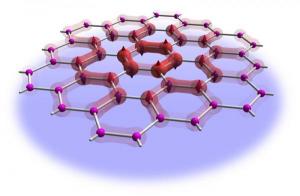
An exotic state of matter that physicists call a "quantum spin-liquid" can be realized by electrons in a honeycomb crystal structure.
flat honeycomb structure
The simulation of the quantum spin-liquid was performed 
on a flat honeycomb structure, where the electrons show
a dynamical phase lacking any order. 
(Credit: Image courtesy of University of Stuttgart)

This is shown by scientists from the Universities of Stuttgart and Würzburg, Germany in a new study published in the journal Nature.

Electrons inside a crystal exist in different states. In many cases it is the crystal structure that decides, if the material is a metal with a finite electric conductivity, or if it is an insulator, which does not carry an electric current. But there also exist insulating materials, whose crystal structures suggest that they should behave like metals. Such materials are called "Mott insulators," and it is the repulsion between the electrons, that suppresses a metallic behaviour, such that the electrons are locked to the atoms.

Such localized electrons tend to order upon lowering the temperature, such as for example in magnetic structures. A "quantum spin-liquid" however is a non-magnetic Mott-insulator that is stabilized purely by quantum mechanical effects. The electrons inside a quantum spin-liquid resist to order down to the lowest temperatures, way down to the absolute zero of temperature at minus 273 degrees Celsius. The tendency to order is suppressed by dynamical fluctuations of the electrons even at zero absolute temperature (quantum fluctuations). For this to happen, the quantum fluctuations must be sufficiently large, which is rarely the case in nature, and also hard to realize in realistic models.

Now theorists from Stuttgart University, Zi Yang Meng, Priv.-Doz. Stefan Wessel, and Prof. Alejandro Muramatsu, together with their colleges Thomas Lang and Prof. Fakher Assaad from Würzburg University, showed that such a quantum spin-liquid exists in a realistic model of interacting electrons. For their study, they used large-scale computer simulations, in order to account for both the interactions between the electrons and their quantum fluctuations. Their unexpected findings were thus accepted for publication in the "Nature" magazine.

The quantum spin-liquid found by Meng et al. occurs in materials where the atoms form a two-dimensional, periodic array of hexagons, thus realizing a honeycomb lattice. Such a crystal structre is found for example in Graphene, a two-dimensional carbon allotrope, that was only recently synthesized, and has since then been the focus of intensive research. If the electronic interactions could be enhanced in such a material, then the highly interesting quantum spin-liquid state could be realized. It appears unlikly that this can be achieved, for example by expansion, in Graphene. Thus, the physicists from Stuttgart and Würzburg suggest exploring honeycomb-like structures formed from other group IV elements that show enhanced electronic interactions. A first step in this direction might already have been taken, since previously chemist succeeded in synthesizing Graphene-like structures of silicon atoms.

Furthermore, the quantum spin-liquid should also be realizable using ultra-cold atoms. In fact, the mathematical model studied by the physicists describes both interacting electrons in solid state systems as well as interacting ultra-cold atoms in an optical lattice. The impressive progress that has been achieved in this research field opens up the possibility to realize the quantum spin-liquid with ultra-cold atoms.

Another fascinating aspect of the quantum spin-liquid is that it can also be viewed as a starting point for superconductivity. Electric currents would then flow without resistance through the material. This has potential for many applications, such as ultra fast computers or the dissipation free transport of electricity.

In their fundamental research, the two theory groups in Stuttgart and Würzburg analyse complex phases of strongly interacting quantum many-body systems in general. They discovered the quantum spin-liquid phase, while studying possible transitions between metallic and insulating phases in a model for Graphene. In the vicinity of such transitions, the quantum fluctuations become significantly enhanced, and destroy any magnetic order. The scientists could also exclude other types of electronic orders from an extensive analysis. Such a study was only possible with the help of modern supercomputers. In particular, for their calculations, the theorists could profit from the highly efficient supercomputer centers in Jülich, München and Stuttgart. For the future, they hope to apply simulations of strongly interacting electrons also to the design of novel materials that realize exotic states of matter -- including the quantum spin-liquid.

The research described above is embedded within the general research activities of the two universities. At the University of Stuttgart, the DFG research unit SFB/TRR 21, "Controll of Quantum Correlations in Tailored Matter," focuses on the realization of tailored quantum systems. Its spokesperson is Prof. Tilmann Pfau from the University of Stuttgart. At the University of Würzburg, a recently established research group "Electron Correlation-Induced Phenomena in Surfaces and Interfaces with Tuneable Interactions" complex electronic states are of central focus. Its spokesperson is Prof. Ralph Claessen from Würzburg University.

Saturday, June 25, 2011

Optical circuit enables new approach to quantum technologies


An international research group led by scientists from the University of Bristol, UK, and the Universities of Osaka and Hokkaido, Japan, has demonstrated a fundamental building block for quantum computing that could soon be employed in a range of quantum technologies.

Professor Jeremy O’Brien, Director of the University of Bristol’s Centre for Quantum Photonics, and his Japanese colleagues have demonstrated a quantum logic gate acting on four particles of light – photons. The researchers believe their device could provide important routes to new quantum technologies, including secure communication, precision measurement, and ultimately a quantum computer—a powerful type of computer that uses quantum bits (qubits) rather than the conventional bits used in today’s computers.

Unlike conventional bits or transistors, which can be in one of only two states at any one time (1 or 0), a qubit can be in several states at the same time and can therefore be used to hold and process a much larger amount of information at a greater rate.

“We have realised a fundamental element for processing quantum information—a controlled-NOT or CNOT gate—based on a recipe that was theoretically proposed 10 years ago,” said Professor O’Brien. “The reason it has taken so long to achieve this milestone is that even for such a relatively simple circuit we require complete control over four single photons whizzing around at the speed of light!”

The approach taken by Professor O’Brien and his colleagues combined several methods for making optical circuits that must be stable to within a fraction of the wavelength of light, that is, nanometres. In 2001 optical quantum computing became possible when a theoretical recipe for realising this CNOT gate, as well as the other necessary components, was developed. However, the technological challenges associated with making the optical circuits have prevented its realisation until now. The implications for this new approach are far-reaching.

“The ability to implement such a logic gate on photons is critical for building up larger scale circuits and even algorithms,” said Professor O’Brien. “Using an integrated optics on a chip approach that we have pioneered here at Bristol over the last several years will enable this to proceed far more rapidly, paving the way to quantum technologies that will help us understand the most complex scientific problems.”


In the short term, the team expect to apply their new results immediately for developing new approaches to quantum communication and measurement and then for simulation tools in their lab. In the longer term, a small-scale quantum simulator based on a multi-photon optical circuit could be used to simulate processes which themselves are governed by quantum mechanics, such as superconductivity and photosynthesis. “Our technique could improve our understanding of such important processes and help, for example, in the development of more efficient solar cells,” said Professor O’Brien. Other applications include the development of ultra-fast and efficient search engines, designing high-tech materials and new pharmaceuticals.

The leap from using one photon to two photons is not trivial because the two particles need to be identical in every way and because of the way these particles interfere, or interact, with each other. There is no direct analogue of this interaction outside of quantum physics.

“Now that we can implement the fundamental building blocks for quantum circuits, the move to a larger scale devices will become our focus. Because of the increasingly complexity the results will be just as exciting” said Professor O’Brien. “Each time we add a photon, the complexity of the problem we are able to investigate increases exponentially, so if a one-photon quantum circuit has 10 outcomes, a two-photon system can give 100 outcomes and a three-photon system 1000 solutions and so on.”

The Centre for Quantum Photonics now plans to use their chip-based approach to increase the complexity of their experiment not only by adding more photons but also by using larger circuits.

The research is published in Proceedings of the National Academy of Sciences.

Wednesday, November 17, 2010

Quantum Memory for Communication Networks of the Future


Researchers from the Niels Bohr Institute at the University of Copenhagen have succeeded in storing quantum information using two 'entangled' light beams. Quantum memory or information storage is a necessary element of future quantum communication networks. The new findings are published in Nature Physics.
The illustration shows the two quantum memories. Each 
memory consists of a glass cell filled with caesium atoms, 
which are shown as small blue and red balls. The light 
beam is sent through the atoms and the quantum 
information is thus transferred from the light to the atoms. 
(Credit: Quantop)

Quantum networks will be able to protect the security of information better than the current conventional communication networks. The cornerstone of quantum communication is a phenomenon called entanglement between two quantum systems, for example, two light beams. Entanglement means that the two light beams are connected to each other, so that they have well defined common characteristics, a kind of common knowledge. A quantum state can -- according to the laws of quantum mechanics, not be copied and can therefore be used to transfer data in a secure way.

In professor Eugene Polzik's research group Quantop at the Niels Bohr Institute researchers have now been able to store the two entangled light beams in two quantum memories. The research is conducted in a laboratory where a forest of mirrors and optical elements such as wave plates, beam splitters, lenses etc. are set up on a large table, sending the light around on a more than 10 meter long labyrinthine journey. Using the optical elements, the researchers control the light and regulate the size and intensity to get just the right wavelength and polarisation the light needs to have for the experiment.

The two entangled light beams are created by sending a single blue light beam through a crystal where the blue light beam is split up into two red light beams. The two red light beams are entangled, so they have a common quantum state. The quantum state itself is information.

The two light beams are sent on through the labyrinth of mirrors and optical elements and reach the two memories, which in the experiment are two glass containers filled with a gas of caesium atoms. The atoms' quantum state contains information in the form of a so-called spin, which can be either 'up' or 'down'. It can be compared with computer data, which consists of the digits 0 and 1. When the light beams pass the atoms, the quantum state is transferred from the two light beams to the two memories. The information has thus been stored as the new quantum state in the atoms.

"For the first time such a memory has been demonstrated with a very high degree of reliability. In fact, it is so good that it is impossible to obtain with conventional memory for light that is used in, for example, internet communication. This result means that a quantum network is one step closer to being a reality," explains professor Eugene Polzik.

Saturday, March 19, 2011

Quantum Pen for Single Atoms Is a Big Step Toward Large-Scale Quantum Computing


Physicists at the Max Planck Institute of Quantum Optics succeeded in manipulating atoms individually in a lattice of light and in arranging them in arbitrary patterns. These results are an important step towards large scale quantum computing and for the simulation of condensed matter systems.
With the help of a laser beam, the scientists could address single atoms in the lattice of light and change their spin state. In this way they succeeded in having total control over the single atoms and in "writing" arbitrary two-dimensional patterns. (Credit: Image courtesy of Max Planck Institute of Quantum Optics)

Physicists around the world are searching for the best way to realize a quantum computer. Now scientists of the team around Stefan Kuhr and Immanuel Bloch at the Max Planck Institute of Quantum Optics (Garching/Munich) took a decisive step in this direction. They can now address and change the spin of single atoms with laser light and arrange them in arbitrary patterns. In this way, the physicists strung the atoms along a line and could directly observe their tunneling dynamics in a “racing duel” of the atoms. A register of hundreds of addressable quantum particles could serve for storing and processing of quantum information in a quantum computer.

In the present experiment, the scientists loaded laser-cooled rubidium atoms into an artificial crystal of light. These so-called optical lattices are generated by superimposing several laser beams. The atoms are kept in the lattice of light in a way similar to marbles being contained in the hollows of an egg carton.

A few months ago, the team of Stefan Kuhr and Immanuel Bloch showed that each site of the optical lattice can be filled with exactly one atom. With the help of a microscope, the scientists visualized the array atom by atom and thereby verified the shell-like structure of this “Mott insulator.” Now the scientists succeeded in individually addressing the atoms in the lattice and in changing their respective energy state. Using the microscope, they focused a laser beam down to a diameter of about 600 nanometers, which is just above the lattice spacing, and directed it at individual atoms with high precision.

The laser beam slightly deforms the electron shell of the addressed (targeted) atom and thereby changes the energy difference between its two spin states. Atoms with a spin – i.e. an intrinsic angular momentum – behave like little magnetic needles that can align in two opposite directions. If the atoms are irradiated with microwaves that are in resonance with the modified spin transition, only the addressed atoms absorb a microwave photon, which causes their spin to flip. All other atoms in the lattice remain unaffected by the microwave field.

The scientists demonstrated the high fidelity of this addressing scheme in a series of experiments. For this purpose, the spins of all atoms along a line were flipped one after the other, by moving the addressing laser from lattice site to lattice site. After removing all atoms with a flipped spin from the trap, the addressed atoms are visible as holes, which can easily be counted. In this way, the physicists deduced that the addressing worked in 95% of the cases. Atoms at the neighboring sites are not influenced by the addressing laser. The method provides the possibility to generate arbitrary distributions of atoms in the lattice.

Starting from an arrangement of 16 atoms that were strung together on neighboring lattice sites like a necklace of beads, the scientists studied what happens when the height of the lattice is ramped down so far that the particles are allowed to “tunnel” according to the rules of quantum mechanics. They move from one lattice site to the other, even if their energy is not sufficient to cross the barrier between the lattice wells. “As soon as the height of the lattice has reached the point where tunneling is possible, the particles start running as if they took part in a horse-race”, doctoral candidate Christof Weitenberg describes. “By taking snapshots of the atoms in the lattice at different times after the "starting signal", we could directly observe the quantum mechanical tunneling-effect of single massive particles in an optical lattice for the first time.”

The new addressing technique allows many interesting studies of the dynamics of collective quantum states, as they appear in solid state systems. It also opens new perspectives in quantum information processing. “A Mott isolator with exactly one atom per lattice site acts as a natural quantum register with a few hundred quantum bits, the ideal starting point for scalable quantum information processing,” as Stefan Kuhr explains. “We have shown that we can individually address single atoms. In order for the atom to suit as a quantum bit, we need to generate coherent superpositions of its two spin states. A further step is to realize elementary logical operations between two selected atoms in the lattice, so-called quantum gates.”